

Choose the ventilation system and the visible hood together
A range hood should suit the cooking appliance, capture cooking emissions effectively and fit the architecture around it. Begin with the appliance model and the room's installation conditions. Then develop the form, material, finish and details that make the metalwork belong in the kitchen.
The system includes more than the decorative shell. Blower, filters, ductwork or approved recirculation components, controls, electrical supply and installation all affect the result. Your daily cooking habits help define the brief, but they do not replace the appliance and hood instructions.
Match the hood type to the layout
Under-cabinet and cabinet inserts
Under-cabinet models occupy the space beneath upper cabinetry. A cabinet insert is fitted into a compatible enclosure. In both cases, confirm capture dimensions, access for filter removal, mounting requirements and the route for air leaving the unit. under cabinet range hood
Product searches for terms such as pacair range hoods are only a starting point; compare the actual manufacturer and model rather than relying on a category label.
Wall-mounted hoods
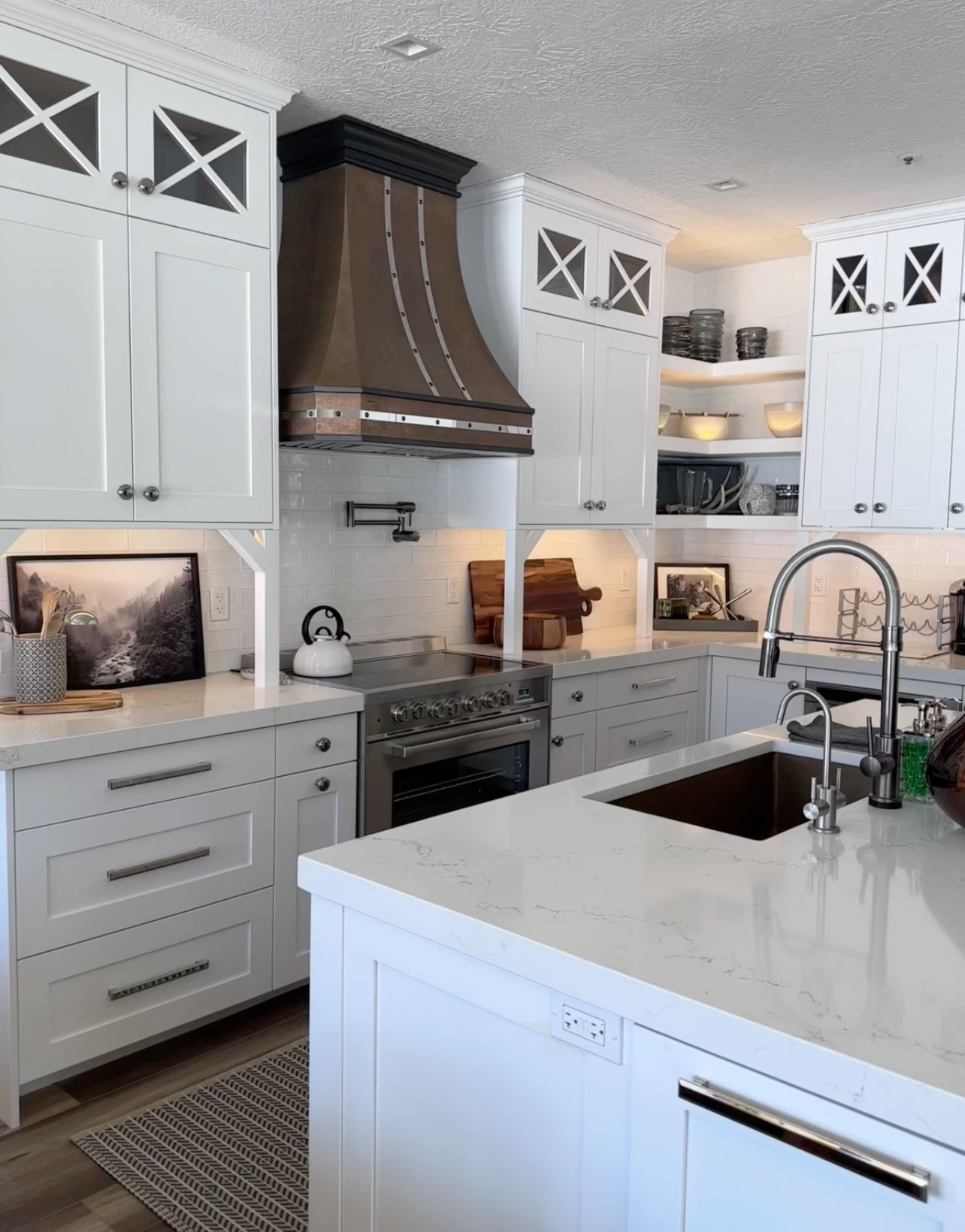
A wall-mounted hood can become the center of the cooking elevation. Coordinate its width and depth with the appliance, neighboring cabinetry and backsplash. The chimney or upper section must fit the ceiling and service route. wall mount hood provide examples to explore, and Wall-mount copper range hoods show how the form can relate to the room.
Island and ceiling-mounted hoods
A range hood for island needs careful attention to support, capture area, duct routing and views from several directions. An island does not have the same surrounding walls as a cooking alcove. The installer should assess those conditions rather than simply repeating a wall-hood specification.
Downdraft systems
Downdraft ventilation draws air toward an intake near the cooking surface. Suitability depends on the equipment and cooking layout, including pot height and the position of the emissions. Confirm the complete appliance combination and route before designing the cabinetry around it.
Custom shells and inserts
A custom range hood can resolve the proportions and finish of the cooking wall, while an insert supplies the ventilation functions. Check that the enclosure and insert are designed to work together, including access, mounting and clearances. Review the internal ventilation system. as part of the initial specification. custom range hoods
Outdoor and commercial applications
An outdoor range hood must be documented for its intended environment and cooking equipment. Outdoor cooking can involve demanding heat and grease conditions; a residential indoor hood should not be assumed suitable. outdoor range hoods
Commercial cooking systems have application-specific requirements that can include specialized exhaust, fire protection and maintenance. Have the relevant professionals establish the specification rather than applying residential rules of thumb.
Microwave and hood combinations
An Over The Range (OTR) Microwave and range combination can save space, but compare its capture area, exhaust configuration and usability with a separate hood. If you plan to replace microwave with range hood, account for the new microwave location as well as the cooking-wall changes.
Decide how the air will leave the cooking area
An externally vented hood exhausts air outdoors through a suitable duct and termination. A recirculating system filters air and returns it to the room. Ductless range hoods can be useful where an approved exterior route is impractical, but they are not equivalent for removing moisture, heat and all cooking pollutants.
Have the installer evaluate the existing building, possible routes and any replacement-air requirements. Ductwork should terminate where permitted and follow the system's instructions. An attractive chimney cover does not prove that a hood is actually connected to outdoor exhaust. Explore range hoods
At a glance
The six-part hood specification
Appliance
Record the model and installation requirements.
Capture
Coordinate width, depth and mounting position.
Air path
Resolve ductwork or approved recirculation.
Usability
Compare sound, lighting, controls and maintenance.
Metalwork
Approve profile, finish, trim and proportions.
Installation
Confirm support, electrical work and service access.
Compare airflow, capture and noise
CFM describes airflow, but selecting a hood is not a contest for the largest number. Capture depends on dimensions, position and the installed system as well as airflow. A blower rating is not a guarantee of the same airflow after a long or restrictive duct run.
Rules of thumb such as add 100 CFM may appear in general guides. Do not use them as a universal substitute for manufacturer requirements or a professional design. The discussion of greater CFM power and guidance on the required CFM can help frame questions for the installer.
Compare sound ratings under similar conditions and at the speeds you expect to use. A powerful hood that is unpleasantly loud may be used less often. Review the available speeds, control position, lighting and whether delayed shutoff is supported.
Choose filters and blower arrangements deliberately
Grease filters require regular cleaning or replacement according to their design. Mesh and baffle arrangements have different construction and maintenance details. A recirculating system may also require a separate odor filter with its own replacement or regeneration schedule.
A blower may be located within the hood or elsewhere in a compatible system. Remote placement does not automatically make the entire installation silent; air movement, duct layout and vibration still matter. Confirm component compatibility and service access.
Resolve the form, material and finish
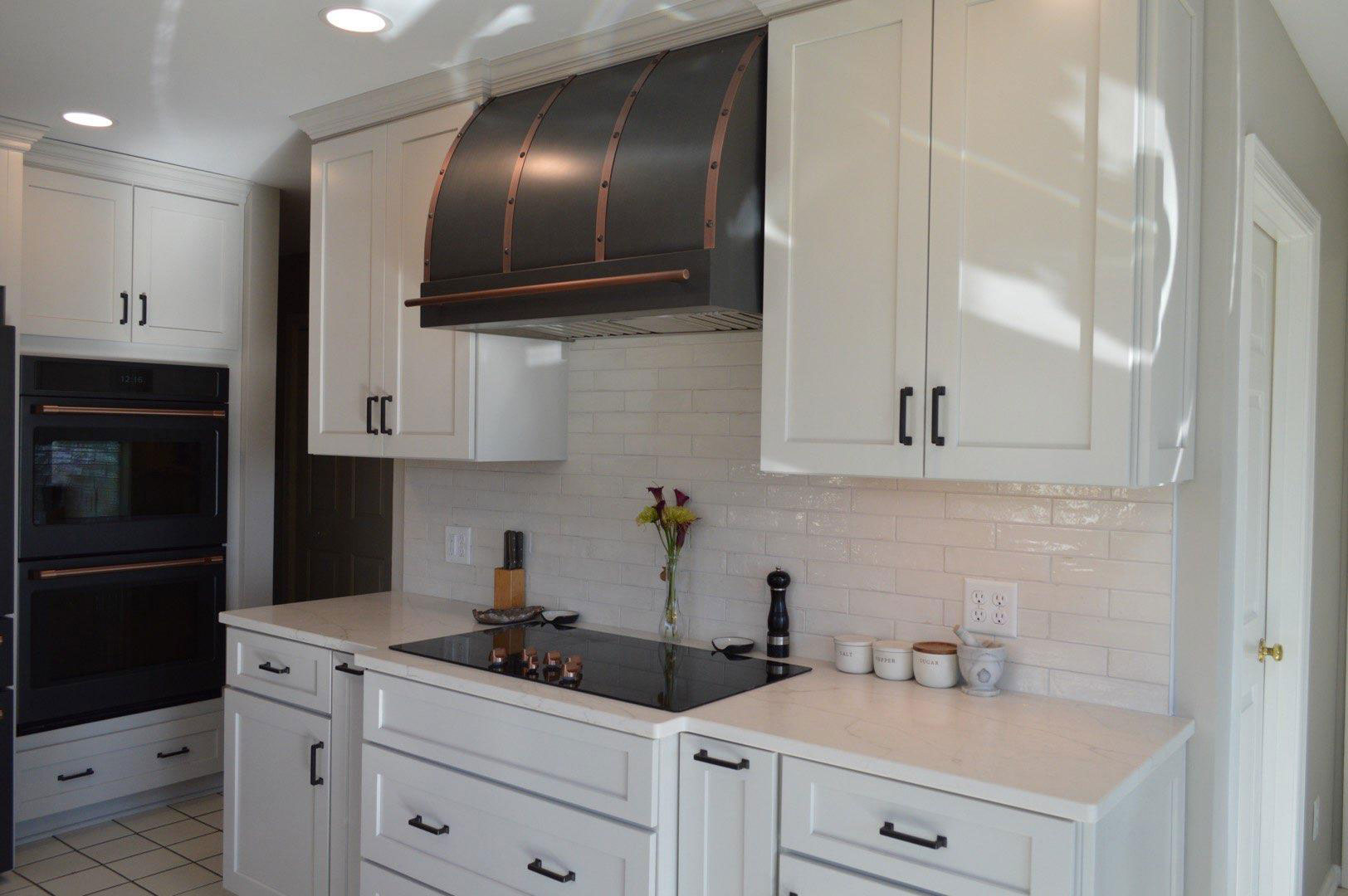
Look at the full elevation before choosing decorative details. A broad apron, a curved profile, straps and trim each change the visual weight of the hood. Compare the surface beside the backsplash, cabinet color, flooring and nearby metals.
Stainless steel range hoods may provide a neutral relationship to appliances, while a copper range hood can introduce warmth or an evolving finish. design preferences are useful inspiration, but a photograph does not establish the dimensions or installation conditions for your room.
Review the height of the chimney and any required extension with the ceiling measurement. Do not confuse the decorative cover with the exhaust duct. Confirm how joints, seams and access panels will be resolved. range hood finish · range hood costs
Budget for the complete installation
Price the hood and all necessary ventilation components together with ductwork, electrical work, structural support, cabinetry adjustments and labor. A custom finish or shape may be only one part of the cost. Avoid comparing a decorative shell with a complete functioning system as though they were equivalent products.
When setting a budget, decide which choices materially improve daily use and which are visual preferences. Review delivery, installation responsibilities and the approval process before ordering. Customer reviews
Prepare a clear specification
- Cooking-appliance manufacturer and complete model number.
- Room and cabinet drawings, including ceiling height.
- Required hood dimensions and mounting position.
- Ventilation components and proposed duct or recirculation arrangement.
- Electrical, structural and service-access requirements.
- Material, finish, trim, lighting and control preferences.
These details help you think about performance and use expert tips to evaluate the perfect product for your kitchen. You can embrace current trends selectively while keeping the long-term layout and care requirements central. Explore finishes · Trade program
Installation, operation and care
Follow the hood and cooking-appliance instructions and applicable local requirements. Have qualified trades handle the relevant work. Verify mounting, duct connections, electrical supply, clearances and service access before the installation is closed up.
Use the hood while cooking food and follow the manufacturer's guidance for starting it and allowing it to run after cooking. Keep filters and collection areas maintained. Care for the metal exterior according to its finish; a cleaner suitable for stainless may not suit patinated copper or coated brass.
Replacing an existing hood
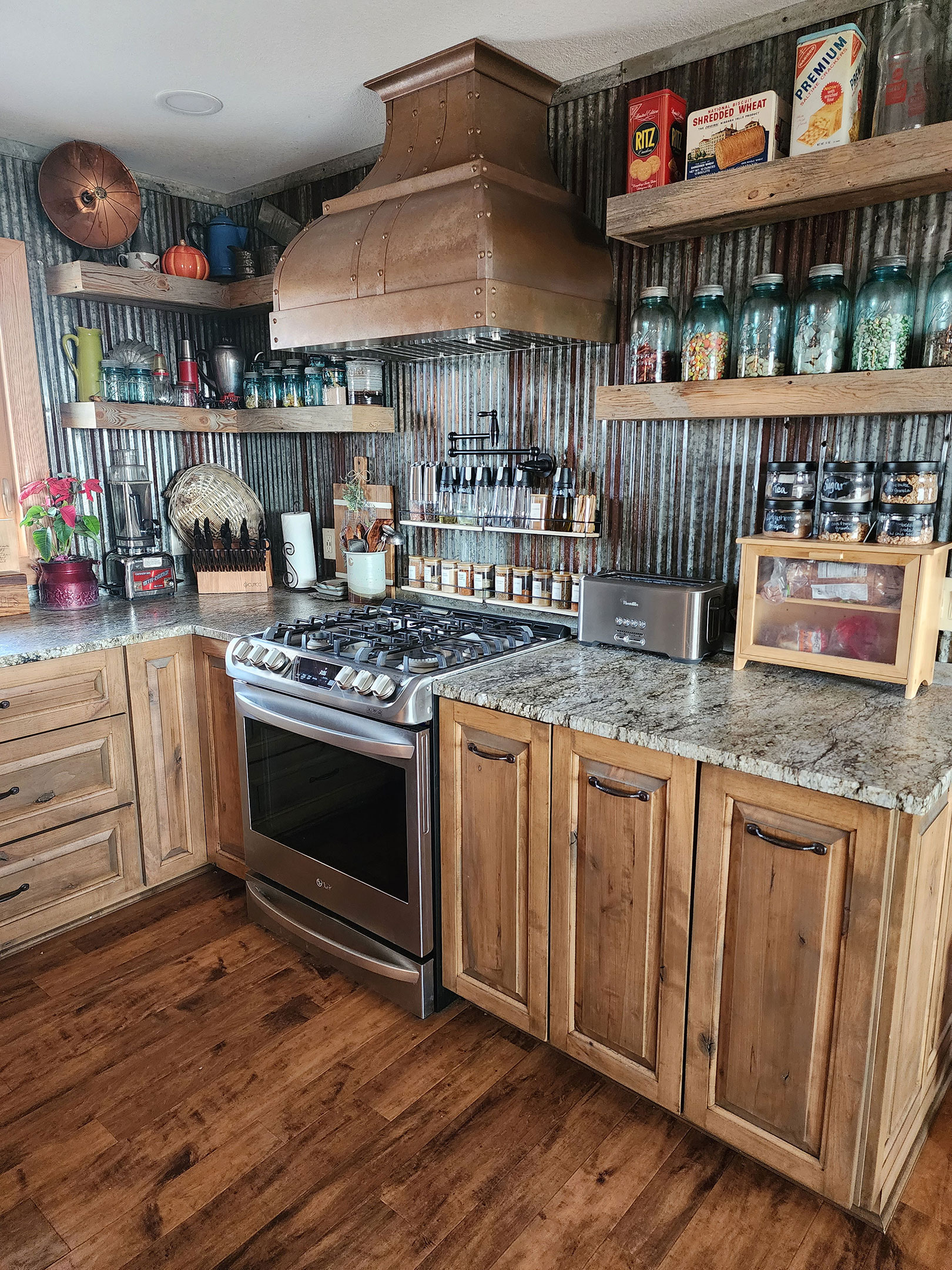
Record the old model, cooking appliance and specific problem. Inspect the existing duct route and dimensions before assuming a new unit can use the same connections. A new shell does not correct an unsuitable duct or unsupported installation.
Use the range hood selection process to separate appearance changes from ventilation needs. Start your project
A brief perspective on hood development
Kitchen ventilation developed alongside changes in fuel, cooking equipment and buildings. Historical discussions of supply and exhaust air provide context, but present-day installations depend on current equipment requirements. New controls and design options should be judged by their usefulness rather than novelty alone.
Compare copper range hoods and black range hoods within your own design brief. When evaluating a range hood company, look for clear specifications, compatible components and support for the installation. Searches such as hauslane range hood should lead to a check of the actual brand and model represented by the destination.
Bring the whole kitchen into view
Metalwork elsewhere, including copper farmhouse sinks, can relate to the hood without duplicating its finish exactly. The same attention to proportion can extend outdoors to fire pits. Make each product choice on its own functional requirements. replacing an old range hood



 By submitting, you agree to our Privacy Policy & Terms