

The useful future of range hood technology is easier operation, clearer performance information and equipment that remains serviceable. Sensors, connected controls and new filtration ideas deserve evaluation at the model level. A feature described as smart is not automatically more effective at capturing cooking emissions.
Technology worth evaluating
Control
Does it make ordinary use easier?
Evidence
Is the performance claim documented?
Service
Can it be maintained within the finished kitchen?
Automation should solve an ordinary problem
Automatic fan adjustment can reduce the number of manual steps during cooking. Ask what the sensor measures, which speeds it can select and how the user overrides it. A heat or air-quality sensor is not necessarily artificial intelligence, and a product should not be described as learning your habits without evidence.
Automatic does not always mean AI
Sensor
Identify what is measured.
Response
Confirm the available automatic actions.
Override
Keep usable manual control.
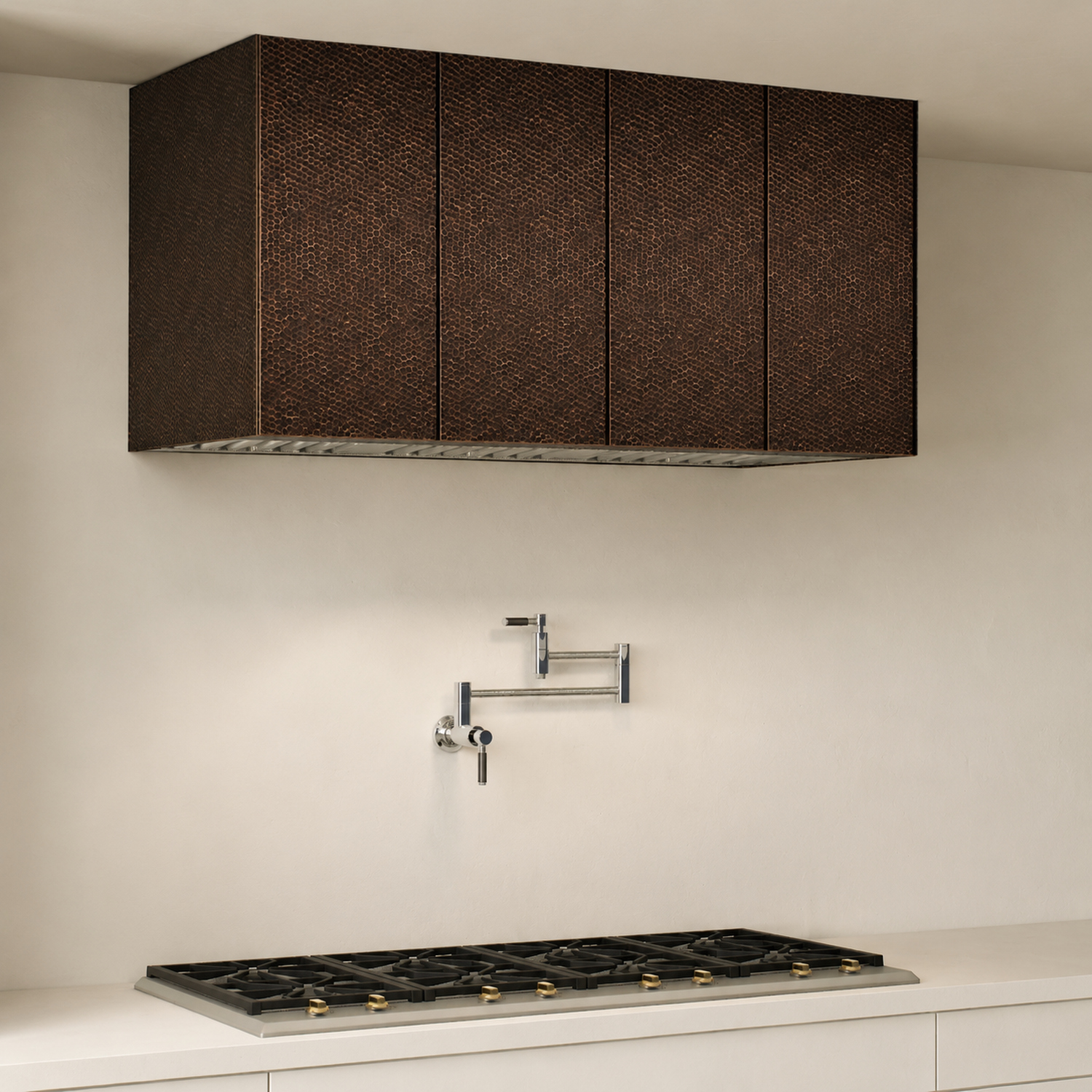
Connected controls need a complete compatibility check
Some systems offer app controls, status information or coordination with a compatible cooking appliance. Confirm the exact models, supported region, network requirements and available functions before specifying them. Do not assume that every hood works with every voice assistant or smart-home platform.
Keep ordinary controls accessible. Ask what happens when Wi-Fi is unavailable, whether essential ventilation functions remain usable, and how software updates and account access are supported over the product’s life.
Check the connected system
Compatibility
Exact models, region and supported functions.
Continuity
Essential operation when the network is unavailable.
Support
Updates, account access and stated support period.
The Matter 1.3 device specification includes an extractor-hood device type. Support in a standard does not establish that a particular hood is certified or that all optional functions are implemented. Check the product documentation.
The UK National Cyber Security Centre’s smart-device guidance recommends checking the manufacturer’s support period and keeping software updated. Include those questions in a connected-appliance purchase.
Evaluate filtration by the claim being made
Grease filtration, odor treatment and particle capture are different tasks. Check the filter type, replacement interval, cost and tested performance for the actual system. A HEPA label on a separate air cleaner does not mean that filter can be fitted to a range hood.
Treat claims about plasma, ultraviolet treatment or sterilization cautiously. Ask for independent evidence, relevant safety information and any potential byproducts. Filtration does not automatically make recirculation equivalent to exhausting captured air outdoors.
Match filtration to the claim
Grease
Specified filter and cleaning access.
Odor
Compatible treatment and replacement schedule.
Other claims
Independent evidence, safety information and byproducts.
Efficiency is a system question
Efficient motors, suitable lighting and controls can contribute to an efficient installation. The duct route, operating speed and maintenance also matter. Compare published performance under stated conditions instead of relying on a general low-energy claim.
Solar panels can supply a home’s electrical demand; that is different from a hood having a self-contained solar power system. Keep household energy planning separate from unsupported product features.
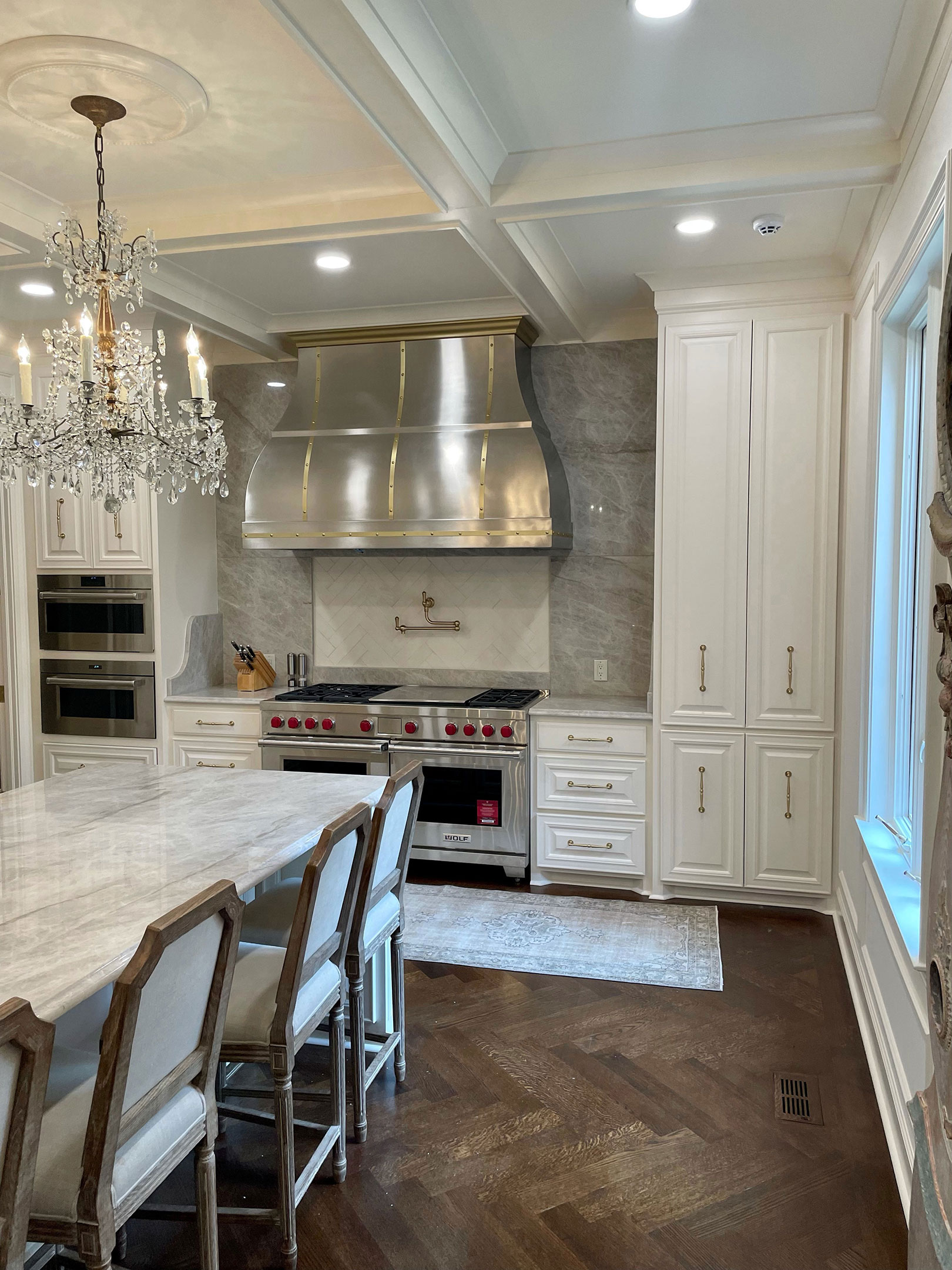
Let service access influence the design
Custom metalwork should allow access to the selected insert, filters, lighting and controls. Establish the service method before closing in the enclosure. Decorative panels and trim should not obstruct airflow or make routine maintenance unnecessarily difficult.
Design for maintenance
Access
Remove filters and service components without damaging the enclosure.
Space
Keep required airflow and equipment clearances.
Parts
Identify replacement filters and service information.
Resolve the technology and visible form together. Review Explore range hoods with the equipment dimensions available, and compare Compare finish samples in the room before final finish approval.
Questions to ask before choosing a feature
- What does this function do on the exact model being ordered?
- What evidence supports the performance claim?
- Can the essential controls be used without an app?
- Which filters and replacement parts will be needed?
- How can the equipment be serviced inside the finished hood?
A useful feature earns its place
Need
Name the everyday task it improves.
Proof
Review the exact model documentation.
Ownership
Understand ongoing maintenance and support.
A clear answer to those questions is more useful than a long list of speculative features. Select technology that supports the way you cook and can be maintained within the finished kitchen.
Review airflow planning alongside the technology, and use installed kitchen examples to assess the visible form.
Start your project with your dimensions, finish preferences and installation requirements.


 By submitting, you agree to our Privacy Policy & Terms