No. 08 / Industrial Coffee House
Foundry
Coffee House
Industrial café design for daily use and an elevated experience.
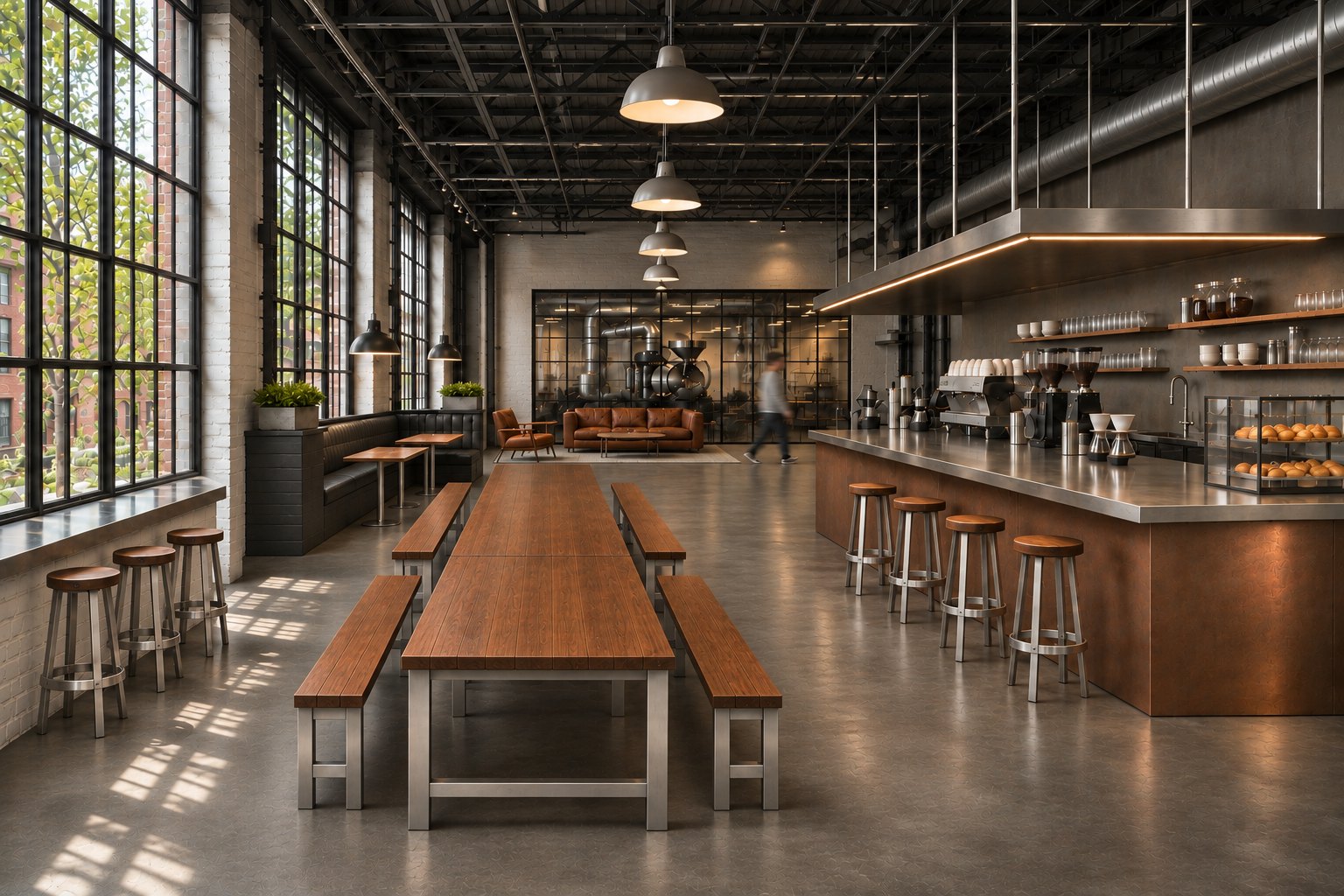
Teak tops and stainless steel bases connect the long communal table with the seating around it. Copper gives the bar a distinct presence within the larger industrial room.
A busy coffee house has to work from the first order through the last conversation. Foundry Coffee House brings teak furniture, stainless steel frames and custom copper metalwork into an industrial interior, with several ways to sit and a clear route to the counter.
The aim is practical hospitality: materials with depth, well-proportioned furniture and a setting that makes an everyday visit feel considered. Wood sits where hands rest. Metal gives the furniture and service areas a common structure. Daylight and softer seating make room for a longer stay.
An industrial room, organized around people.
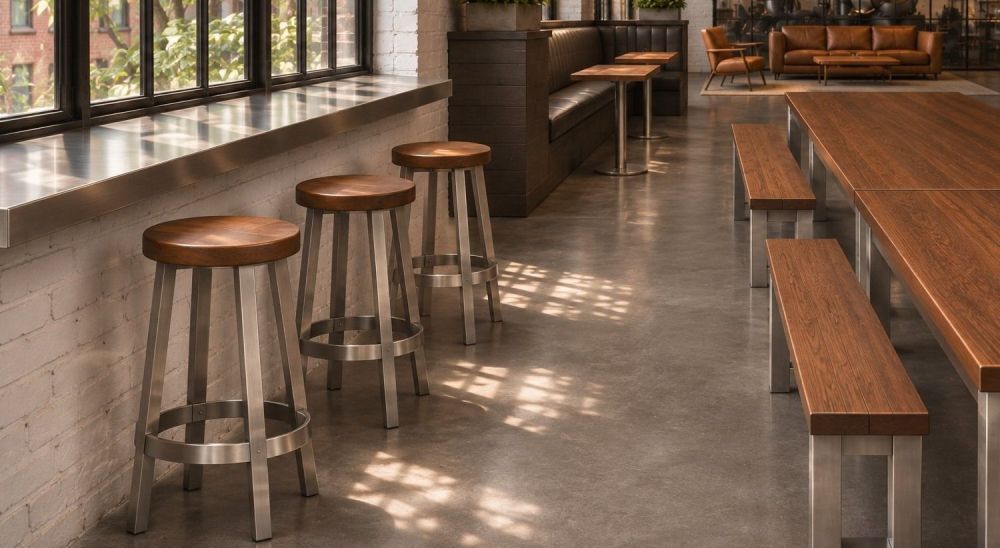
Tall factory windows, pale brick and an exposed roof give the room its scale. Within that shell, seating creates smaller places to spend time: a shared table, stools at the window, a banquette and a lounge farther back. The palette stays restrained so these different settings feel part of one coffee house.
The bar provides a clear destination on arrival. Seating belongs beyond that first movement through the room, with enough space to approach a bench or pull out a stool. A measured plan would establish the final route between ordering, pickup and occupied seating; the concept sets that relationship in motion.
A long table with a clear purpose.
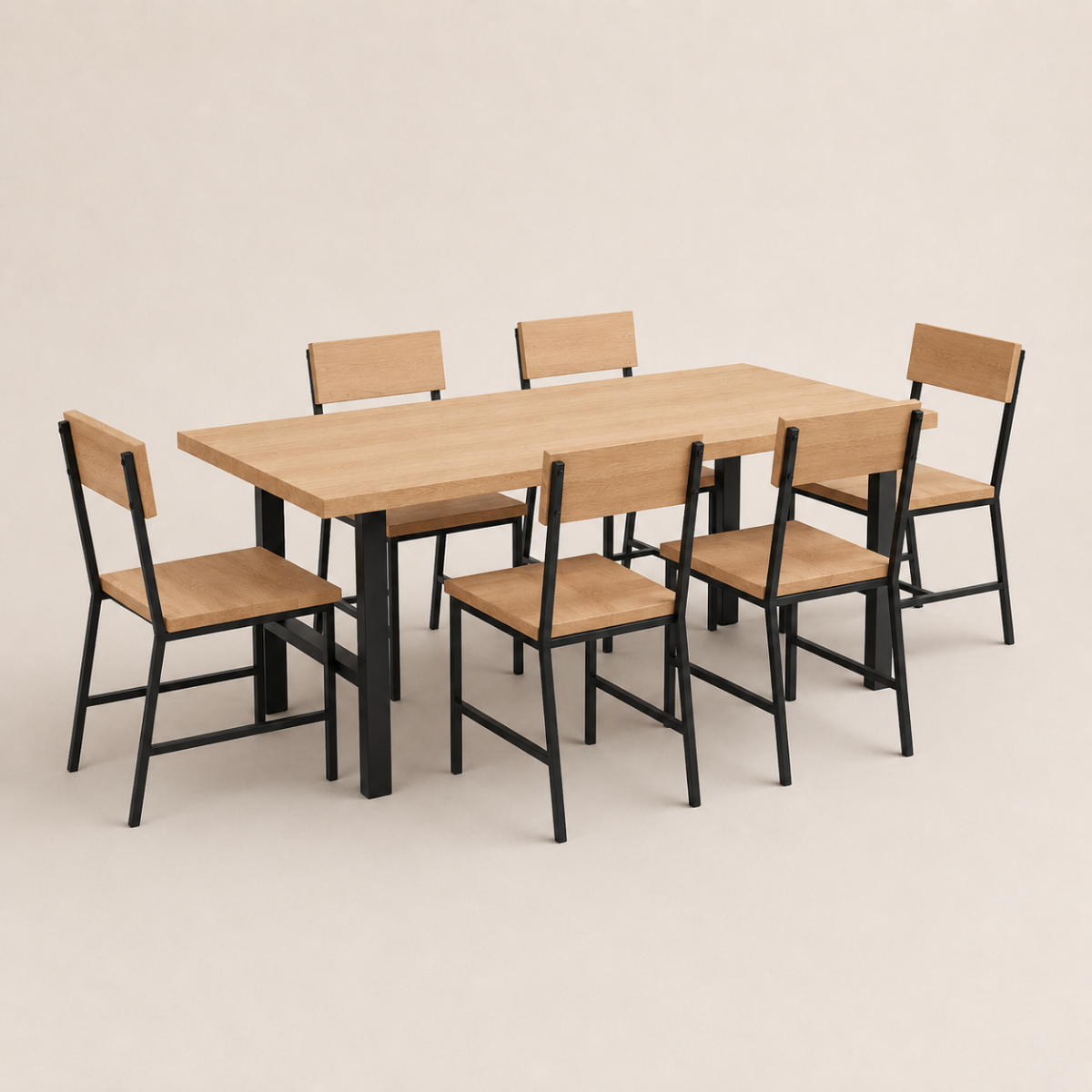
The Industrial ID2 solid wood dining table provides the furniture direction: a substantial wood top carried by an H-frame base. Here, darker teak gives the long table a warmer surface, while satin stainless steel frames relate to the stools and nearby counter. A restrained sheen suits the room better than a mirror finish.
Four bench sections, two on each side, make the table easier to approach than a single uninterrupted bench. The central seam breaks up the long surface and acknowledges how a table of this scale might be assembled. The extended top, joint and companion benches are proposed custom details, to be resolved with the support positions and final dimensions.
Those decisions affect the experience of sitting down. Knees need room around the supports; the benches need space to move; and the table needs a practical route into the building. Reviewing those relationships together keeps the long table useful as well as visually convincing.
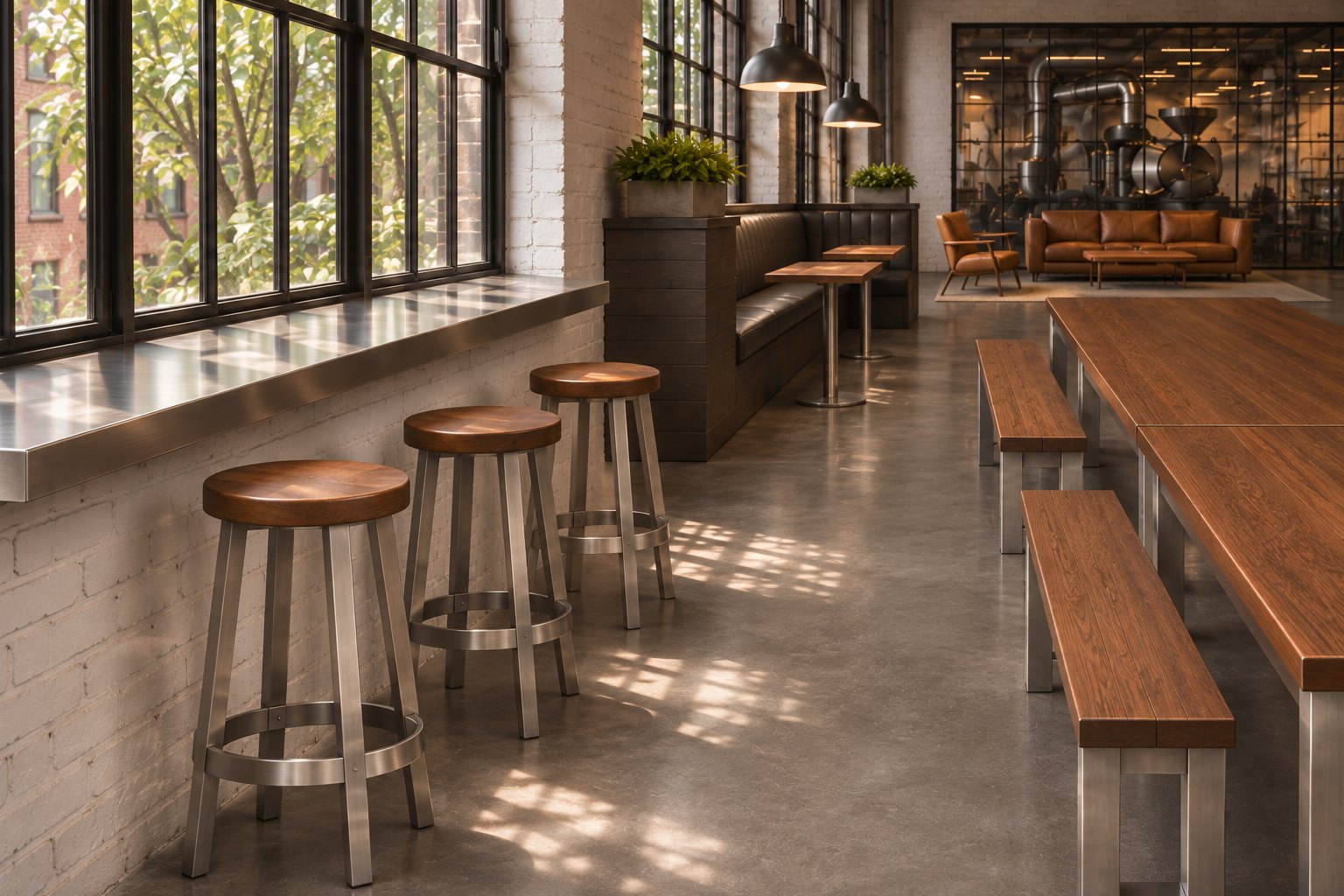
Wood seats and stainless steel frames carry the furniture palette to the window counter, creating a place for a short visit or a quieter pause.
Several ways to stay.
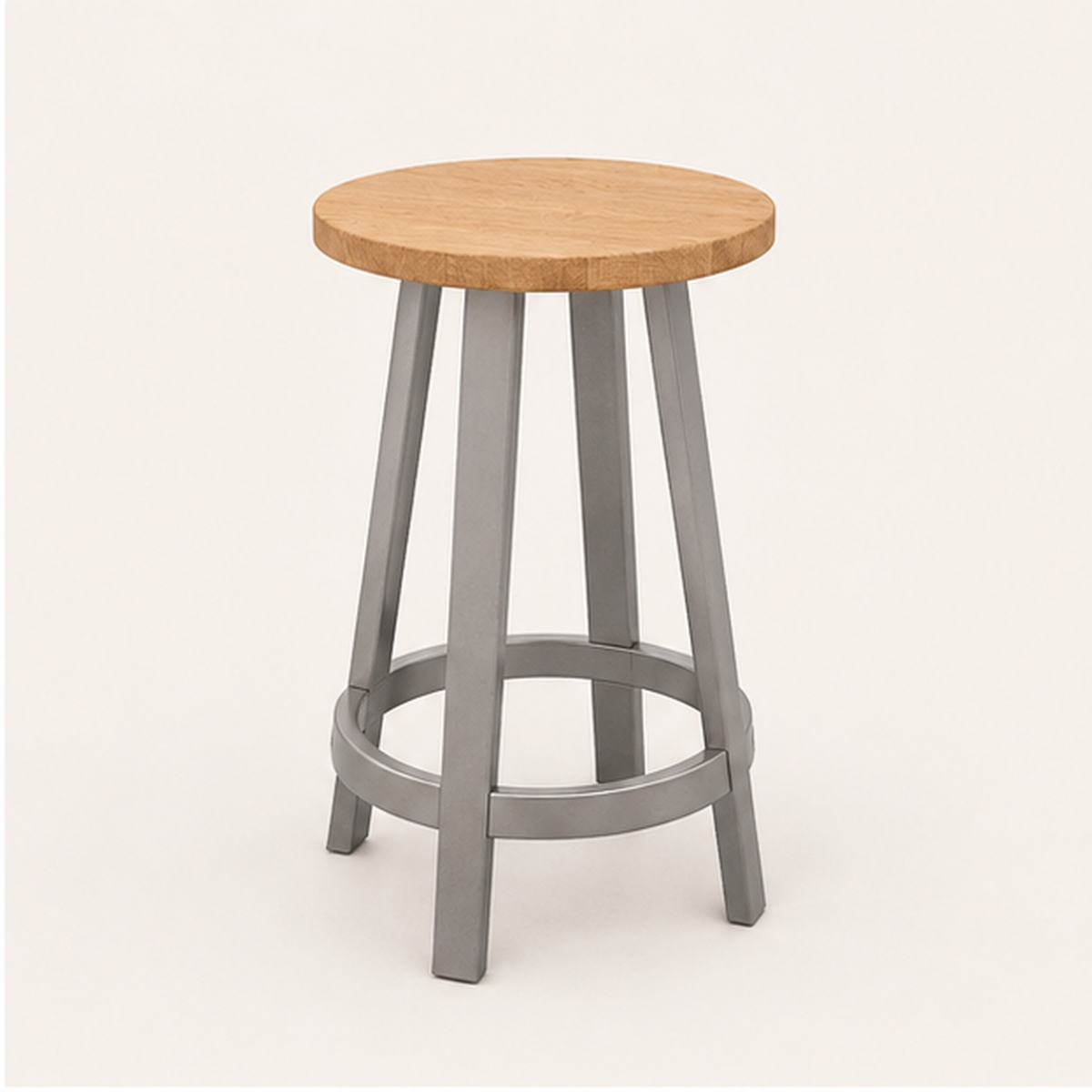
The Classic CS1 freestanding stool brings a round wood seat and a compact metal frame to the straighter lines of the room. Repeating the stool at the bar and window gives the seating a common vocabulary without asking every guest to sit in the same way.
Seat height follows the finished counter height, with the footrest and knee space considered together. The banquette offers a more enclosed setting, while the communal table supports a larger group. Dark upholstery and the rear lounge soften the harder surfaces without introducing another dominant color.
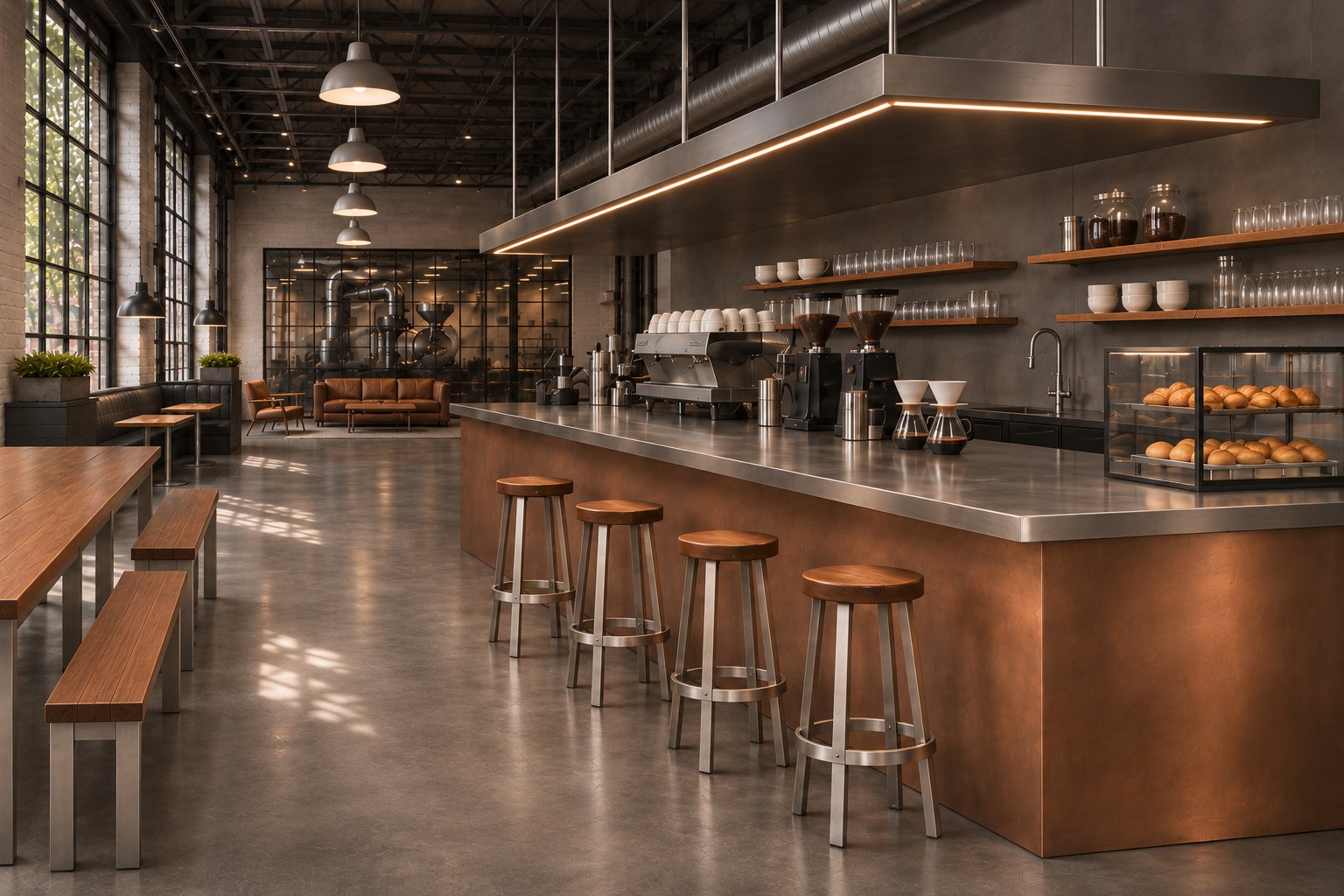
Copper panels face the room, while stainless steel defines the counter and the linear feature above it. The metalwork gives the bar definition without adding another wall of wood.
Custom metalwork makes the connection.
The architectural metalwork brings the bar face, countertops, window ledge and smaller table elements into one material scheme. Copper’s distinctive natural color gives the service area warmth. Stainless steel continues the cooler tone already present in the furniture bases.
The bar needs to be developed around the equipment and the people using it. Panel joints, countertop edges, overhangs, supports and service access should be coordinated in the same drawings. The suspended stainless feature adds another line across the room; its mounting, lighting components and electrical connections would require their own project coordination.
Stainless steel’s chromium content is central to its corrosion resistance. The appropriate grade, surface finish and cleaning approach still depend on where the metal will be used. Selecting those details alongside the visual finish keeps the material choice grounded in the work of a coffee house.
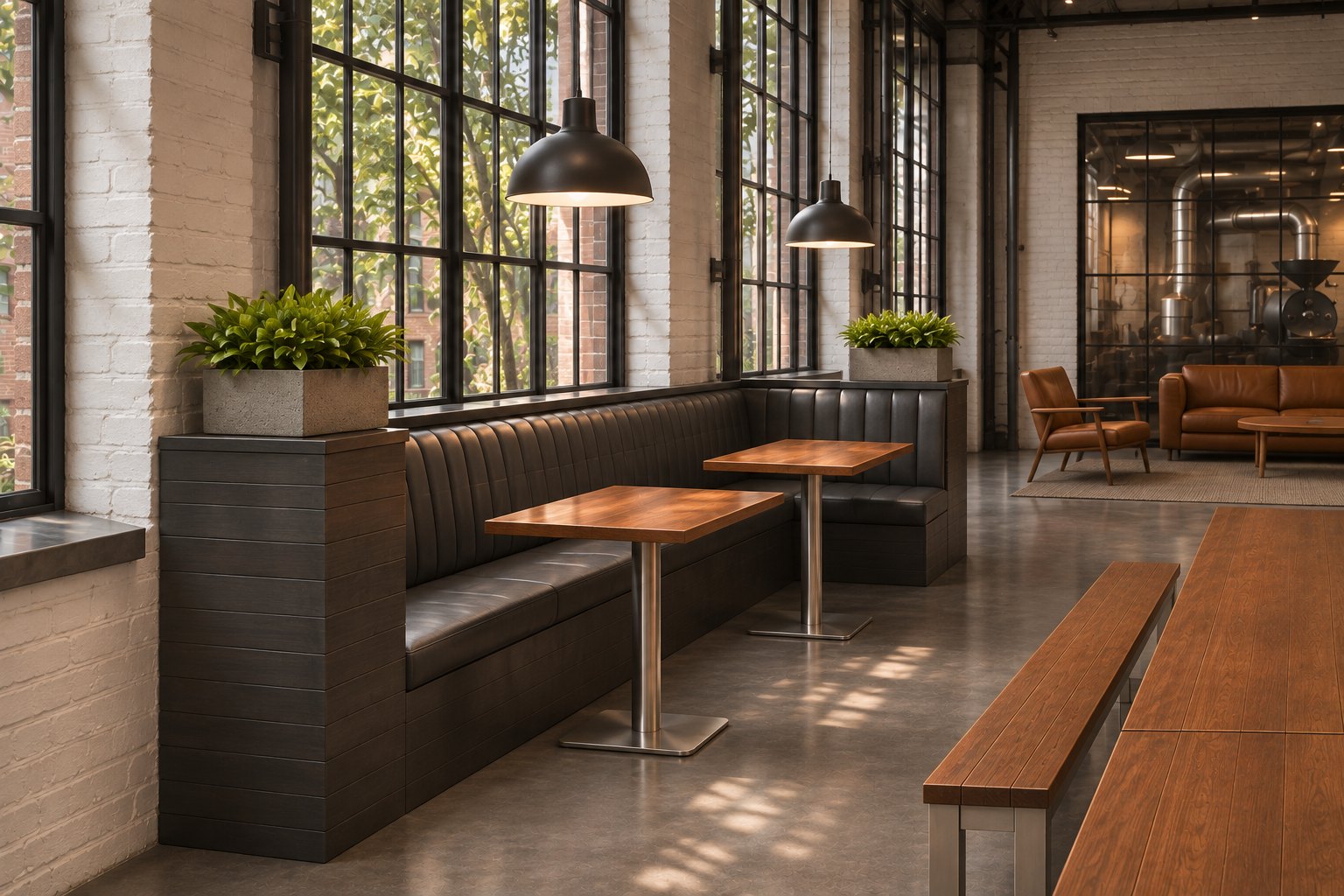
The banquette provides a more enclosed place to sit. Smaller tables and darker upholstery keep the same material direction at a more intimate scale.
Let daylight finish the palette.
The large windows bring variation to the metal surfaces through the day. Stainless steel should pick up the tones around it, with softer highlights and darker areas beneath the table. Copper gives a different response at the bar, where the broad panels hold more warmth.
Review wood and metal samples together in daylight and under the intended practical lighting. The teak should have enough depth to sit comfortably beside the copper, while the stainless finish should relate across table frames, stools and custom work. Small differences are natural; the overall relationship is what makes the room feel unified.
Explore the finish palette
- Teak Wood tops & seats
- Stainless steel Frames & counters
- Copper Bar panels
- Charcoal Upholstery
Illustrative color references; review physical samples for the final material and finish selection.
Explore material samples →Four decisions to resolve together.
- The service route. Map arrival, ordering and pickup against occupied seating.
- The furniture relationships. Check stool heights, bench access, support positions and delivery access.
- The material agreement. Compare teak, stainless steel and copper samples under the intended lighting.
- The custom connections. Coordinate panel joints, supports, equipment and the suspended feature before fabrication.
Walk the plan: approach each seat, take position, operate the nearby fixtures, reach the things you need, share the route, clean and maintain the area, then leave. Review these steps with furniture occupied.
Products in this space.
Two CopperSmith furniture models establish the direction. Project-specific metalwork connects the service areas and smaller details. Catalog imagery shows reference configurations; the concept proposes a darker teak and stainless steel palette.
-
Communal table
Industrial ID2 dining table
A solid wood top and substantial H-frame base establish the long-table direction.
Concept direction: teak top with stainless steel base. The extended table and benches require project review.
Explore the ID2 table →Product details
- Solid wood top with a substantial H-frame steel base. Dimensions and top thickness are configurable.
- Resolve the proposed center joint and companion benches as custom details.
- Catalog image shows a reference configuration; surrounding seating is contextual.
-
Window & bar seating
Classic CS1 stool
A round wood seat, compact metal frame and footrest connect the bar with the window counter.
Concept direction: wood seat with stainless steel frame. Match the final seat height to each counter.
Explore the CS1 stool →Product details
- A solid wood seat, compact metal frame and wraparound footrest define the model. Listed seat heights include 18, 24 and 30 inches.
- Natural teak and brushed or natural stainless steel options are listed; review the complete seat/base configuration and counter relationship.
- Catalog image shows a reference configuration.
-
Bar & architectural details
Custom architectural metalwork
Copper bar panels and stainless steel surfaces bring the furniture palette into the service areas.
Project-specific work: bar panels, counters, ledges, small-table elements and the suspended stainless feature.
Explore architectural metalwork →Product details
- Coordinate dimensions, joints, supports and equipment access in project drawings.
- Develop the suspended feature with appropriate mounting and lighting coordination.
- The concept is a design direction rather than a fabrication specification.
Designing an industrial coffee house.
How can an industrial café feel welcoming?
Offer different ways to sit, place wood where people touch the furniture, and use upholstery to soften brick, concrete and metal. A clear service route also helps the room feel comfortable from arrival.
Should the bar and window stools have the same height?
Only if their finished counter heights and clearances suit the same stool. Check the seat-to-counter relationship, footrest and occupied footprint at each location.
Is the long table a standard ID2 configuration?
The ID2 establishes the model direction. The extended assembly, center seam and four companion bench sections are proposed custom details that need project-specific review.
Can the bar and suspended feature be ordered exactly as pictured?
They require project drawings and specification review. The concept illustrates the material direction; the equipment, supports, connections and lighting components must be coordinated for the actual space.
Bring the materials together.
Begin with the way your coffee house will work: the service counter, the seating mix and the people moving between them. Then develop the furniture and architectural metalwork as a related collection.
Share your plans, dimensions and finish direction with CopperSmith to explore the right products and custom details for your project.



 By submitting, you agree to our Privacy Policy & Terms