How copper and brass finishes age at home
A polished strap catches the light. A weathered sink records daily use. A sealed hood holds its dark tone. The metal matters, but so does the surface you choose.
Six finishes, side by side
Compare the sheen of polished metal, the mottling of Weathered and the darker grain of Dark Antique.
| Polished | Weathered | Dark Antique | |
|---|---|---|---|
| Copper |  | 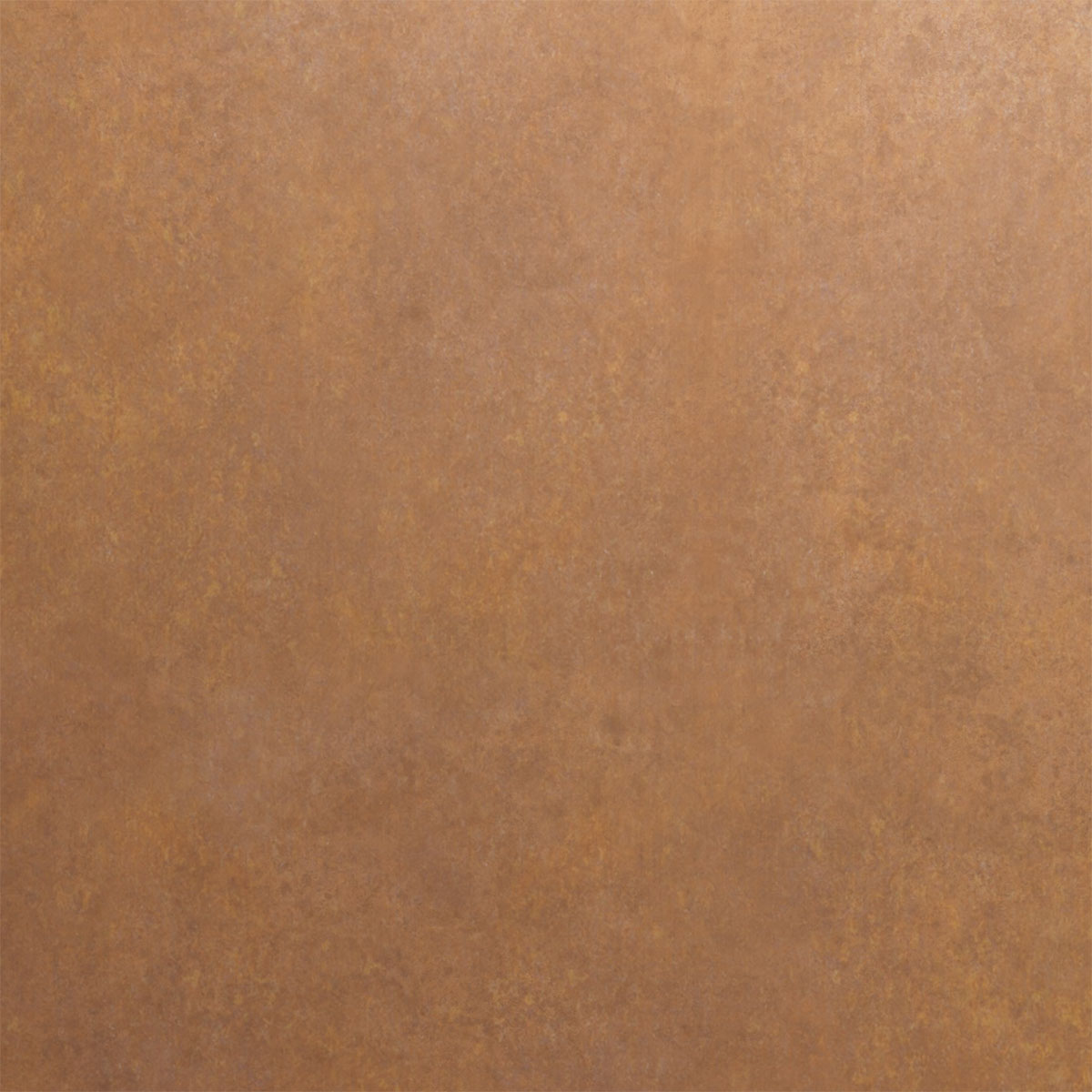 | 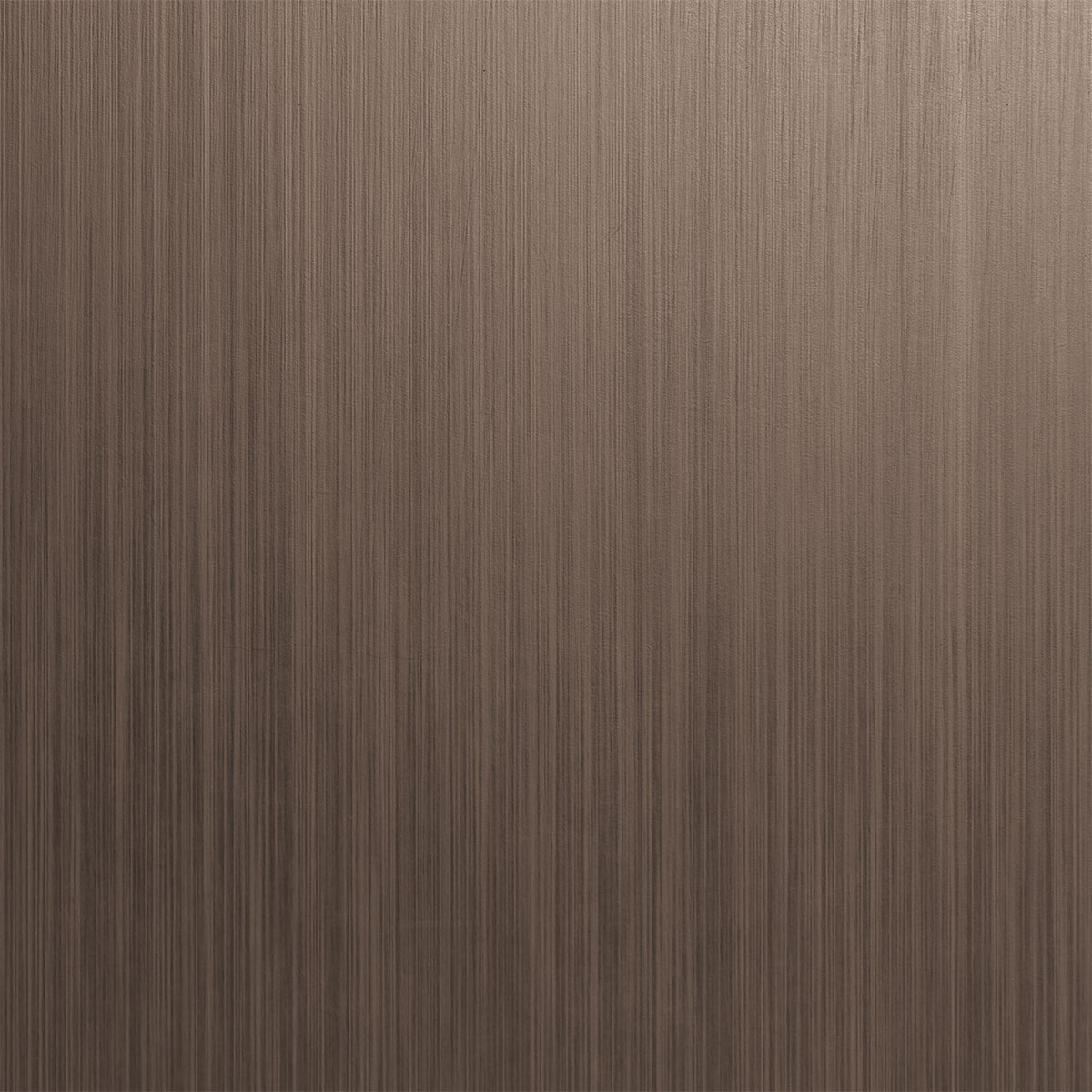 |
| Brass |  | 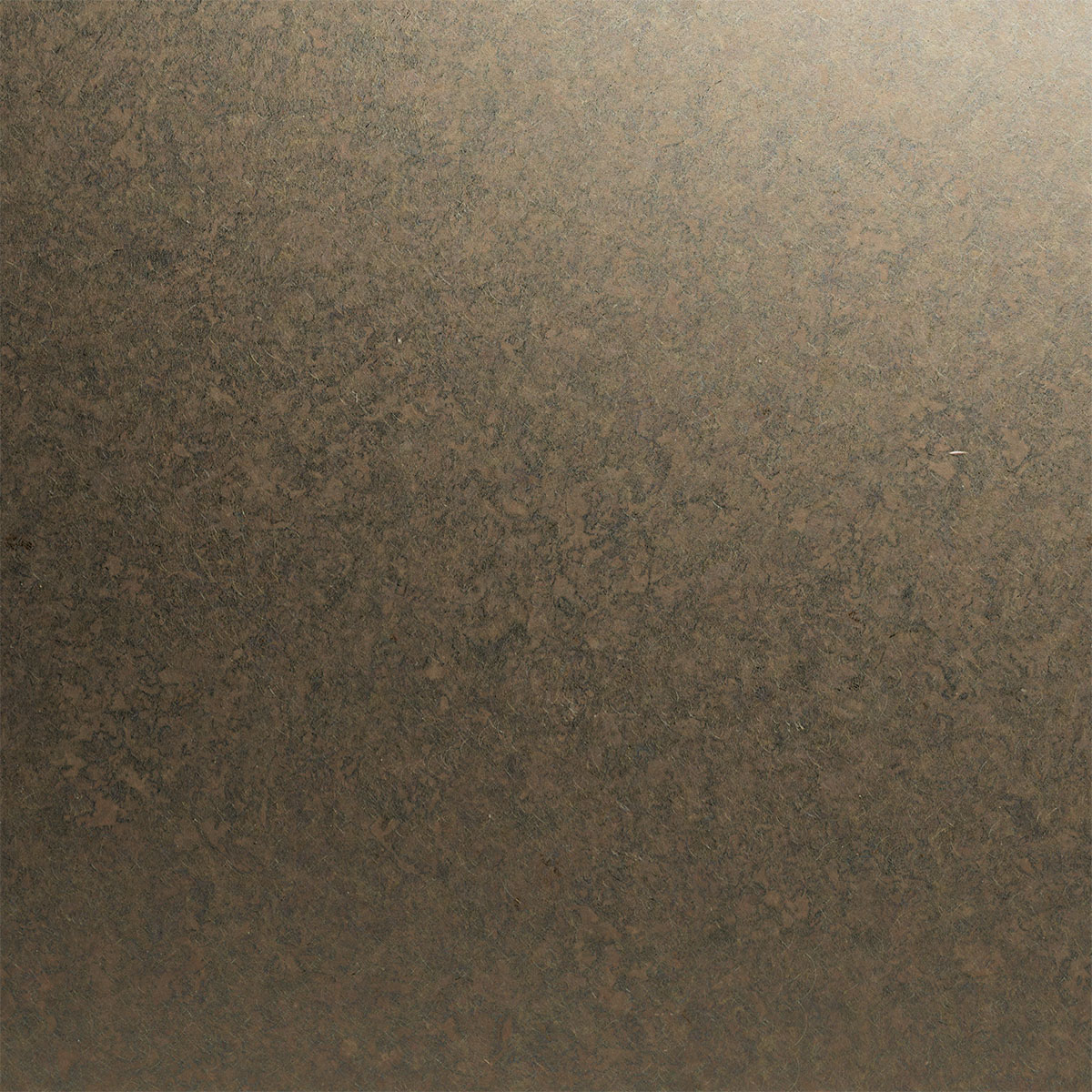 | 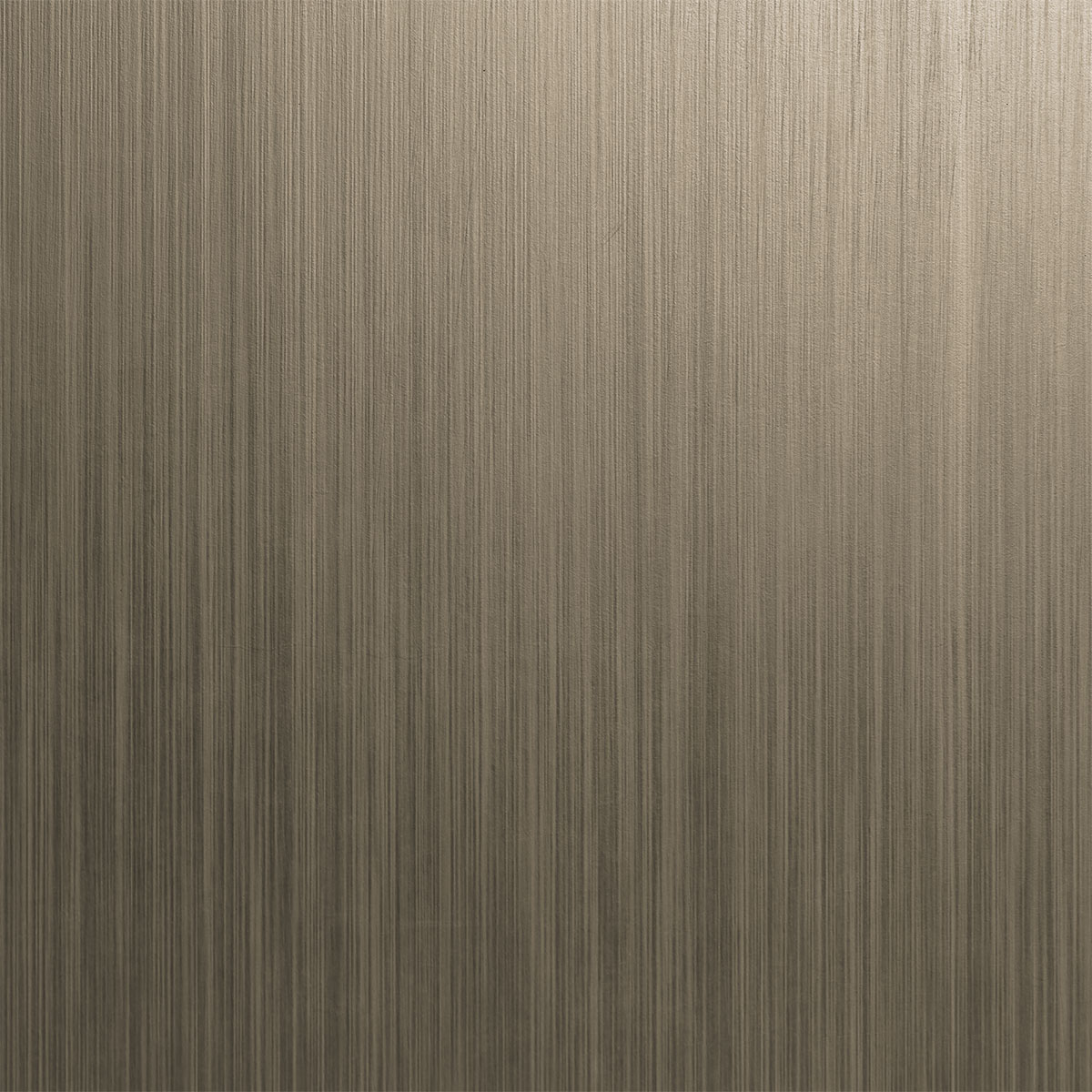 |
Each swatch shows a different CopperSmith Smooth finish as offered. Hold the two closest choices beside your stone or cabinetry in daylight and under the room’s evening lights. View finish samples.
Which appearance do you want to keep?
What does “antique” tell you?
A maker can give new metal an aged appearance before installation. Sculpt Nouveau, for example, documents brown finishes it can produce on either copper or brass. The color treatment establishes the starting tone. A separate clear coat, where specified, helps preserve it. Two pieces can start the same shade of brown and age differently if only one is sealed.[1][4]
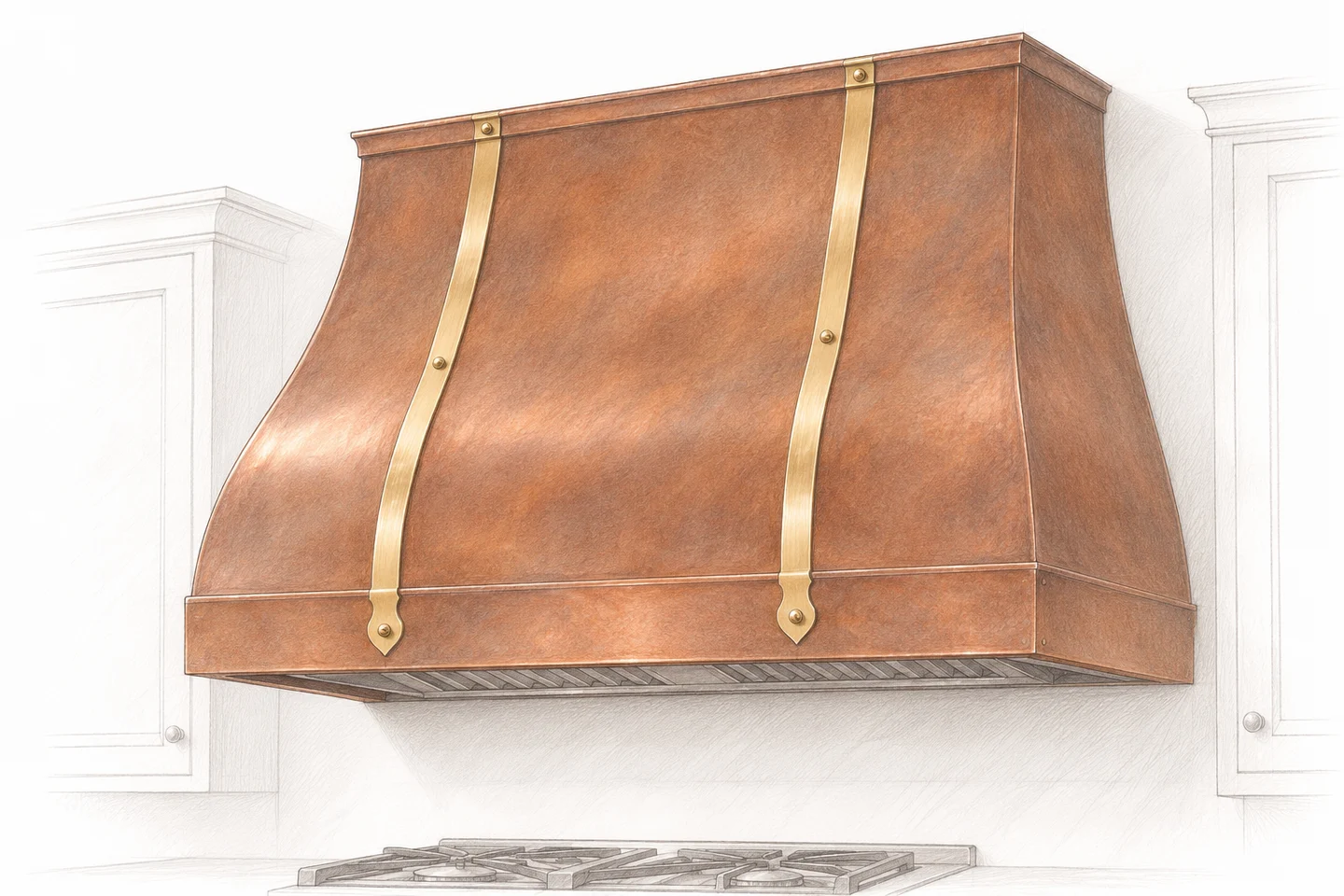
A hood face, a brass strap and a working sink
Specify the hood body and the trim separately
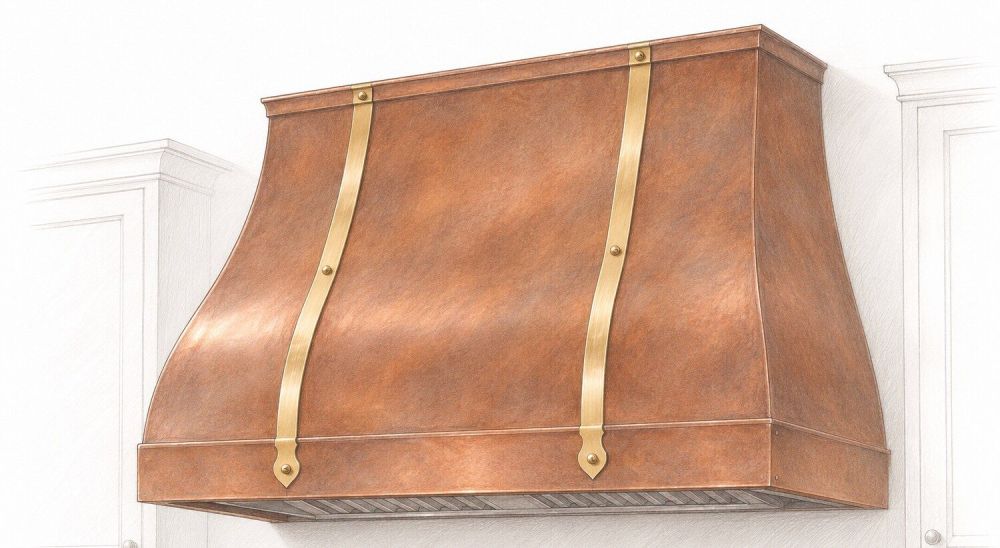
In the sketch, the broad weathered copper face carries the warm color across the wall. The narrow brass straps catch two lines of light. If the design depends on those bright lines, specify how the strap is protected and how the owner will maintain it. If the hood body needs to stay close to a dark cabinet stain, compare a sealed Dark Antique sample beside the cabinet door.
Stand the body sample upright against the backsplash, lay the trim sample across it, then step back to the kitchen entrance. That view tells you more about the contrast than two swatches lying flat on a desk. CopperSmith lists the two polished swatches above for hood accessories. View body and trim options on the Classic CX3.
Specify the sink bowl and the apron separately
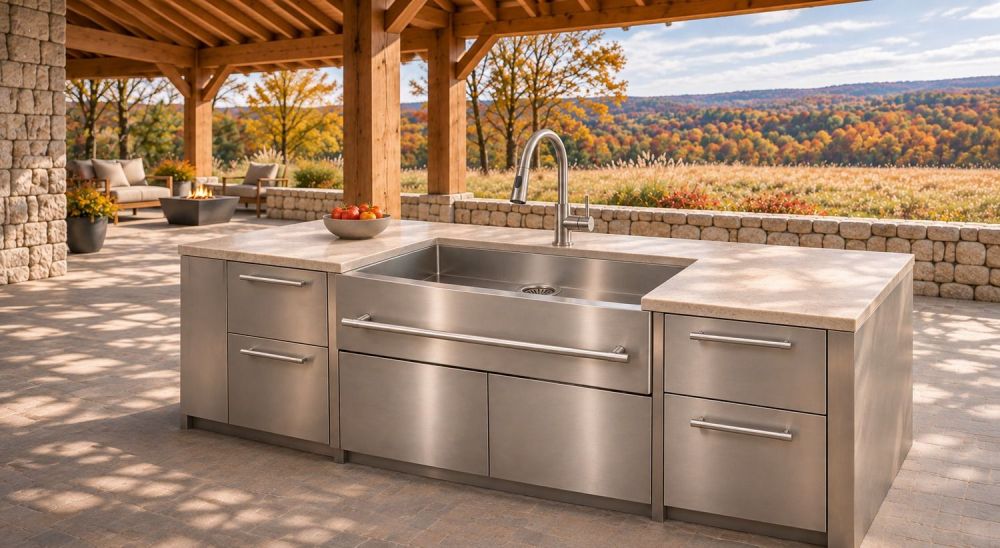
Water, food and wiping reach the bowl every day. The vertical apron catches side light and receives a different pattern of touch. On the Bar SW workstation sink, CopperSmith lists Weathered Copper as a living bowl finish. It starts brown and can acquire brighter or darker patches in use. The location and extent will depend on the household.[5]
The Convex DB farmhouse sink gives separate guidance for the apron. It identifies polished and natural copper and brass as finishes that change with use. The other aprons are sealed or fire-cured according to the selection. On the finish schedule, give the bowl and the apron their own entries.[6]
Does brass tarnish or develop a patina?
Use “tarnish” for the familiar loss of shine on bare polished brass. A polished brass strap may still read as gold after its crisp reflection has softened. “Patina” is a broader term used for an aged or deliberately developed surface on brass as well as copper. The Canadian Conservation Institute shows fresh polish and patination on a single brass object. Sculpt Nouveau describes intentional patinas for brass. For a homeowner, the practical question is whether to maintain a bright finish or allow that surface character to develop.[1][3][4]
Will copper roofs and siding turn green?
For a roof or a broad expanse of siding intended to age in place, natural, uncoated architectural copper is a practical starting point. A bright polished finish makes more sense on a reachable accent when maintaining the reflection is part of the design. A weathered or antique finish makes sense when the color matters on installation day, as it might on a hood above a walnut island.
Bare exterior copper usually darkens through browns before a mature green or gray-green patina appears. There is no 50-year threshold. The Copper Development Association reports that green can develop in roughly five to seven years in some coastal or industrial exposures. A dry climate can leave copper brown indefinitely. The Roof Industry Committee on Weather Issues guide hosted by IBHS gives about 25 years as a common example for full patination on a sloping roof. These examples describe different exposures and stages of development.[2][8]
Even on one house, a rain-washed roof slope and siding protected by a deep eave can age differently. Slope and the amount of moisture each surface receives help explain that difference. An indoor hood has its own exposure, so keep the roof photograph for the exterior palette and approve the kitchen finish from its own sample.[8]
What can the first 60 days tell us?
The indoor comparison asks a narrower question. On samples left undisturbed in the same room, which first changes are visible in the sheen or color? We’ll compare two polished samples of each metal and one sample of each Weathered and Dark Antique finish with its own starting photograph. The sealed Dark Antique Copper is a useful comparison precisely because it may show very little change.
Study status The day 0, 7, 30 and 60 photographs are pending. The six swatches above are catalog references. Findings will be added here once the physical samples have been photographed and reviewed.
| Photo date | What the comparison records |
|---|---|
| Day 0 | Identify each sample, its delivered finish and its protection. Photograph the group and individual faces under fixed light with a neutral reference. |
| Day 7 | Repeat the angle and exposure. On polished faces, compare the sharpness of the reflection as well as the hue. |
| Day 30 | Locate any changes within the original mottling of the Weathered samples. Record the room conditions and any handling. |
| Day 60 | Show matched first and last photographs, including any finish that looks the same. Give the date and specimen ID for each observation. |
The samples will retain their delivered finish through the study. A maintained strap, a working sink and a roof each have a different exposure. For the background on copper colors and general care, see the CopperSmith copper patina guide.
Sources and finish specifications
- Sculpt Nouveau · Traditional Brown Patinas. Documents deliberately applied brown patinas on copper and brass.
- Copper Development Association · How to Apply Statuary and Patina Finishes. Gives climate-specific examples of how long a green patina can take to develop outdoors.
- Canadian Conservation Institute · Recognizing metals and their corrosion products. Includes a photographed example of partly patinated brass.
- Canadian Conservation Institute · Care of brass and copper. Distinguishes cleaning, polishing, protective finishes and tarnish.
- CopperSmith · Bar SW workstation sink. The bowl finish selector identifies Weathered Copper and describes the living finish.
- CopperSmith · Convex DB farmhouse sink. The apron specification distinguishes finishes that age with use from sealed or fire-cured options.
- CopperSmith · Signature SX5 finish options. Describes the role of sealed hood finishes and identifies the finish sample as the reference for living selections. CopperSmith identifies the Dark Antique Copper discussed here as sealed.
- Insurance Institute for Business & Home Safety · RICOWI copper roof guide. Section 3.1 discusses natural aging, roof slope and arid climates.



 By submitting, you agree to our Privacy Policy & Terms