

To clean a copper table, first identify the finish. Remove loose dust with a soft cloth, use the approved mild cleaning method, and dry the surface promptly. Polishing, stripping patina and applying wax are separate decisions; they are not automatic steps in every cleaning routine.
A copper tabletop earns its place through the texture, tone and edge that relate it to the room. Good care preserves that intention. A bright polished top, an unsealed living finish and a coated surface should not all receive the same treatment.
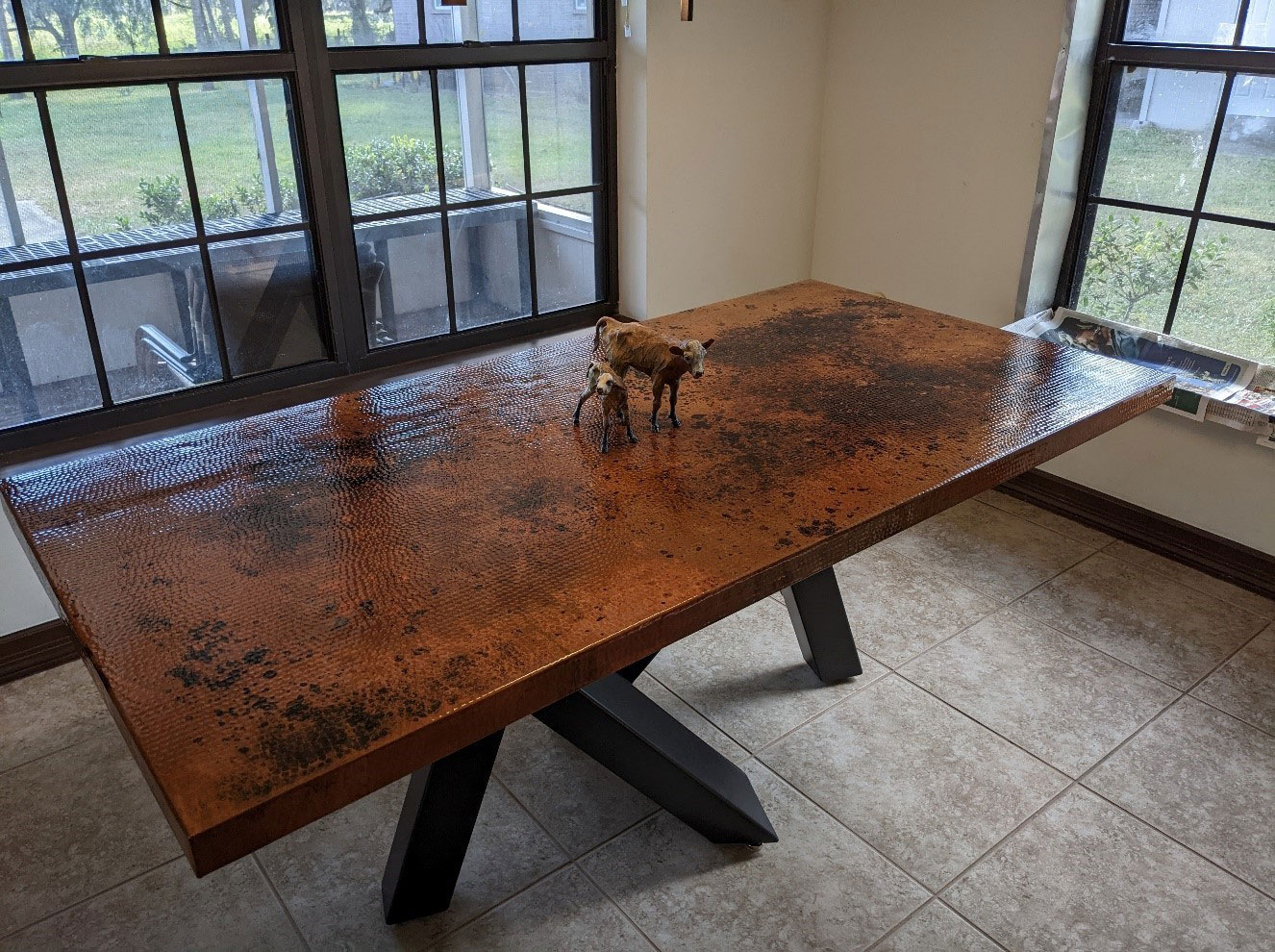
Three Steps to a Clean Copper Table
A Simple Care Sequence
1. Identify the surface. Find the finish description and care instructions. Determine whether the top is coated, waxed, polished or intended to develop a living patina.
2. Remove soil gently. Lift away loose grit with a clean soft cloth. Use the manufacturer-approved cleaner and a lightly dampened cloth for remaining soil. Avoid flooding seams, edges and the underside.
3. Dry and protect. Remove cleaning residue as directed and dry the surface. Return coasters, placemats and suitable heat protection before using the table. Apply a wax or other treatment only when specified for that finish.
Clean spills when they occur rather than waiting for a fixed calendar date. Dusting frequency depends on the room and use. A dining table used every day needs a different routine from a console that holds a lamp and a vase.
For copper tables, the finish should guide that routine from the start. The surface in a busy dining area will meet food, drinks and moving tableware, so keep its care instructions close at hand.
Materials for Copper Table Maintenance
Keep clean, soft cloths for dusting, washing and drying. A mild soap-and-water method may be appropriate when the maker permits it, but the cleaner’s compatibility matters more than whether it is described as “natural.” Use a small amount of moisture and remove residue as instructed.
A cloth carrying grit can scratch a surface even when the cloth itself is soft. Wash or replace it when needed. For stuck-on material, use an approved method to soften and lift the deposit instead of increasing pressure or reaching for an abrasive pad.
Cleaning and restoration have different purposes. GSA’s guidance on copper-alloy architectural features distinguishes cleaning from treatments that address deterioration and coatings. Its professional conservation procedures are not household table-cleaning recipes, but the distinction is useful: removing dirt should not unintentionally remove the chosen finish.
When Should You Apply Wax?
Only apply a wax when it is approved for the surface, and follow the stated preparation, quantity and renewal instructions. A lacquered or otherwise coated top may not need wax at all. “Wax after every wash” is not a universal rule, and adding layers can create buildup or interfere with later care.
The material, finish and treatment history matter more than the table’s age. If those details are unknown, establish them before testing a polish or protective product.
Products and Methods to Avoid
Avoid abrasive pads, steel wool and unapproved scouring powders. Acidic mixtures, strong alkalis, solvents and cleaners intended for another material can change a patina or damage a coating. A cleaner’s advertising, fragrance or requirement for gloves does not tell you whether it is suitable for the table.
Do not use salt, lemon juice, vinegar or ketchup as a general maintenance recipe. These ingredients may remove tarnish from exposed copper, but that means they can also remove a finish you wanted to keep. Salt crystals and other particles can add abrasion.
If sanitation is required for a particular use, obtain a compatible procedure from the finish supplier. Copper’s material properties do not eliminate the need for normal hygiene, and a household table should not be treated as a certified antimicrobial surface without product-specific evidence.
Everyday Protection
Coasters help separate glasses and cups from the finish. Choose clean, nonabrasive undersides and check beneath them for trapped moisture. Placemats can reduce contact with plates and cutlery; lift them after use so the surface can be inspected and dried.
Use heat protection suited to the table’s construction. Copper metal conducts heat, but the complete top may also contain coatings, adhesives or a supporting substrate. Do not place a hot pan directly on it simply because the visible surface is metal.
Lift decorative objects instead of sliding them. Protect the feet of lamps, bowls and accessories with a compatible material. A tablecloth can be useful for a particular activity, but a damp covering left in place may create a different problem.
What Happens If a Table Is Not Cleaned?
Food residue, dust and moisture can accumulate and affect the appearance. Acidic spills may leave a lighter or otherwise altered patch. These changes are different from ordinary patina and from physical damage to the metal or coating.
Deal with the cause first: remove soil using the approved method and dry the area. If a mark remains, identify it before escalating to a stronger product. Photograph the area and ask for finish-specific guidance when the next step is uncertain.
Patina, Tarnish and Polishing
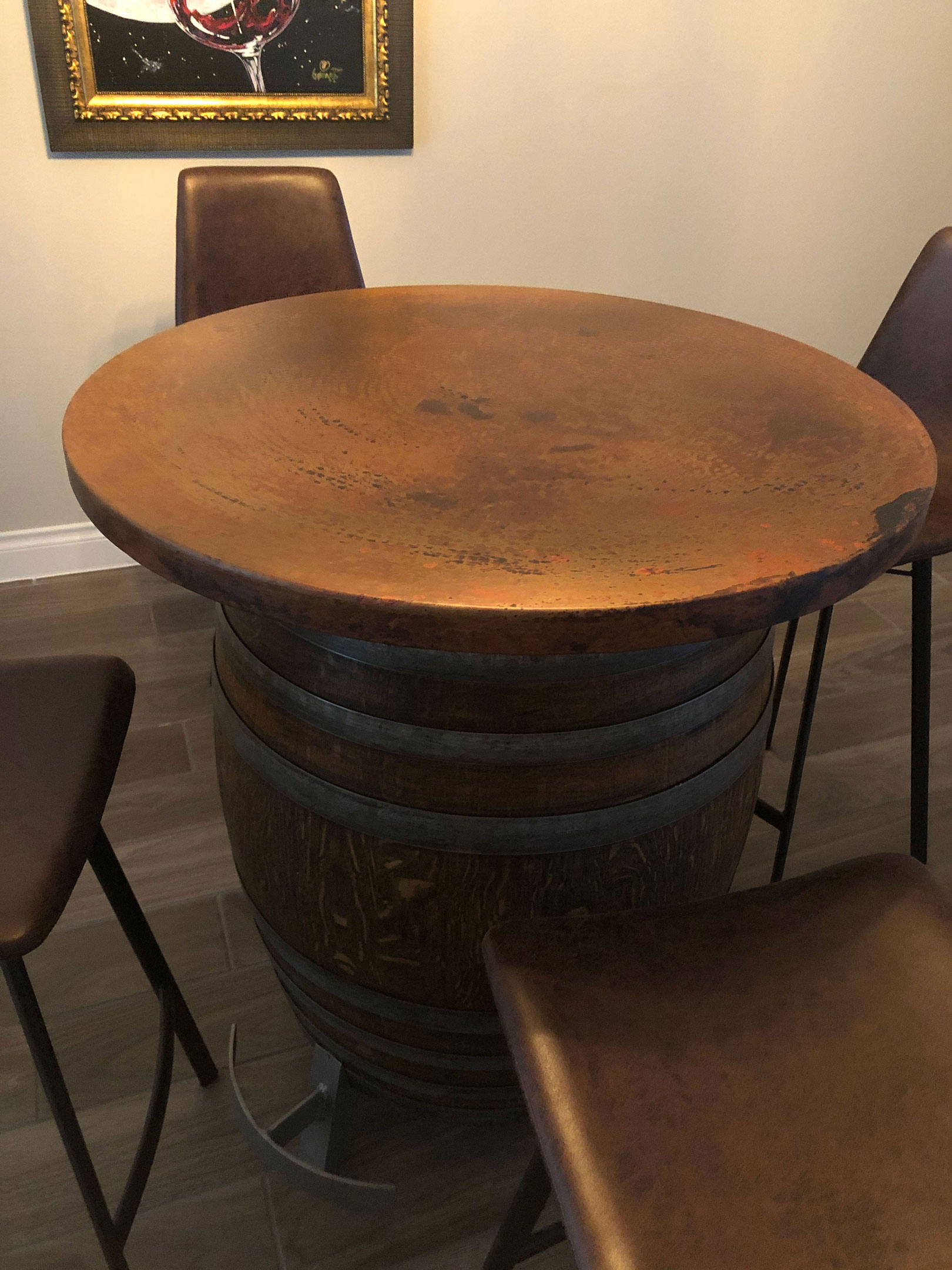
Patina is part of many copper designs. The Museum of Fine Arts’ patina reference describes surface changes that develop over time and distinguishes them from a bright, newly polished appearance. A darker surface is not automatically dirty or defective.
Polishing changes the surface by removing material or surface products. It can create a brighter patch that differs from the surrounding top. Decide whether the goal is to clean the existing finish or restore a different appearance before choosing the method.
Guides to various natural copper cleaners often focus on exposing bright metal. That is a different goal from preserving an aged tabletop. Advice intended to make copper shiny and beautiful should be checked against the approved finish instructions, not applied simply because the ingredients are available in the kitchen.
Testing a mixture on a coin does not establish its suitability for your furniture. Coins may have a different composition, coating and surface history. The table’s substrate and edge construction add further considerations.
What If the Surface Is Scratched?
A scratch is a physical change. Exposed copper within it may darken over time, but patina does not fill the groove, repair a coating or guarantee an invisible result. Avoid sanding or polishing a small area without guidance, since the repair attempt can enlarge the visible difference.
The room environment can influence surface reactions, but it cannot provide a reliable deadline for a scratch to disappear. Coated and uncoated surfaces also behave differently. Record the finish and the cause of the damage before asking about repair options.
Identify the Mark Before Treating It
Loose soil or fingerprints: begin with the approved cleaning method and a clean soft cloth.
Water residue or a ring: remove moisture promptly; ask about a compatible treatment if ordinary cleaning does not remove the mark.
A color change in living copper: consider whether it is normal surface variation before attempting to polish it away.
A scratch, dent or damaged coating: seek a repair assessment. Cleaning alone cannot reverse mechanical damage.
Styling a Copper Table Without Hiding the Surface
Let the top’s texture and tone carry some of the room’s detail. A simple bowl, a low arrangement or a small group of objects can leave the surface visible. Consider how the finish relates to nearby wood, upholstery and lighting rather than matching every accessory to copper.
A design such as the Serria hammered copper kitchen table can suggest a direction, but confirm the current model and configuration before relying on an older product reference. If you want to compare the broader collection, click on over to our product pages today.
Choose accessories for both appearance and contact with the top. A rough ceramic base, an overflowing planter or an unprotected candle can affect the finish. A protective tray may help, provided its underside is compatible and the area beneath it remains clean and dry.
What Makes a Copper Table Suitable for Daily Use?
Gauge and material composition are only part of the specification. Ask about the copper surface, supporting construction, seams, edge, base attachment and coating. Total tabletop thickness is not the same measurement as metal thickness.
The appearance of All of our copper tables depends on those details working together. With a secondhand piece, request the original specification or have it assessed before choosing a restoration method. Whether it sticks to a magnet is not a conclusive purity test: a nonmagnetic result does not distinguish copper from every other nonmagnetic metal, and hidden steel components can affect the result.
Do not use acids to test authenticity on a finished table. The test itself can damage the surface you are trying to understand.
Explore table designs to compare forms, view customer reviews for ownership perspectives, or compare copper products to coordinate a table with the rest of the room.
Frequently Asked Questions
Can I Use Vinegar on a Copper Table?
Not as a default cleaning method. Vinegar can change exposed copper and an applied patina. Use it only if the manufacturer specifically approves it for the exact surface and purpose.
Does Every Copper Table Need Wax?
No. The coating or finish system determines whether wax is appropriate. Follow the specified product and renewal instructions rather than applying it on a fixed schedule to every table.
Will a Darkened Table Become Bright Again With Ordinary Washing?
Ordinary washing removes soil. Returning an aged copper surface to a bright appearance usually involves a separate finish-changing treatment, which should be planned deliberately.
Originally published August 23, 2016. Updated October 31, 2026.


 By submitting, you agree to our Privacy Policy & Terms