

The best copper farmhouse sink for your kitchen fits the cabinet, accommodates the items you wash, and has a finish you want to live with. Begin with the bowl layout and installation requirements, then compare thickness, apron form, texture, and patina. A sink should work with the kitchen’s daily routines as clearly as it works with the cabinetry.
What Are Farmhouse Sinks?
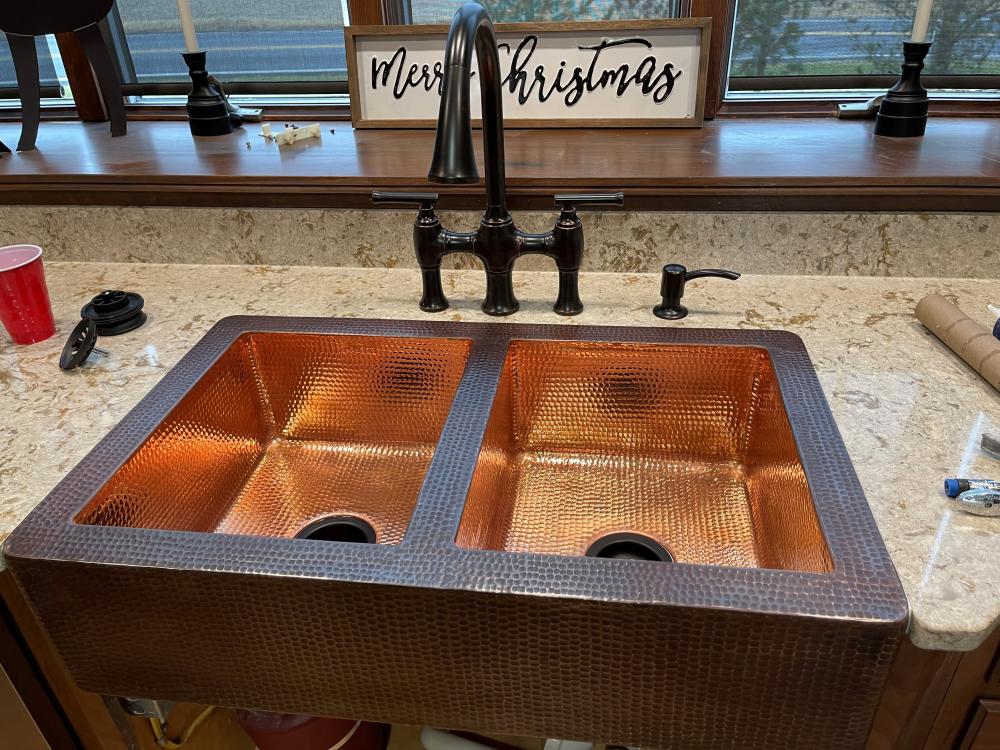
A farmhouse sink is commonly identified by its exposed apron front. That front becomes part of the cabinet elevation, while the basin can be configured for different washing and preparation tasks. The style can suit a traditional room or a restrained contemporary kitchen; the profile and finish determine much of its visual character.
Accounts often describe farmhouse sinks as developed in the 1600s. For today’s selection, the useful question is how the “apron-front” design affects the cabinet, countertop, and your reach into the bowl. An apron does not guarantee a comfortable working height for every user.
Farmhouse Sink Materials
Farmhouse describes a form rather than one material. Copper, stainless steel, fireclay, and other constructions have different weights, surface characteristics, and installation needs. Compare the complete sink rather than assuming that all copper sinks are lighter, more durable, or easier to install than alternatives.
Copper offers a visible metal surface whose texture and tone can play a substantial role in the room. On a living finish, use can change that appearance. If you prefer a more controlled initial tone, establish the available finish and coating before ordering.
Choose the Layout Around Your Routine
Single or Divided Bowl
A single bowl offers uninterrupted room for larger pans. A divided bowl creates separate zones, but each bowl has less usable width than the full sink. Measure the largest tray or pot you wash and compare it with the internal dimensions, including the divider and corner shape. An outside width alone does not tell you whether that item will fit.
Drainboards and Workstation Accessories
A drainboard can provide a dedicated wet area, while a workstation ledge may support a board, rack, or colander. These are different arrangements. Confirm what is included, how accessories fit, and whether the adjacent counter still has enough clear preparation space. Do not assume every sink can accept an integrated drainboard.
A copper farmhouse sink should be considered with the faucet and disposal. Check spout reach, sprayer movement, drain compatibility, and the space beneath the cabinet. A side-positioned drain can change the available storage and plumbing route.
Review Construction and Drain Details
Ask how the bowl and seams are formed, what materials join them, and what documentation applies to the finished sink. The method name alone does not establish whether a joint is suitable. Avoid blanket claims that every soldered seam leaks or every welded sink has identical quality.
When a certification is claimed, check the exact product and scope. NSF’s explanation of certification describes testing and continuing oversight, rather than a general promise attached to a material name. Do not infer certification or lead-content compliance from a finish photograph.
Confirm the drain opening, drain assembly, overflow arrangement if any, disposal fit, and required fittings with the installer. A familiar-looking opening is not a substitute for matching the documented components.
Smooth or Hammered Copper?
Smooth copper draws attention to the form and broader reflections. Hammered copper introduces a repeated texture that may make small surface variations less visually prominent. Neither appearance proves how the sink was made or guarantees resistance to scratches and dents.
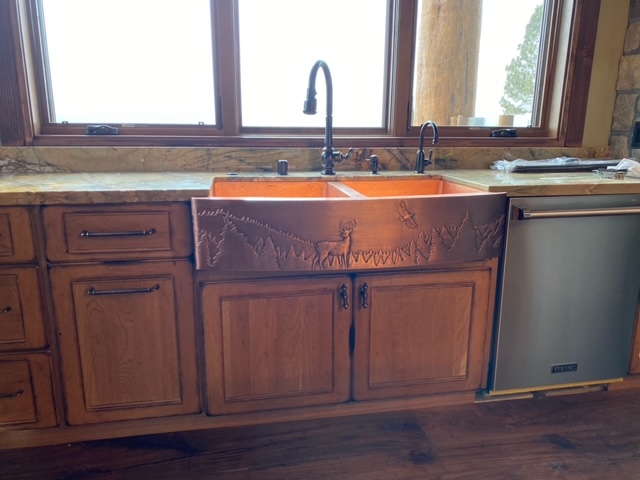
Review the apron and bowl separately. The visible front can have a stronger texture while the working basin follows the available product specification. Keep the approved sample and finish name so that a photograph is not the only record of the decision.
Understand Gauge Without Losing the Larger Picture
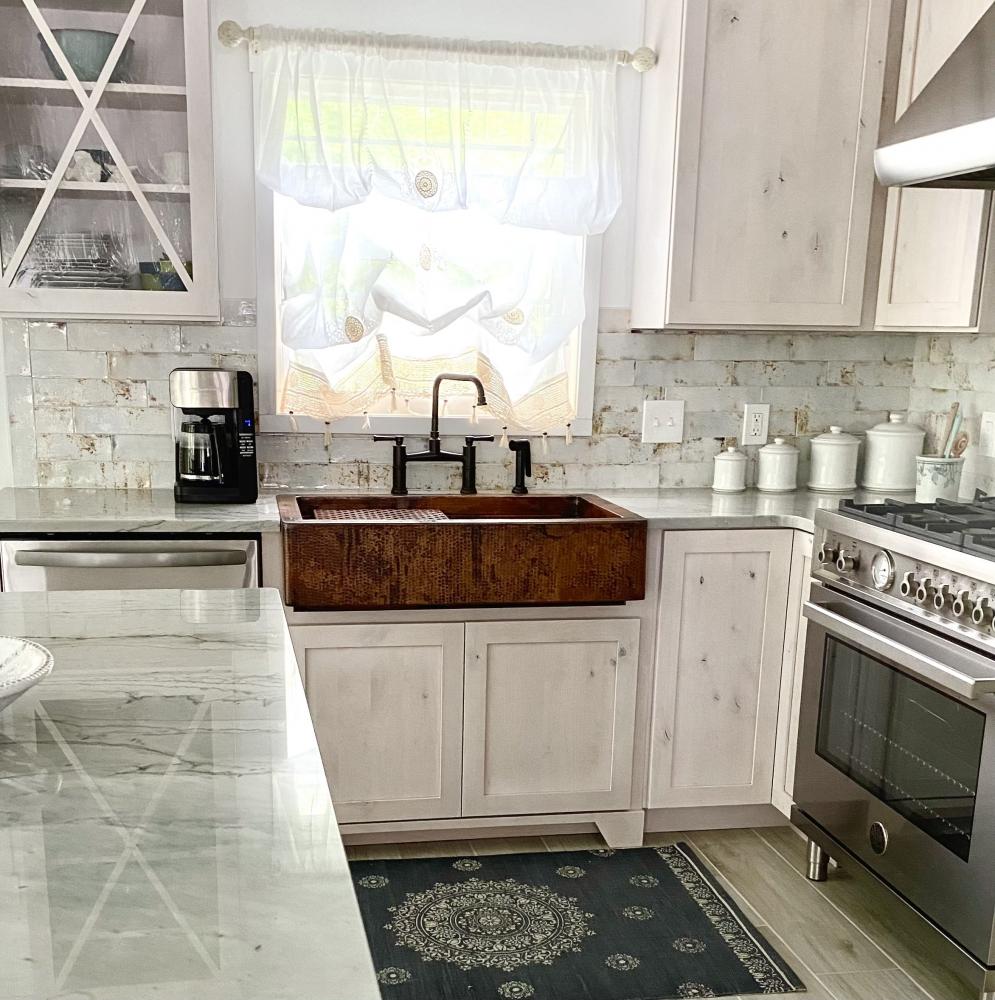
Gauge is a thickness designation. Within the same applicable system, a lower gauge number generally describes thicker sheet, but a gauge value is not itself a dimension or a weight per square foot. Ask for the actual thickness if you need a precise comparison. Gauge ranges do not end universally at 14 or 20.
The current Farmhouse SB configuration lists 16-gauge and 14-gauge options, with separate apron and bowl finish selections. That is a model-specific example, not a statement that every sink offers the same choices. Compare the supported configuration, attachment, and finish alongside the metal thickness.
The related Thicker gauge copper sinks article can help frame the comparison. Thickness is one input; forming, support, seams, and installation still matter. A thicker sheet does not remove the need for a correctly prepared cabinet.
Patina, Coatings, and the Appearance You Prefer
A copper sink can arrive with an intentionally developed tone or a brighter surface. An unsealed living finish may darken and vary through exposure, water, and use. A coating adds a different surface layer and maintenance requirement. Choose either on its documented suitability, rather than following a universal rule to avoid all sealants.
There is no reliable six-week or one-year timetable for every sink. A kitchen basin experiences different conditions from an exterior roof, and one part of a bowl may change faster than another. Bright marks from an acidic spill may develop new color over time, but a precise match or repair should not be promised.
When comparing copper sink finishes, decide whether you want a surface that develops visible variation. The idea of natural copper sinks should still include the exact metal, finish treatment, and care instructions; the word natural alone does not establish performance.
Maintenance and Staining
Keep food residue and standing cleaning products from remaining on the surface longer than necessary. Use the approved cleaner, rinse as instructed, and dry when the product guidance recommends it. Drying a sink is a care practice, not evidence that its metal is impure.
Do not use a fixed waxing or polishing schedule copied from another product. Copper cleaner can change a patina; a wax or sealer can change the supplied surface. The care method must match the finish, including the bowl, apron, and any accessories.
Copper is not scratch-proof, stain-proof, or self-sanitizing. Continue routine kitchen cleaning and safe food handling. An antimicrobial finding for a tested copper surface does not mean a purchased sink remains free of harmful bacteria.
Mounting, Size, and Cabinet Preparation
Choose the sink before the countertop opening and cabinet front are finalized. Confirm the outside envelope, usable bowl dimensions, apron height and projection, support method, countertop reveal, and faucet location. Drop-in and undermount details are model-specific.
A deep bowl may be useful for pans, but it can also mean reaching farther down during washing. Mock up the rim and basin height with the intended users. Review clearance for the disposal, supply lines, drawer hardware, and service access before approving the installation.
Bring these details to the installer
Cabinet and counter
Opening, support, front clearance, reveal, and countertop fabrication sequence.
Daily use
Largest pan, preferred bowl split, faucet reach, and accessory layout.
Product record
Model, material, gauge or thickness, finish sample, drain assembly, and care instructions.
Cost, Durability, and Choosing a Supplier
Compare the installed scope: sink, accessories, shipping, cabinet changes, countertop work, plumbing, and support. A lower purchase price may exclude components you need; a higher price does not prove quality by itself. Neither copper nor a farmhouse form guarantees a resale-value increase or a particular lifespan.
Ask for clear product information, delivery terms, inspection steps, warranty coverage, and the process for addressing a problem. Keep the approved specification and order records. A review can help assess service, but it does not replace the model’s dimensions and construction details.
For the final copper farmhouse sink decision, set the intended use beside the approved finish rather than choosing on price or color alone.
Frequently Asked Questions
Should I choose a single or double bowl?
Choose a single bowl if uninterrupted space is your priority. Compare a divided bowl if separating washing and rinsing tasks matters more. Test the usable dimensions against your largest items.
Is 14-gauge always the right choice?
It is a thicker option than 16-gauge within the same applicable system, but the best specification also considers construction, support, finish, and budget. Compare the actual model options.
Can a farmhouse sink fit an existing cabinet?
Possibly, but the cabinet front, support, counter opening, and plumbing must be assessed. Confirm the installation before ordering rather than relying on the nominal sink width.
Originally published November 26, 2014. Updated October 30, 2026.


 By submitting, you agree to our Privacy Policy & Terms