

Understand why copper sinks change color and how the selected finish shapes their appearance over time.
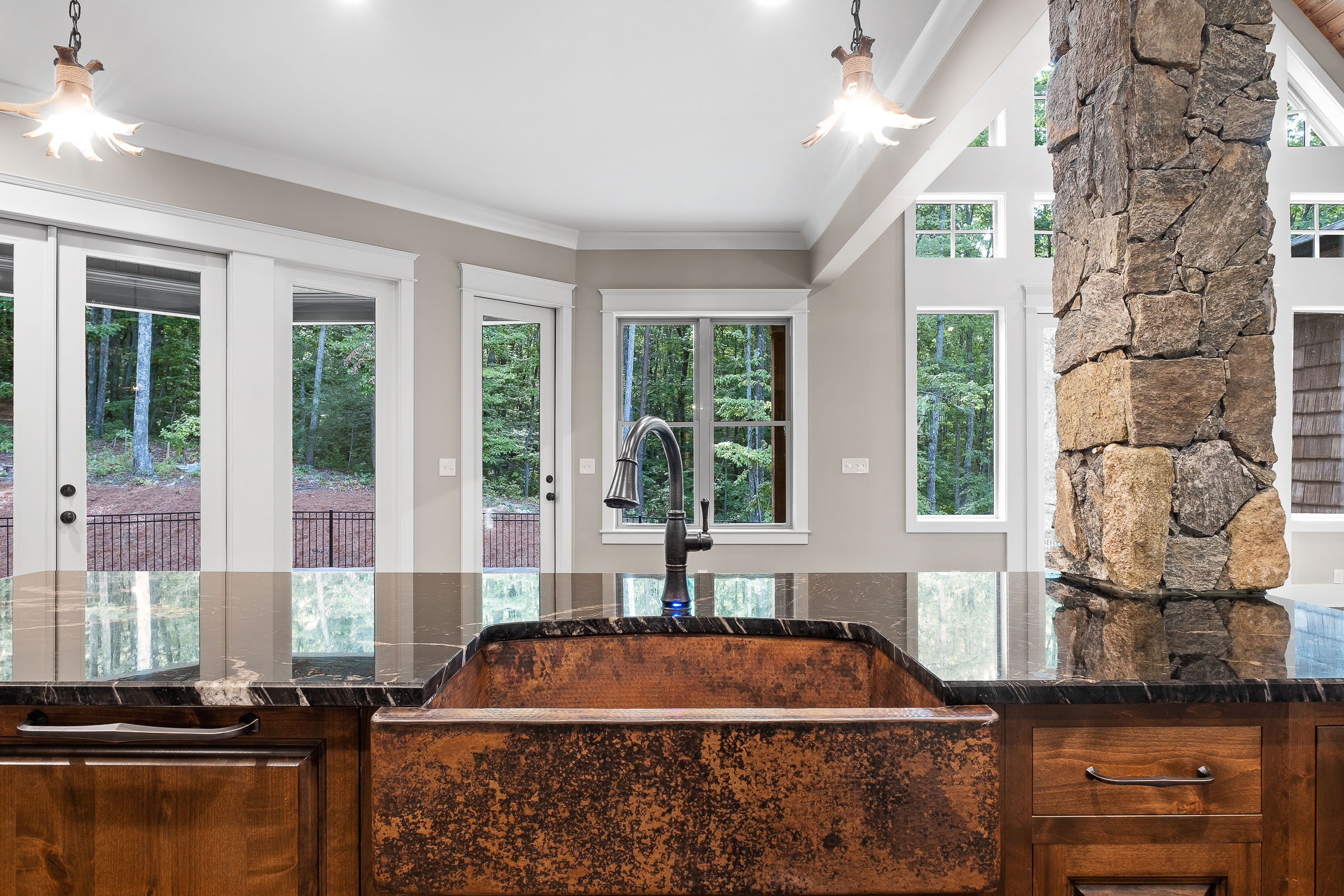
The sink’s tone and apron detail connect the metal to the surrounding cabinetry and countertop.
Yes, exposed copper can tarnish and develop a patina. In a living finish, changing tone is part of the material’s appearance. A protective coating changes how the surface responds, but it does not make a sink immune to wear. Choose the finish with its expected variation and care requirements in mind.
What to Expect From Copper Patina
Patina is the changing surface appearance that develops as copper reacts with its surroundings. In a working sink, water, food contact, cleaning, and daily use can affect the pattern. An unsealed basin should not be expected to retain a perfectly uniform, freshly polished tone.
The National Park Service’s Statue of Liberty FAQs provide a familiar example of copper changing color through exposure. That outdoor example does not predict the color or timescale of a kitchen sink. Indoor use and the selected finish create different conditions.
Think of the sink as part of the room’s material palette. A living finish is a good subject to explore if variation appeals to you. If consistent color is a priority, discuss that expectation before choosing a finish rather than planning to polish the basin repeatedly.
What Our Early Sink Observations Showed
When developing its copper sink line, CopperSmith compared raw copper sheets and sinks exposed to water, salt water, and ordinary food residues. The informal observations produced different tones over time. They helped illustrate how strongly appearance depends on contact and use.
These were product-development observations, not a standardized study establishing a predictable color sequence. They do not mean that every sink will turn the same shade after a month. Nor are salt, vinegar, or food waste recommended treatments for creating a patina at home.
Earlier trials also explored removing surface color with abrasive pads. That is not the routine care recommended here: abrasion can strip the chosen patina, scratch the metal, or damage a coating. Decide which surface you want to keep before selecting a cleaning method.
Modern Copper Sinks and Living Finishes
A smooth copper basin can make gradual tonal changes especially visible. Water marks and areas touched by food may contrast with the surrounding surface. Those changes should be assessed in relation to the finish specification, not described automatically as a defect or damage.
CopperSmith’s copper sink care sheet explains that acidic foods can lighten a patina and that exposed areas may darken again. It recommends mild soap, warm water, and a soft cloth or nonabrasive sponge. The timing and final appearance are not guaranteed.
For more context on the material, read the copper patina guide. Keep this distinction clear: a surface changing color and a coating peeling away are different situations. If you see flaking, a deep mark, or an unfamiliar deposit, ask for finish-specific advice.
Rustic Copper Finishes and Artisan Processes
During visits to Santa Clara del Cobre in Mexico, CopperSmith observed artisans using hammering and heat to develop texture and tones in copper. These processes helped inform the rustic appearance described in the original article. They should not be treated as a manufacturing description for every current sink.
The Metropolitan Museum of Art’s explanation of patinating copper shows that patina can also be deliberately developed during metalworking. For a sink, the useful question is how its selected surface was finished and how it should be maintained, rather than whether all patina is natural or all color is permanent.
Compare copper sinks by the exact finish and texture specified. Wax or oil may be part of a particular finish system, but do not assume every basin should receive the same treatment or renewal schedule. Scratches may become less conspicuous as exposed copper changes tone; patina does not physically repair them.
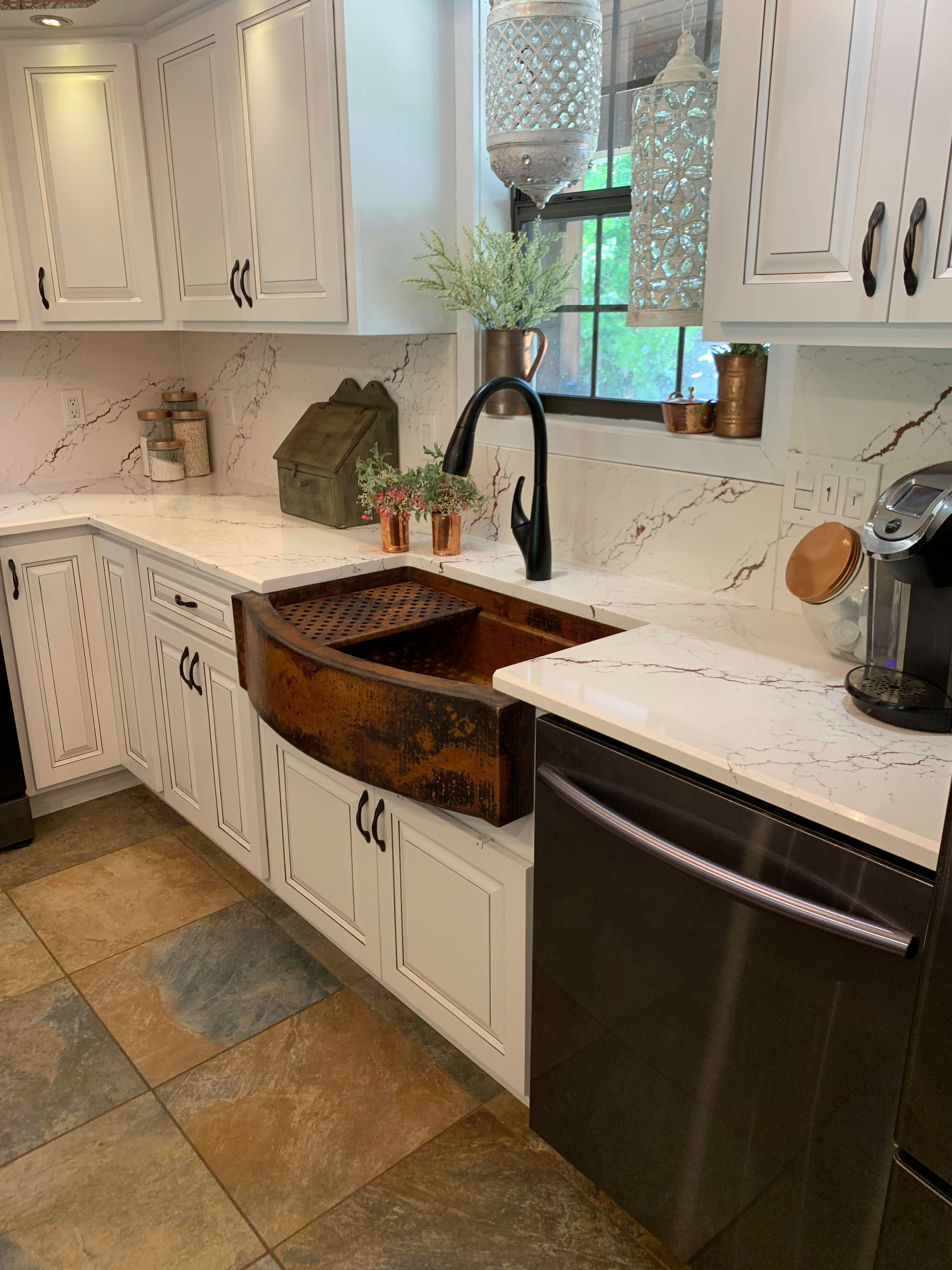
Compare the selected texture and finish in person. A project photograph is a reference, not an exact color guarantee.
Sealcoat Finishes: Different Expectations
A clear protective coating can limit direct contact with the copper and help retain an intended appearance. Its suitability and care depend on the specific product and application. Do not assume that a finish used on a hood exterior is available or appropriate for every sink basin.
A scratch through a coating can expose copper that then changes differently from the protected area. Applying household wax or another sealant over the scratch may not restore the original finish. Contact the manufacturer before attempting a repair, and provide photographs and the order’s finish details.
Choose the Finish Before You Choose a Care Routine
Review the available finishes and architectural details with samples in the room’s lighting. Ask what variation is expected, whether a coating is present, which cleaners are approved, and what to do if the surface is marked.
Then compare the copper sink collection with those expectations in mind. The right choice is a finish whose appearance and care suit your household, rather than a promise that copper will never change.
Common questions
Will a copper sink turn green?
Green patina is possible under some conditions, but it is not an inevitable or predictable result of normal sink use. Investigate unusual deposits with the manufacturer rather than trying an aggressive cleaner.
Can I keep an unsealed copper sink permanently bright?
Exposed copper reacts with use and exposure. Repeated polishing changes the finish and may conflict with its care instructions. Discuss a preference for stable color before selecting the product.
Will patina hide scratches?
Changing tone may reduce a mark’s contrast on exposed copper. It does not repair a gouge, dent, or damaged coating.
Updated October 29, 2026. Originally published 2014-06-09. Confirm product, finish, and installation details for the selected configuration.
Define the details around your space.
Compare the expected appearance of each finish with the way you use and care for your kitchen.
Review finish options


 By submitting, you agree to our Privacy Policy & Terms