

A copper kitchen range hood can establish the kitchen’s main vertical form while housing the equipment that captures cooking emissions. Choose the visible profile and finish alongside the ventilation plan. The metal exterior shapes the room; the compatible insert, blower, ducting, and installation determine how the system works.
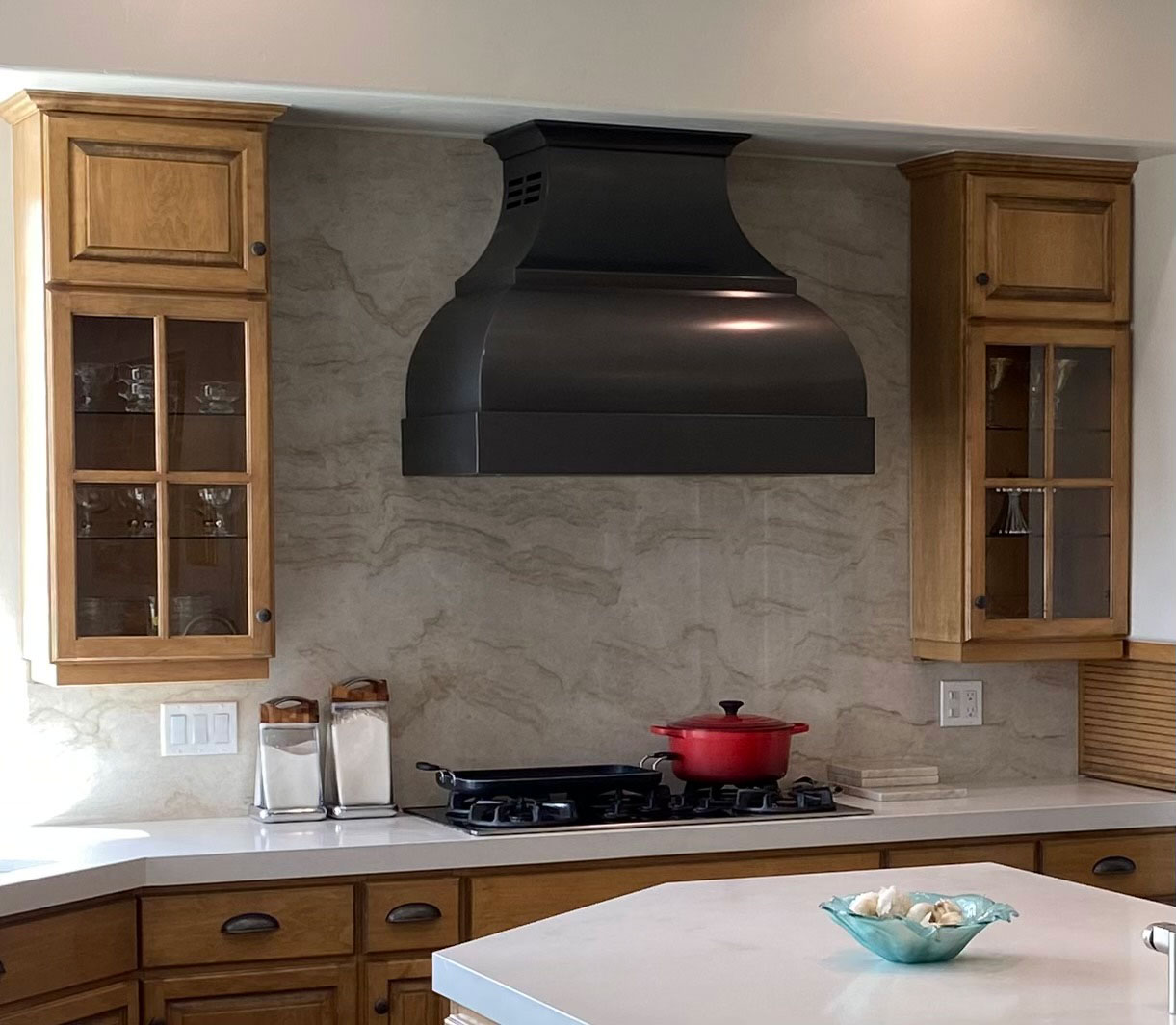
Easy to Customize: Begin with Proportion
The shape of Copper kitchen hoods can reinforce the cabinet lines or create contrast with them. A rectangular form reads differently from a curved canopy; a darker field gives trim a different presence than a bright surface. Choose the role in the elevation before adding bands, straps, crown details, or texture.
Coordinate the canopy with the cooking appliance and surrounding clearances. Do not select the decorative shell independently and assume any insert will fit later. Height, width, depth, chimney form, and access to controls belong in the same drawing.
Function: Plan the Air Path
Cooking produces airborne particles and other emissions on different stove types. The Washington State Department of Health’s cooking-ventilation guidance explains the distinction between exhausting outdoors and recirculating air into the room. A copper finish does not establish either configuration.
Resolve the compatible insert and blower, exhaust route, duct dimensions, power supply, and installation clearances with the project team. Follow the equipment instructions and applicable local requirements, including any makeup-air provisions. There is no universal airflow or mounting-height number that suits every appliance and home.
The American Lung Association’s cooking-air guidance recommends using kitchen exhaust when cooking and notes the benefit of cooking on back burners when practical. Good use matters alongside equipment selection.
Review before the hood is approved
Capture and fit
Cooking appliance, canopy coverage, compatible insert, controls, and listed clearances.
Air and access
Duct route, blower location, service access, electrical supply, and any makeup-air needs.
Visible design
Profile, chimney proportions, material, finish, texture, and relationship to the cabinetry.
Low Maintenance: Separate the Exterior from the Filters
An unsealed copper exterior can develop variation; a coated surface follows a different care routine. Patina does not heal scratches, restore a damaged coating, or remove grease. Clean the exterior with the method approved for its finish, and maintain filters and working components according to their own instructions.
When comparing a broan range hood filter, identify the exact compatible part rather than choosing on the decorative hood material. The current range hood assortment and its equipment specifications should guide compatibility; a category link alone does not identify a replacement filter.
Environmental Questions Need Product Evidence
Copper can be recovered for recycling, but a particular hood’s recycled content, service life, and environmental impact depend on its construction and supply chain. Ask for product-specific information rather than assuming every copper hood has the same content or creates no manufacturing impact.
Choose a form you want to keep and a system that can be maintained. Accessible filters and clear equipment records help future care. Copper itself does not guarantee a home-value increase or lower operating costs.
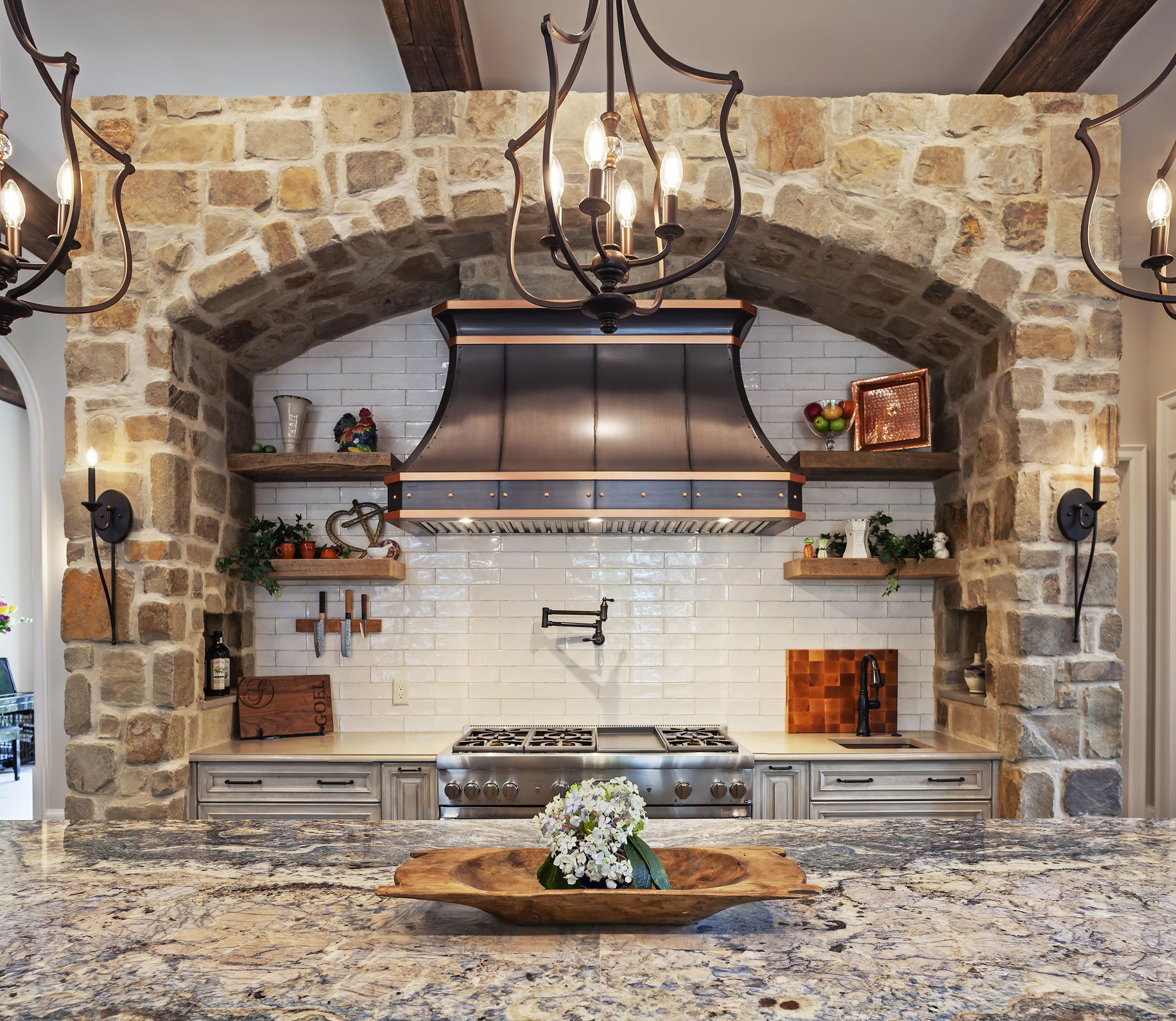
Connect the Hood to the Rest of the Kitchen
Compare the metal beside the actual cabinet finish and backsplash. A related tone in a faucet or light can connect the room without repeating copper everywhere. Use finish samples to judge the surface in the kitchen’s light, and review the inspiration gallery for proportion and placement.
Frequently Asked Questions
Does copper improve a hood’s airflow?
The exterior metal does not determine the airflow by itself. The insert, blower, duct system, capture geometry, and installation must be assessed together.
Can a copper hood work with an existing duct?
Possibly, but the duct size, route, condition, termination, and equipment requirements must be checked before the hood is specified.
Will the finish stay the same color?
That depends on the supplied treatment, coating, exposure, and care. Confirm the selected finish rather than using one photograph as a forecast.
Originally published December 28, 2014. Updated October 30, 2026.



 By submitting, you agree to our Privacy Policy & Terms