

A finish-specific care guide for copper sinks, with related guidance for copper bathtubs and range hood exteriors.
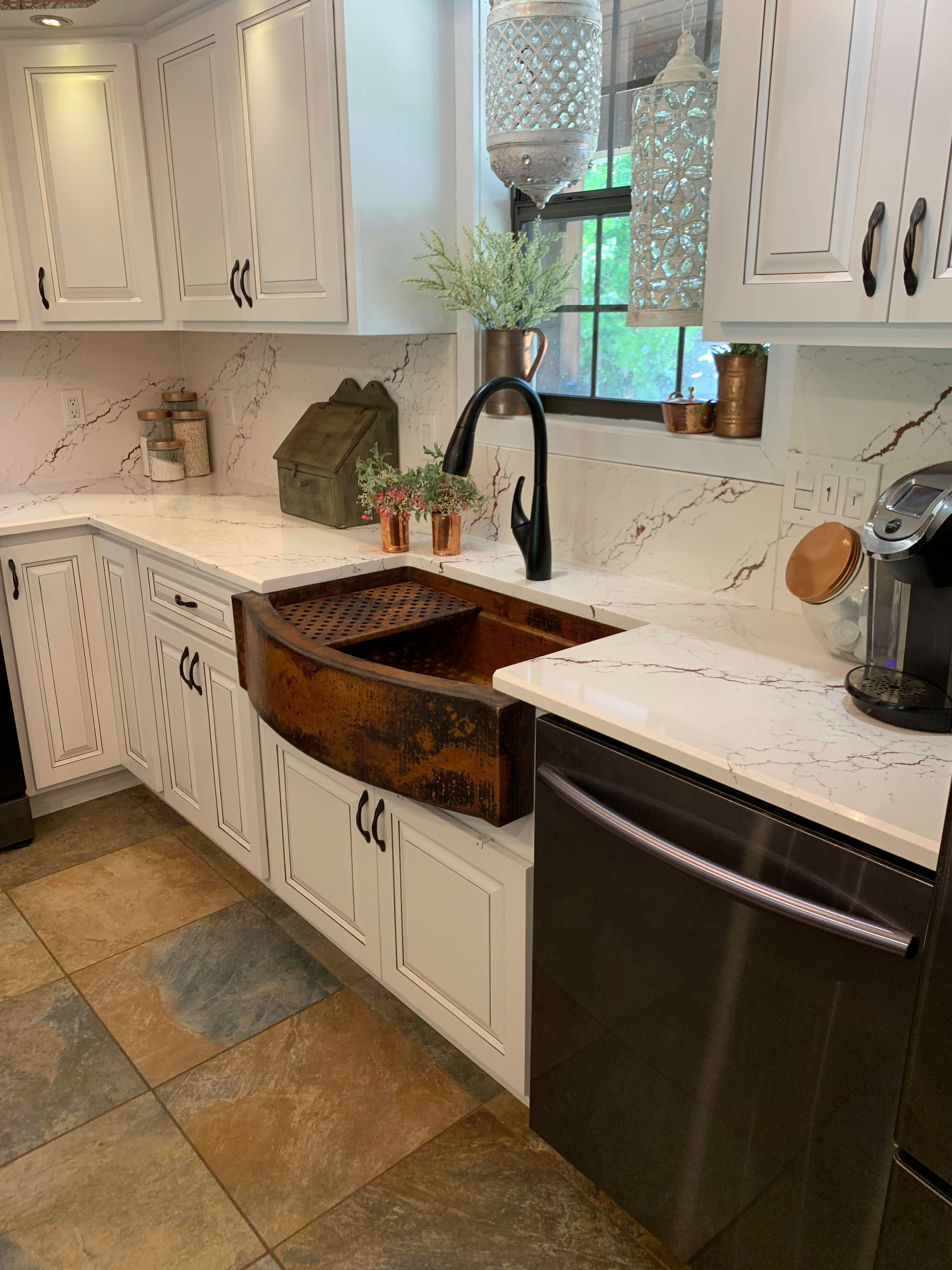
Compare the selected texture and finish in person. A project photograph is a reference, not an exact color guarantee.
Identify the finish before treating copper sink tarnish. For routine sink care, use the manufacturer’s approved gentle cleaning method; do not scrub away color with steel wool, abrasive pads, or unapproved polish. Living copper can change tone, while a damaged coating may need a different response. Patina is not a substitute for cleaning.
Copper Sink and Range Hood Care and Maintenance Instructions
Copper care starts with the surface you ordered. A living copper basin, an applied patina, and a sealed finish can require different decisions. Keep the order information and product instructions available before using a cleaner, conditioner, or repair treatment.
A rustic kitchen sink can change appearance with use, but it is not maintenance-free. Food residue, water deposits, and physical damage still need attention. The aim of routine care is to clean the surface while respecting the selected finish.
The GSA’s guidance on cleaning copper alloy architectural features makes a useful distinction between surface soiling and an established patina. That conservation guidance is not a household sink-cleaning recipe. For your basin, use the product’s care instructions rather than applying treatments intended for historic architectural metal.
Rustic Finish Sinks
Rustic appearance can include hammer texture and a developed patina. Begin with the CopperSmith copper sink care instructions: mild soap, warm water, and a soft cloth or nonabrasive sponge. Rinse after cleaning and wipe away standing water.
Avoid metal scouring pads, steel wool, and unapproved copper polish. Ask whether a wax or conditioning treatment is appropriate for the exact finish; do not apply a blanket six-month schedule. A product suitable for one copper surface may be unsuitable for another.
If a spill changes the color, gently remove the residue and assess the surface after normal cleaning. Do not scrub the surrounding area to force an immediate color match. If the change is unexpected for the specified finish, send photographs to the manufacturer.
Living Finish Sinks
Living copper is intended to develop variation. Acidic food contact may lighten an area, and exposed copper may darken again with time. Keeping a sink clean does not require returning the whole basin to bright raw copper.
Rinse away food residues after use and follow the approved cleaning routine. Avoid acidic homemade mixtures, teak cleaners, abrasive brightening, and unapproved metal treatments. Hard-water deposits need a finish-compatible approach; a general limescale remover may affect the copper or coating.
For questions about expected color changes, the related article Will Copper Sinks Tarnish? explains patina and finish choices. Use this care guide to decide what to do day to day rather than treating every change in tone as a cleaning problem.
Rustic Finish and Sealcoat Finish Bathtubs
A bathtub’s contact with bath products and standing water differs from a hood exterior or kitchen basin. Identify the finish and request the instructions for the specific tub. Check compatibility before using bath additives, cleaners, oils, or protective treatments.
Use a soft cleaning tool and the approved cleaning solution. Do not assume that an annual wax application is necessary or compatible with every coating. If the surface flakes, develops a sharp mark, or shows an unfamiliar deposit, seek advice before attempting to refinish it.
When considering copper bathtubs, discuss the cleaning products used in the household and the expected appearance over time. Care should be part of the selection, alongside dimensions, placement, and plumbing.

Use project photography to compare proportions and materials. Determine mounting height from the actual equipment instructions.
Rustic Finish Range Hoods
Care for the decorative metal exterior separately from the ventilation equipment. Dust gently and use only the cleaning method approved for the selected hood finish. Keep excess moisture away from controls, lighting, electrical components, and seams.
Grease filters need their own maintenance routine. Follow the insert or liner manufacturer’s directions for removal, washing or replacement, drying, and refitting. The guide to range hood filter replacement helps identify those separate tasks. Do not apply copper conditioner to filters or internal ventilation parts.
Avoid treating heat marks or finish changes with household polish before the cause is understood. For copper range hoods, retain the finish details as well as the ventilation model information so care questions can be answered accurately.
Sealcoat Finish Sinks, Range Hoods, and Bathtubs
A coating is a distinct layer with its own cleaning and repair requirements. Do not sand it, use an abrasive pad, or assume that wax will repair a scratch. Photograph the affected area and confirm the finish specification before selecting a repair method.
Use the product maintenance guides as the starting point, and ask for clarification when the installed finish differs from a general guide. Current finish instructions take priority over older advice describing all copper products as unsealed.
- Identify the product, order, and finish before applying a treatment.
- Separate ordinary color variation from coating failure, deposits, or physical damage.
- Test only manufacturer-approved products as directed; do not improvise a polishing or sealing system.
- Keep the approved care instructions for future household or professional cleaners.
Common questions
Should I remove tarnish from a copper sink?
First confirm whether the tone is part of a living finish. Removing it can change the appearance you selected. Clean residue gently and ask for advice before stripping or polishing.
Can I use steel wool or a Scotch-Brite pad?
Do not use abrasive pads or steel wool as a routine copper sink treatment. They can remove patina, scratch the surface, or damage a coating.
How often should I wax copper?
There is no single schedule for every finish and product. Use only the treatment and frequency approved for the actual surface.
Is green or white residue always patina?
No. Deposits, surface reactions, and coating problems can look different. Provide photographs and finish details so the cause can be assessed before treatment.
Updated October 29, 2026. Originally published 2014-06-11. Confirm product, finish, and installation details for the selected configuration.
Define the details around your space.
Keep the finish specification and approved care routine together so the surface can be maintained consistently.
Find maintenance guidance


 By submitting, you agree to our Privacy Policy & Terms