

Copper can connect a kitchen’s working fixtures with its larger design. A sink brings the metal to the counter, a hood gives it height, and cookware introduces it at a smaller scale. Choose where copper should lead, then coordinate its tone, texture, and care with the way you cook.
Copper Cookware and Kitchen Fixtures Do Different Jobs
Copper conducts heat readily, which is one reason it has been used in cookware. Even so, the complete pan determines cooking performance: thickness, lining, construction, and heat control all matter. Copper does not guarantee that food cannot scorch, and the material used for a decorative hood or sink should not be treated as a cooking surface.
Food-contact suitability is a separate question from color or appearance. The FDA Food Code is a model for retail food regulation, rather than a blanket approval of every copper object. For cookware, follow the manufacturer’s intended use, lining requirements, and care instructions.
Six Things to Understand About Copper in the Kitchen
1. Material Properties Do Not Replace Cleaning
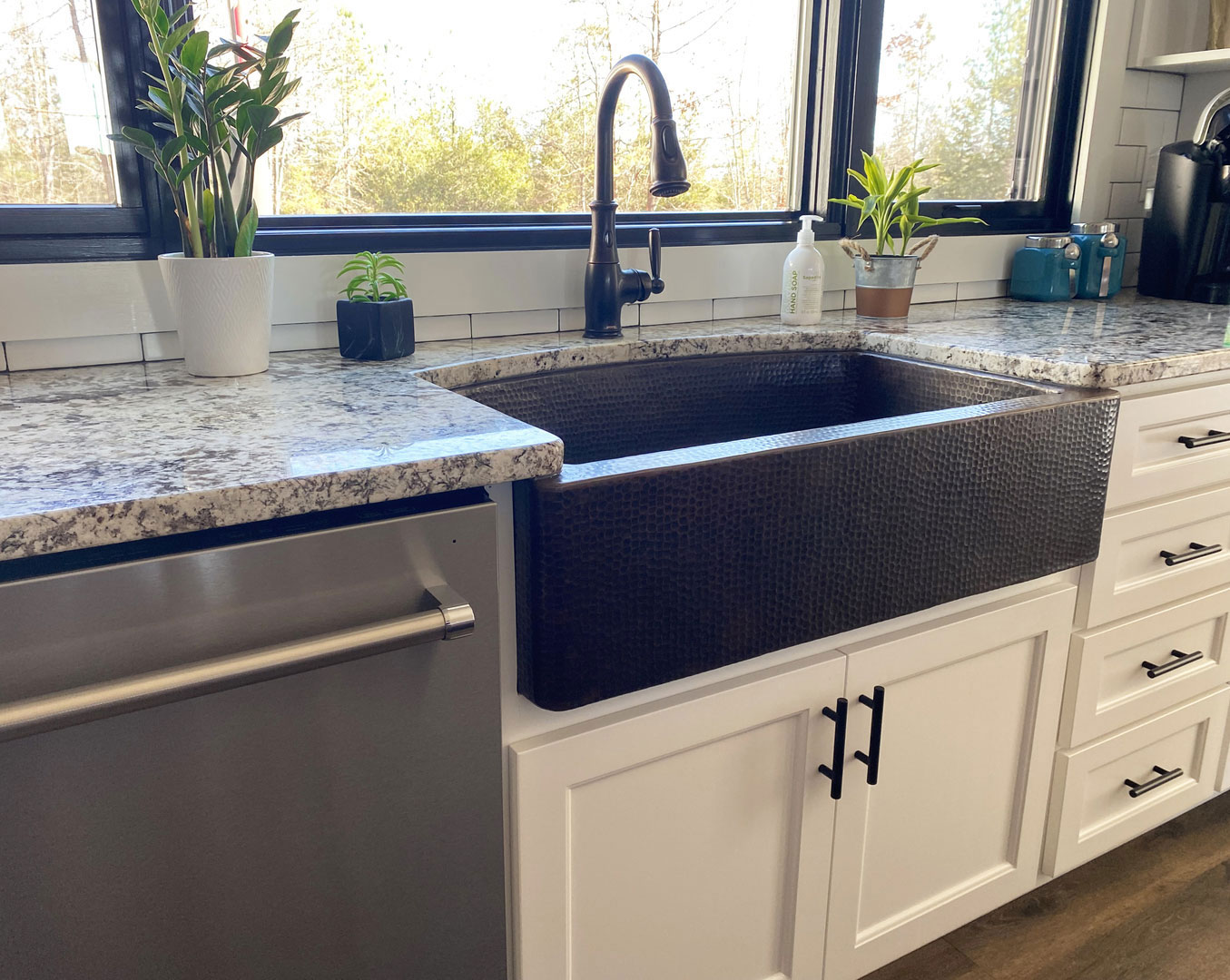
Select a copper sink for its form, finish, and suitability for kitchen use. General research about copper surfaces does not mean a finished sink keeps food safe or sanitizes itself. Continue normal cleaning and food-handling routines, using products approved for the actual finish. A coating, residue, or different underlying material changes the surface being discussed.
2. Durability Depends on the Whole Piece
Metal thickness, forming, seams, support, and installation all contribute to a sink’s performance. Copper can develop dents and scratches; it is not damage-proof. Compare the actual construction instead of using a warm color or hammered texture as a quality test.
The Association for Materials Protection and Performance explains that corrosion is a reaction between a material and its environment. Copper’s surface changes are different from iron rust, but that distinction does not make every copper assembly immune to corrosion or wear.
3. Copper Can Establish the Room’s Focal Point
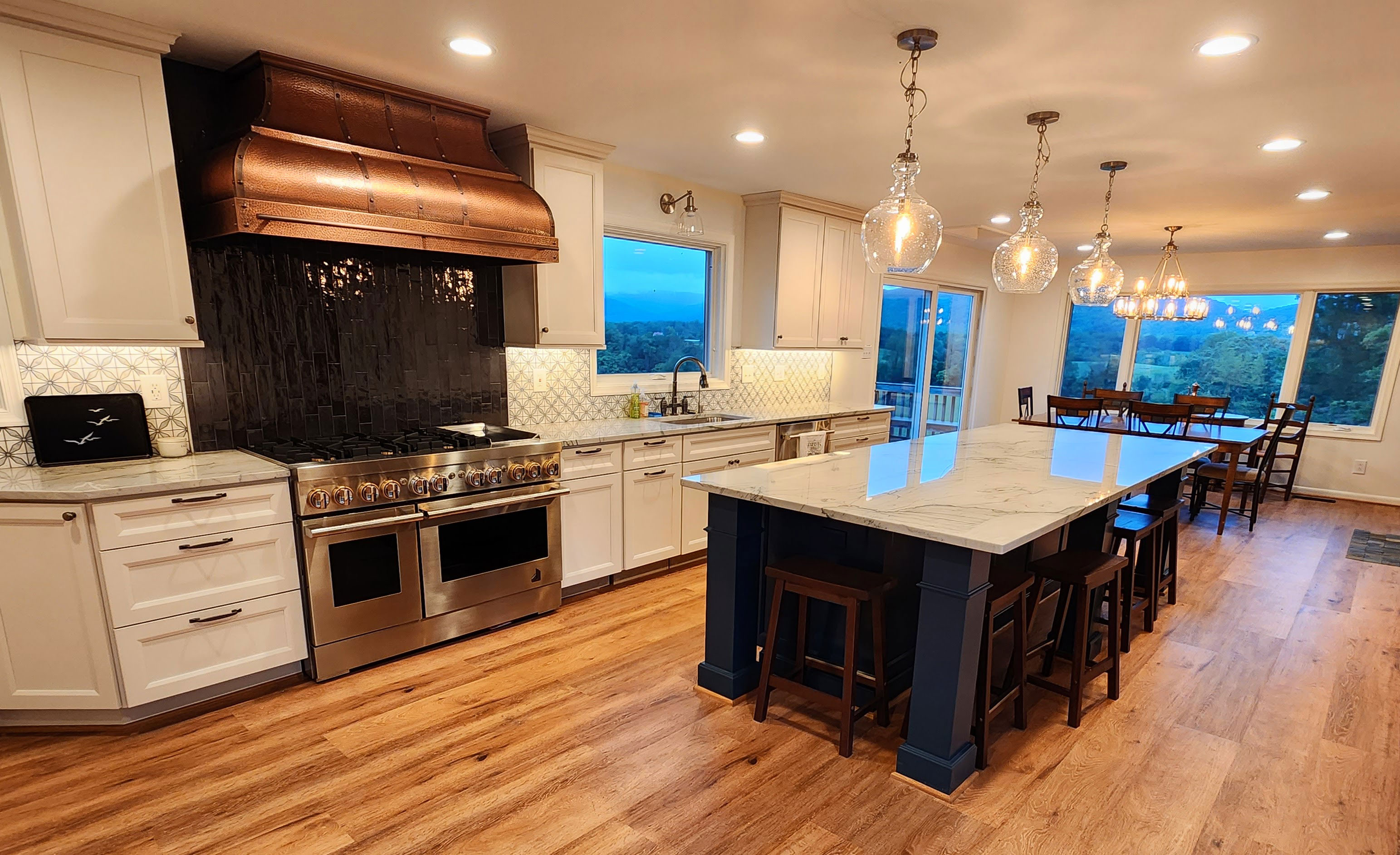
A broad apron creates a visible band through the cabinetry. A tall hood draws attention up the kitchen elevation. If one will lead the room, give the other a quieter form or a related tone. Repeating copper on every surface is not necessary to make the materials feel connected.
4. Maintenance Starts with the Finish
Identify whether the surface is a living finish or has a protective coating. Mild cleaning methods suitable for one finish may be inappropriate for another. CopperSmith’s maintenance guides provide a starting point; retain the instructions for the selected product and finish.
5. Color Changes Are Different from Stains and Damage
Water, food residue, cleaners, and touch may change copper’s appearance. Rinse away spills promptly using the approved method rather than allowing acidic ingredients to sit on the surface. Patina can develop new variation, but it does not repair a dent, a leaking seam, or a damaged coating.
6. Texture Changes How Light Reads
Smooth copper emphasizes broad reflections and the outline of the piece. Hammered copper breaks reflections into smaller marks. Compare a sample beside the actual countertop and backsplash: a textured sink may need a quieter stone pattern, while a simple hood can carry a more expressive finish.
A practical order for choosing copper
Choose the role
Decide whether the sink, hood, or another piece should carry the strongest metal presence.
Resolve the working requirements
Confirm the sink layout or ventilation configuration before refining the decorative details.
Compare the finish in the room
Review samples with cabinetry, stone, hardware, and the light you will use each day.
Bring the Metal into the Plan Early
Explore copper sinks when the counter is the main working surface, or copper range hoods when the kitchen elevation needs a stronger center. Keep the dimensions and intended use with the finish selection so the design and working requirements develop together.
Frequently Asked Questions
Do all copper pieces in a kitchen need to match?
No. Repeat a tone or detail where it helps, and compare the actual samples together. Different metals can work well when their roles and proportions are intentional.
Will a copper kitchen sink stay bright?
That depends on the supplied finish and its care. An unsealed living surface can change with use; a coating has different maintenance requirements. Choose the behavior as well as the initial color.
Define the details for your space
Bring your cabinet layout, countertop selection, and preferred metal direction to the conversation.
Start your projectOriginally published October 27, 2014. Updated October 30, 2026.


 By submitting, you agree to our Privacy Policy & Terms