

Five considerations for a copper kitchen table: its role in the room, everyday care, a changing patina, hygiene expectations, and material recovery.
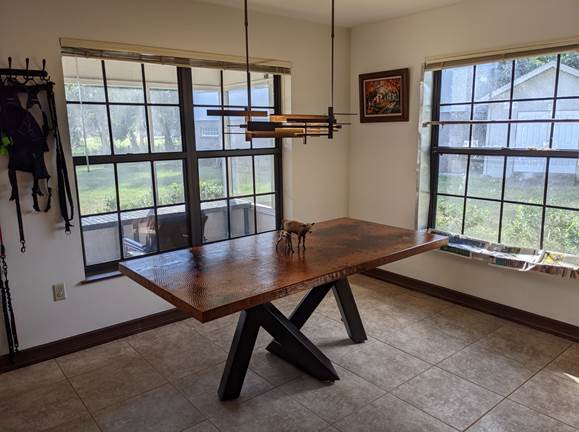
Copper connects the table surface with the warmer tones in the room. Base position and chair clearance deserve the same attention as the finish.
A copper kitchen table can work well if you want a surface with natural variation and are comfortable protecting it from heat, abrasive cleaning, and lingering spills. Decide around the way your kitchen is used. Patina, chair clearance, finish-specific care, and the complete table construction matter more than the material name alone.
A Copper Kitchen Table can connect the eating area to the cabinetry, stone, and hardware around it. The useful question is how that surface will look and behave during breakfast, homework, family meals, and everything in between.
Start with your actual habits. A household that welcomes tonal variation may enjoy a living copper surface. A household expecting a permanently identical color or an unmarked work surface needs a different conversation about the finish and how the table will be used. These five points help make that decision concrete.
1. Appearance: Give Copper a Clear Role in the Kitchen
Look at the whole room before choosing a bright or dark surface. A copper top can repeat the warmth of a wood cabinet, bridge mixed metals, or contrast with pale stone. It does not require every nearby metal to match. Choose which relationship you want the table to establish, then compare actual samples.
Texture changes how the surface reads across the room. Hammered copper breaks reflections into smaller highlights; a smoother surface shows broader reflections and color movement. Check a sample near the window and under the light you use for dinner, since a photograph cannot reproduce every lighting condition.
Map the table footprint on the floor and pull out your chairs. The edge should allow comfortable seating while the base leaves room for knees and feet. Review the table and chair sizing guide when coordinating the eating area.
2. Daily Care: Simple Habits Still Matter
A kitchen table receives frequent spills and repeated contact with dishes, bags, and school supplies. Plan to wipe spills promptly, use coasters and placemats, and place a heat-resistant trivet beneath hot serving dishes. Copper should not be treated as an indestructible worktop just because it is metal.
Ask for the care instructions for the exact top and finish. Avoid assuming that lemon, vinegar, salt, or a general metal polish is a suitable cleaner. Those products can change a patina or damage a protective treatment. Do not apply a furniture wax or oil until its compatibility has been confirmed.
Keep the everyday routine realistic. If the table will be used for craft projects, protect it with a suitable mat and check the instructions before using adhesives, solvents, or markers around the surface. Decide who will handle cleaning and how quickly spills are likely to be noticed.
3. Patina: Decide Whether Change Is Part of the Appeal
A living finish changes in tone with exposure and use. That variation can become part of the room, but it should be expected before purchase. Request a description of the starting patina and any coating, and ask which changes are normal for that combination.
Patina is not the same as physical repair. Color around a small mark may become less conspicuous, while a dent, gouge, or scratch in a coating can remain. If a consistent appearance matters to you, discuss finish options and maintenance rather than assuming the surface will renew itself.
For independent background, the Canadian Conservation Institute’s metal-care guidance distinguishes stable patina from active corrosion. Use the maker’s directions for the furniture itself, particularly when a protective coating is present.

A blue-green copper surface creates contrast with a wood base and pale paving. A finish sample establishes the starting appearance; exposure can change it.
4. Hygiene: Keep Normal Cleaning Practices
Do not buy a finished table on the assumption that it eliminates germs. EPA information on registered antimicrobial copper surfaces concerns particular products and confirms that they supplement normal hygiene. It does not establish performance for every copper table.
Use plates and appropriate serving dishes rather than treating the tabletop as a food-preparation board. Clean residues between activities and ask which products are compatible with the finish if more than routine cleaning is needed. For a commercial setting, have the operator confirm the sanitation procedure before specifying the table.
5. Recycling: Ask About the Entire Table
Copper can be recovered and recycled. The International Copper Association’s recycling overview explains the material’s ability to return to use. That is a material attribute, not proof of a particular table’s recycled content or total environmental impact.
Ask what supports the metal surface, how the base is attached, and whether the table can be repaired or separated into material streams. Request evidence for any recycled-content claim you want to use in a project specification. Keeping a well-suited piece in service is also a practical part of the decision.
Before You Choose: Test the Everyday Scenario
Picture a normal meal with every chair occupied. Where will a serving dish go? Does a chair arm clear the underside of the top? Can someone reach the adjacent cabinet without moving the table? These details determine whether the material choice works in the room.
Compare the Industrial ID1 metal dining table as one starting form, then confirm the copper configuration, dimensions, base, and finish. A model image does not establish all the details of the configuration you will receive.
Common questions
Is copper a good surface for a busy kitchen table?
It can be, when the finish and care expectations fit the household. Protect the surface from heat and abrasion, and be comfortable with the variation expected from the selected finish.
Will a copper kitchen table stay bright?
An exposed living surface can change tone. Ask about the finish, any protective treatment, and the care needed to maintain the appearance you want.
Does choosing copper mean the whole kitchen must match?
No. Compare copper against the actual cabinetry, countertop, light fittings, and hardware. A deliberate contrast can be as useful as a repeated metal tone.
Updated October 29, 2026. Originally published 2015-01-01. Care and suitability depend on the selected product and finish.
Define the details around your space.
Bring your kitchen photographs, table footprint, chair dimensions, and finish samples to a Design Specialist. Resolve the everyday use and material relationships together.
Explore copper tables

 By submitting, you agree to our Privacy Policy & Terms