

A designer oven hood can establish the character of a kitchen through its shape, proportion, and finish. A curved copper surface brings a different presence to the room than a plain metal box or a dark hood outlined with fine straps.
These 35 CopperSmith projects show how the same model can take on different identities through material, detailing, and placement. Look at the hood in relation to the cabinets, backsplash, lighting, and ceiling, then consider which decisions would work in your own room.
Before choosing a design
Shape and finish. Compare the profile, apron, crown, straps, rivets, and optional pot rail. Available details and textures vary by model and material. Review physical samples alongside the other kitchen finishes.
Size and fit. Establish width, height, depth, and mounting type for the actual kitchen. CopperSmith’s custom hood process includes a project-specific CAD drawing; use it to review the dimensions, insert fit, and installation details before fabrication.
Ventilation. Choose the insert and blower for the cooking appliance and installation. Confirm permitted mounting clearances, ducting, and any applicable makeup-air requirements with the equipment instructions and project team. A finish or exterior profile alone does not determine airflow, sound, or capture performance.
1. PR2 Black Oven Hoods

The PR2 gives this white kitchen a clear focal point. Its trapezoidal body and broad box apron echo the straight lines of the cabinetry, while narrow metallic straps connect the dark hood with the surrounding appliances and hardware.
Notice how the black pendant lights repeat the hood’s color across the room. The result feels coordinated without requiring every metal surface to match. For a new PR2, review the configured dimensions and details on the project drawing before fabrication.
Design details
- Angular body with a broad box apron
- Contrasting straps and low-profile rivets
- Wall-mounted composition
2. PR2 Brass Oven Hoods

This PR2 pairs a dark body with warm metallic straps and a matching pot rail. Open wood shelves on black frames extend the same palette along the white tile wall.
The restrained mix of black, wood, and warm metal gives the kitchen an industrial character without heavy ornament. Coordinate the pot rail with the cooking area, and confirm the selected insert’s lighting when planning illumination over the range.
Design details
- Dark body with warm metal accents
- Linear straps and a coordinating pot rail
- Open shelving that repeats the hood’s geometry
3. PR4 Copper Oven Range Hood

The PR4 brings a curved profile and textured surface to a kitchen framed by substantial wood cabinetry. Its dark finish lets the illuminated decorative backsplash remain prominent beneath the hood.
The broad apron gives the curved body a defined base. For a similar composition, compare the hood’s lower edge with the cabinet rails and the top of the backsplash feature; those alignments give the cooking wall its order.
Design details
- Convex profile above a defined apron
- Textured finish with an aged appearance
- A strong relationship to wood cabinetry and decorative tile
4. PR4 Black Range Hoods

A dark PR4 with warm accents creates a compact focal point within this white kitchen. The surrounding cabinetry stays quiet, allowing the curved face, apron, and rivet details to carry the composition.
This is a useful approach when the cooking wall needs definition without a large material change. If you want an ornamental apron or additional trim, confirm the details available for the selected model and finish.
Design details
- Dark finish against white cabinetry
- Warm straps and trim
- Rivet details that add an industrial note
5. PR4 Black Oven Hoods

The PR4 uses fine warm-toned straps to outline a dark curved body. White cabinetry and a strongly veined backsplash make the metalwork easy to read from across the island.
The same profile can take on a different character in another material. Copper can introduce warmth beside wood, while a pale metal finish can sit more quietly with white stone. Compare physical samples in the room before choosing the final combination.
Design details
- Convex face balanced by straight trim
- Fine vertical accents on a dark body
- A clear focal point above a veined backsplash
6. PR4 Stainless Steel Oven Hoods

This PR4 uses a pale metallic surface to fit into an expansive wall of light cabinetry. Its curved face and broad apron give it enough definition to remain distinct from the cabinet doors.
The light-catching finish relates to nearby appliances, while the symmetrical cabinet layout establishes the hood’s position. In a remodel, confirm the existing opening, duct route, and mounting support before assuming a replacement will fit.
Design details
- Convex form with a broad apron
- Light metallic finish within pale cabinetry
- A centered, symmetrical cooking wall
7. PR5 Copper Range Hoods

The PR5 introduces a tall, concave face above a clipped-corner apron. Its dark, textured appearance provides depth beside white cabinets and a simple tile backsplash.
The shape carries much of the design, so additional straps are not essential to the composition. A pot rail, rivet treatment, or contrasting trim can be considered where compatible, but the uninterrupted curve is the defining feature here.
Design details
- Concave face with a tall vertical emphasis
- Clipped-corner apron
- Textured surface against simple white cabinetry
8. PR6 Black Custom Oven Hoods

The PR6 creates a sculptural break in a run of natural wood cabinetry. Its dark convex face moves from a narrow upper profile to a flared apron above the range.
This example keeps the surface free of contrasting straps. The shape and the change in material provide sufficient detail beside the veined backsplash. For other rooms, the PR6 offers wall or island configurations; confirm the mounting arrangement and final depth for the project.
Design details
- Convex face and flared apron
- A plain surface that emphasizes the profile
- Dark metal balanced by natural wood
9. PR6 Copper Range Hoods

This PR6 uses a visibly textured surface to bring depth to a traditional kitchen. The dark hood contrasts with light cabinetry and the warm patterned tile below it.
A crown can help connect a hood with neighboring cabinet details, while a simpler upper edge can keep the focus on the metal. Compare available crown profiles with the actual cabinet molding before selecting the transition.
Design details
- Textured curved face
- Warm contrast with light cabinets and tile
- Crown and trim choices to coordinate with the room
10. PR6 Copper Range Hoods

The tall PR6 follows the vertical scale of this kitchen’s peaked ceiling. Its broad face and slim metallic details rise above dark wood cabinetry and a light backsplash.
The long straps draw the eye upward, while the apron establishes a firm horizontal line over the range. In a high-ceilinged room, resolve the upper enclosure around the permitted cooking-surface clearance; a taller ceiling does not determine the hood’s mounting height.
Design details
- Extended vertical proportions
- Slim contrasting straps and trim
- A broad apron above the cooking area
11. PR6 Stainless Steel Custom Range Hoods

This PR6 combines a dark face with bright vertical straps in a mostly white kitchen. The convex body and straight lower apron provide a deliberate contrast to the expressive veining of the backsplash.
The straps repeat the cool metallic accents elsewhere in the room. If sound is a priority in an open kitchen, compare the actual blower options and their documented ratings; the exterior material does not establish operating noise.
Design details
- Dark curved body against white cabinetry
- Bright straps that repeat nearby metal finishes
- A defined apron above a patterned backsplash
12. PR8 Aluminum Range Hoods

The PR8 introduces a sinuous profile above a broad apron. In this kitchen, its light metallic surface is framed by wood cabinetry and a continuous stone backsplash.
Vertical straps and small rivet details add structure to the curve. Additional apron ornament can be explored where offered, but this composition shows how a restrained finish allows the profile to do most of the work.
Design details
- Sinuous face with a broad lower apron
- Light metallic surface with contrasting details
- A balanced fit within wood cabinetry
13. PR8 Brass Range Hoods

This PR8 pairs a dark, warm-toned body with brighter vertical straps. Bands at the top and apron frame the curved face, giving the hood a clear outline against the pale wall.
Its tall proportions make the cooking area feel deliberately composed. When adapting the idea, coordinate the crown with the ceiling and cabinet heights, then review physical finish samples together under the room’s lighting.
Design details
- Tall curved profile
- Warm contrasting straps
- Horizontal bands that frame the body
14. PR8 Brass Range Hoods

The bright surface of this PR8 brings warmth to pale cabinets and a white veined backsplash. The curved face catches light across a wide area, while the straps and apron add smaller changes in texture.
This approach suits a kitchen where the hood is intended to be the principal metal feature. Keep nearby finishes considered and selective so the warm surface has room to stand out.
Design details
- Bright warm-metal appearance
- Curved face that catches changing light
- Straps and apron details with visible texture
15. PR8 Stainless Steel Range Hoods

A wide PR8 anchors this symmetrical cooking wall between two windows. Its light metallic body, warm straps, and broad apron relate to the scale of the range and the framed stone backsplash.
The composition is generous, but exterior size alone does not establish capture performance. Coordinate the actual insert opening, hood depth, mounting position, and ventilation system with the cooking appliance.
Design details
- Wide proportions within a symmetrical wall
- Light metal with warm accent straps
- A broad apron above a framed backsplash
16. PR9 Copper Custom Range Hoods

This PR9 brings a dark face and warm metallic accents into a kitchen with dark lower cabinets. The flared apron gives the hood a strong base, while the upper trim relates to the surrounding cabinet crown.
Warm pendant lights repeat the accent color across the island. The pot rail adds another horizontal detail; include its projection and position when reviewing the finished hood’s relationship to the cooking surface.
Design details
- Flared apron beneath a dark curved body
- Warm straps, trim, and pot rail
- Upper trim coordinated with cabinet crown
17. PR9 Stainless Steel Range Hoods

The PR9 uses a dark body and bright warm-toned straps against a heavily patterned stone backsplash. The vertical bands follow the curve, while the apron provides a clear stopping point above the range.
Rivet scale can change the character of this design: smaller details read quietly, while more pronounced profiles make the trim a stronger feature. Confirm the selected rivet style and placement on the project drawing.
Design details
- Dark body with contrasting warm straps
- A curved profile framed by a straight apron
- Rivet options that change the scale of the detailing
18. SX2 Black Range Hoods

The SX2 gives this kitchen a bell-shaped silhouette, a tall chimney, and a clearly defined crown. Warm straps and perimeter trim outline the dark body against a light backsplash.
The nearby lantern pendants repeat the hood’s dark framework. This relationship makes the cooking wall part of the wider room composition, with the hood’s curved face providing a softer counterpoint to the lighting.
Design details
- Bell-shaped body and tall chimney
- Defined crown and warm accent trim
- A palette repeated in the room’s lantern lighting
19. SX2 Brass Range Hoods

This SX2 stretches upward between white cabinets, using a narrow chimney and a flared base to emphasize height. Warm straps trace the curve and continue the detailing through the apron.
The crown makes the transition to the upper wall feel intentional. In a smaller kitchen, compare the hood’s width and depth with the surrounding cabinetry so the tall form remains proportionate to the available space.
Design details
- Tall chimney above a flared base
- Warm straps and riveted apron trim
- Crown detail beside light cabinetry
20. SX2 Stainless Steel Range Hoods

The SX2 combines a pale metallic body with warm trim. Its concave profile narrows through the middle before widening toward the apron, giving the large metal surface a distinct silhouette.
Blue cabinetry and a patterned backsplash make the warm trim particularly effective. A small amount of contrasting metal can connect the hood with hardware or lighting while leaving the principal surface visually calm.
Design details
- Concave body with a narrowed middle
- Warm trim around a pale metallic surface
- A strong pairing with colored cabinetry
21. SX4 Black Range Hoods

The SX4 introduces a three-sided concave form above a simple tile backsplash. A dark face, bright upper trim, and narrow vertical straps give the hood definition within the pale cabinet wall.
The balance comes from the contrast between curved metalwork and straight cabinet rails. Keeping the backsplash pattern small allows the hood’s profile and rivet details to remain easy to read.
Design details
- Three-sided concave profile
- Bright upper trim and vertical straps
- A dark focal point above small-format tile
22. SX4 Copper Range Hoods

This SX4 gives an ornamental apron room to be seen. The broad face is largely free of straps, allowing the mottled surface and embossed nature motif to provide the detail.
Substantial wood cabinetry and dark stone support the hood’s aged appearance. If specifying a decorative motif, review the actual pattern, scale, placement, and finish together so the apron remains legible at the intended size.
Design details
- A broad, largely uninterrupted face
- An embossed nature motif across the apron
- An aged appearance beside wood and dark stone
23. SX4 Copper Range Hoods

A warm metal SX4 becomes the principal accent in a kitchen of dark cabinetry, pale stone, and wood flooring. The simple face keeps attention on the color and the concave profile.
This is a quieter use of copper than a heavily ornamented hood. The material contrast gives the room definition, while the restrained detailing leaves the island, lighting, and cabinetry in balance.
Design details
- Simple concave profile
- Warm metal against dark cabinetry
- Minimal ornament that emphasizes the surface
24. SX4 Stainless Steel Oven Hoods

The SX4 pairs a dark body with bright metallic straps above a light patterned backsplash. The apron is kept simple, giving the curve and contrasting vertical details a clear role.
A dark finish changes the visual character of the hood, but cleaning requirements still depend on the specified surface. A coordinating pot filler faucet can bring water to the cooking area; coordinate its location with the backsplash and hood clearance, and remember that filled cookware still needs to be moved for draining.
Design details
- Dark body with bright vertical accents
- A plain apron above a decorative backsplash
- Coordinated planning for a pot filler
25. SX5 Copper Range Hoods

The tall SX5 connects the cooking wall with this kitchen’s high ceiling. Its warm, textured appearance and stepped trim give the broad central surface definition without a dense pattern of straps.
The original project pairs the hood with pale cabinetry and a warm wood island. For a similar room, compare the finish with both materials and develop the upper enclosure around the required mounting position.
Design details
- Tall proportions suited to a high-ceilinged composition
- Textured warm-metal appearance
- Stepped trim at the top and apron
26. SX5 Copper Range Hoods

A darker SX5 gives this traditional kitchen a more weathered character. The extended face rises above light cabinets and a large stone backsplash, while the low apron creates a firm horizontal line.
The appeal here is the aged appearance and the contrast in scale. Maintain the exterior according to the selected finish instructions and clean the ventilation filters as directed to keep the cooking area in good order.
Design details
- Dark, aged appearance
- Extended face above a defined apron
- Contrast with pale cabinetry and stone
27. SX6 Brass Oven Hoods

The SX6 sits within a room already shaped by timber beams, an archway, and dark painted cabinetry. Its broad metal face and restrained trim complement those architectural elements.
A recessed apron adds depth without extensive surface ornament. When choosing the finish, distinguish the base metal from its surface treatment: mill aluminum is a material-and-finish choice, while antique brass and Old Coin copper describe different options.
Design details
- Restrained detailing beneath a beamed ceiling
- Recessed apron
- A broad face that balances substantial architecture
28. SX6 Copper Range Hoods

This SX6 uses a simple flared shape and warm dark finish within a white kitchen. The lack of prominent straps lets the silhouette remain the principal detail.
The hood’s position should be developed from the range, insert, surrounding cabinets, and structural support. Whether planning a wall installation or exploring an island configuration, confirm the mount and upper transition for the particular order.
Design details
- Simple flared silhouette
- Warm dark finish against white cabinetry
- Minimal surface ornament
29. SX6 Stainless Steel Range Hoods

The SX6 combines a wide lower opening with a narrower upper body. Its pale metallic surface and warm trim relate to the pendant lighting, while the shape leaves part of the patterned backsplash visible around it.
Review a compatible Remote Blower System if the project calls for a blower located away from the hood. Confirm the insert, duct route, controls, and service access together; the exterior shape does not establish airflow or noise performance.
Design details
- Wide base with a narrower upper profile
- Warm trim related to the pendant lights
- Ventilation selected around the complete installation
30. SX7 Stainless Steel Oven Range Hoods

The SX7 shows how a tall hood can be composed within a kitchen with a sloped ceiling. Its light metallic finish works with pale cabinetry, wood flooring, and a long island.
Treat a sloped ceiling as a measured design condition. Record its angle, the intended mounting position, and the support and duct requirements before approving the upper transition. The finished connection must be resolved for the project rather than assumed to fit every angle.
Design details
- Tall hood within a sloped-ceiling room
- Light metal beside pale cabinetry and wood
- A project-specific upper transition
31. SX8 Copper Range Hoods

The SX8 introduces traditional architectural details: a curved body, layered moldings, and a shaped apron. The dark textured appearance gives those edges definition against a warm-colored wall.
Copper can change in appearance with exposure, while the selected finish, coating, and care determine how a particular hood should be maintained. The ventilation system and how it is used are central to your home’s air quality; evaluate those requirements alongside the finish choice.
Design details
- Traditional curved body
- Layered moldings and shaped apron
- Dark surface with visible texture
32. SX8 Copper Custom Range Hoods

This SX8 pairs a warm, mottled surface with curved sidewalls and a decorative apron. Stepped molding separates the lower portion from the upper body, creating depth even without contrasting straps.
The finish gives the kitchen an aged character beside white cabinetry. The Copper Development Association discusses patina in architectural copper; those outdoor weathering examples do not predict how an indoor, finished range hood will change.
Design details
- Warm, varied surface color
- Curved sidewalls and a decorative apron
- Stepped molding that divides the form
33. SX11 Stainless Steel Range Hoods

The SX11 hood uses a tall chimney and layered trim to hold its place beneath a vaulted ceiling. The light metallic surface stands apart from the darker wood cabinets, while the apron gives the lower portion a defined edge.
The scale works because the hood relates to the whole cooking wall. When adapting the idea, coordinate the crown, chimney height, and apron with the surrounding architecture, then assess blower sound and maintenance requirements separately.
Design details
- Tall chimney beneath a vaulted ceiling
- Layered crown and apron details
- Light metal contrasted with dark wood cabinetry
34. CX4 Copper Range Hoods

The CX4 uses a five-sided, clipped-corner form to soften its footprint within the cabinet wall. A dark body, contrasting straps, and pronounced upper trim give the piece several levels of detail.
The original project shows how separate finish choices can define the body, crown, and apron. Review compatible crown profiles and rivet styles together so the details support the shape without overwhelming it.
Design details
- Five-sided form with clipped corners
- Contrasting body, trim, and strap treatments
- Crown and rivet choices coordinated as one composition
35. DS1 Copper Custom Range Hoods
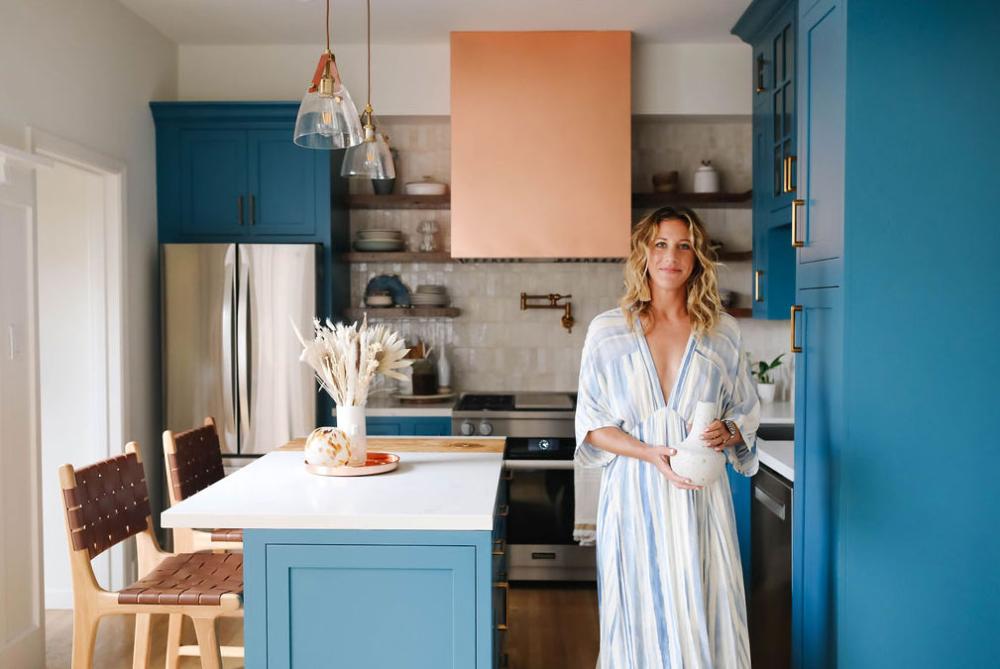
The DS1 takes a direct approach: a rectangular body with a plain warm-metal face. In this kitchen, the simple geometry sits comfortably beside blue cabinetry, open shelving, and a pale countertop.
The broad surface provides a calm focal point among the smaller objects and cabinet details. Keep the visible design simple while coordinating the insert, capture opening, and mounting requirements with the cooking appliance.
Design details
- Straight-sided box form
- A plain warm-metal surface
- A clear accent beside blue cabinetry
Bring the design together
Start with the feature that matters most in your kitchen: a clear silhouette, a particular metal, a quiet surface, or a carefully detailed apron. Then use the surrounding cabinetry and architecture to establish the hood’s scale.
Explore CopperSmith’s collection with the cooking appliance specifications and room measurements in hand. Resolve the finish palette and ventilation plan together, and review the final drawing before the hood is made.
Start your project →Originally published December 11, 2023. Updated November 4, 2026.

 By submitting, you agree to our Privacy Policy & Terms