

Copper quality starts with the material specification and continues through forming, joining, support, and finishing. Gauge, purity, and construction technique all matter, but no single number describes the quality of every copper sink, hood, table, or bath. Evaluate the complete piece for the job it needs to do.
Hand Made Copper Products
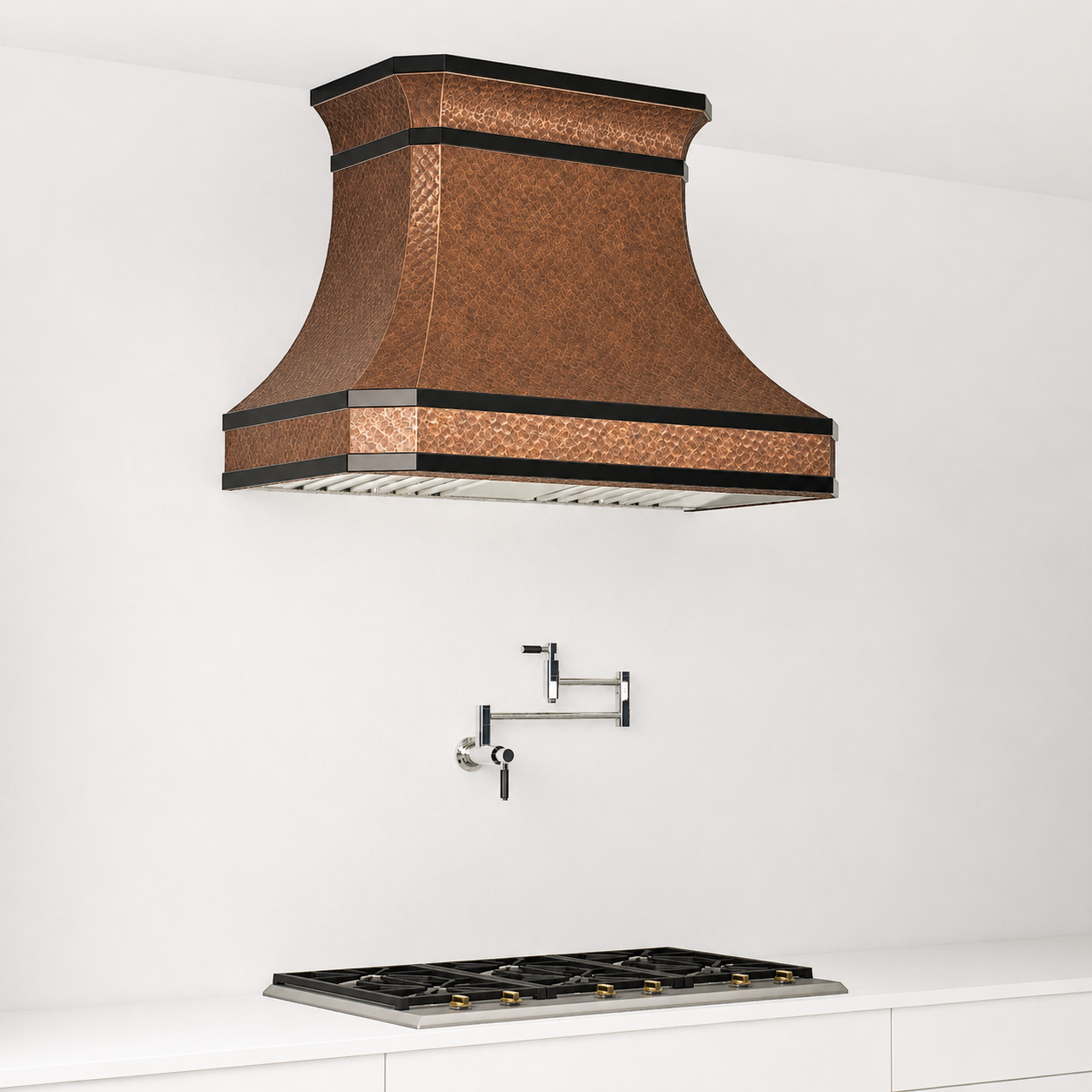
A formed copper surface can carry the visible decisions that make a piece belong in a room: the curve of a hood, a defined rim, a hammered texture, or the relationship between a field and its trim. Handwork is meaningful when those details are resolved and consistently carried through the finished construction.
At World CopperSmith, begin with the established form and the needs of the project, then confirm what can be specified in the selected model. “Hand made” is not a substitute for a material description, drawings, or suitable installation details. Look for evidence of the construction behind the visible surface.

Determining Quality Of Copper
Gauge and actual thickness
Within a stated gauge system, lower numbers generally describe thicker sheet. Ask for the actual thickness in millimeters or inches as well as the gauge designation. Do not compare gauge labels across unknown conventions, or infer an entire catalog’s thickness from one example.
Thickness contributes to how a component behaves, but the right construction also depends on shape, span, supports, and use. A sink bowl, a hood panel, and a metal tabletop need different details. The metal should be specified as part of the assembly, not judged apart from it.
Composition and material identification
Ask whether the piece is made from copper sheet, another copper alloy, copper plating, or a copper-colored finish. If a copper percentage or material grade is claimed, ask for the documentation and its scope. Do not assume that a historical statement about one finish applies to every current model.
Recycled and virgin describe feedstock history, not a complete quality grade. Neither label alone establishes composition or contamination. Verify relevant product requirements directly rather than claiming that all copper pieces use the same percentage of copper and zinc.
Construction technique
Review the joints, seams, edges, supporting structure, mounting, and functional openings appropriate to the product. Ask which details will be documented before production. A visual texture should work with sound construction, rather than distracting from unclear specifications.
Read quality at three levels
Material
What metal or alloy is specified, and what evidence supports that description?
Assembly
How are thickness, form, seams, supports, and mounting coordinated for the application?
Finish
What surface treatment is supplied, how does it change, and what care does it require?
Copper Facts
Copper has a long history in both functional and decorative objects. The Royal Society of Chemistry’s copper reference describes its early use, workability, and conductivity. Those general properties help explain why copper has so many uses, but they do not establish the performance of an individual home fixture.
- Gauge is a convention. Request a measurable thickness and confirm the system used.
- Surface color is not a purity test. Patina, coatings, and alloy composition affect appearance.
- A living patina changes over time. It does not repair structural damage or replace care.
- Feedstock history and finish appearance are separate questions. A recycled material does not automatically require a rustic finish, and virgin material does not guarantee a bright one.
- A dated production ranking is not a timeless material fact. Avoid using old country rankings as evidence of product quality.
Recycling can conserve resources, but a product-specific environmental claim needs its own evidence. The U.S. Energy Information Administration’s recycling explanation describes how reusing materials can save energy and natural resources. It does not certify the recycled content, emissions, or end-of-life recovery of a particular CopperSmith product.

High Quality Copper Products
Bring the material and construction questions back to the room. Determine the piece’s dimensions and role, then resolve the finish alongside nearby surfaces. A larger hood profile, a particular sink rim, or a table edge may change the specification as well as the appearance.
The Artisan AT1 product page is one example of how a defined hood form is translated into a project-specific configuration and CAD review. Use the actual product information to resolve dimensions, ventilation, finish compatibility, and available details; do not extrapolate one hood’s options to every category.
Compare metal and finish samples in the room’s light before making the final surface decision. Keep the approved specifications, installation information, and care guidance with the project documents so the finished piece can be evaluated against what was agreed.
Discuss the material, construction, and finish questions with CopperSmith at 888-431-4677 or use the Online Form. Provide the intended use and dimensions so the conversation can resolve the details that matter.



 By submitting, you agree to our Privacy Policy & Terms