

Type I and Type II identify different commercial kitchen exhaust applications. Type I addresses cooking that produces grease or smoke; Type II generally addresses heat or steam where grease and smoke are absent. The appliance and cooking process determine the requirement, not the decorative shape or metal finish.
Begin with the cooking process
For a commercial project, list the appliances, fuels, menu and cooking methods before selecting range hoods. Frying, griddling and other grease-producing operations call for a different design assessment from equipment used only for a qualifying heat or steam load. A change in menu can change the ventilation requirements.
The Wisconsin commercial kitchen hood guidance illustrates why appliance use matters when distinguishing hood types. Apply the rules adopted for the project's location and obtain the authority having jurisdiction's review; a general article cannot classify a specific installation.
At a glance
Classify the actual cooking application
Process
Record the equipment and cooking methods.
Emissions
Distinguish grease and smoke from heat and steam.
System
Coordinate exhaust, air supply and fire protection.
Approval
Confirm the locally applicable requirements.
Type I: grease and smoke
A Type I design must address grease collection and the associated exhaust system. Hood construction, filters, grease duct, clearances, exhaust discharge, replacement air and fire protection need coordinated review. A residential insert placed inside a decorative enclosure does not become a compliant commercial system simply because the enclosure is stainless steel.
Fire protection is a separate part of that coordinated design. For example, Blaine's kitchen hood suppression guidance describes protection of grease-producing commercial equipment and related exhaust components. The applicable system, coverage, controls and inspection requirements must be established for the actual project.

Type II: qualifying heat and steam loads
Type II does not mean ductless. It describes an application without the grease or smoke load that requires Type I treatment. The design still needs the appropriate air movement, duct arrangement, discharge and maintenance provisions. Condensation, moisture and the actual appliance duty remain relevant.
Do not assume a Type II hood is suitable because an appliance is electric or because the kitchen is small. The food and cooking process matter. If the planned use changes, return to the designer and local authority before continuing under the old classification.
Keep residential and commercial specifications distinct
The residential kitchen category helps homeowners explore forms and finishes, but commercial classification is a different question. The photographs here illustrate residential metalwork only; they do not identify Type I or Type II equipment or demonstrate commercial approval.
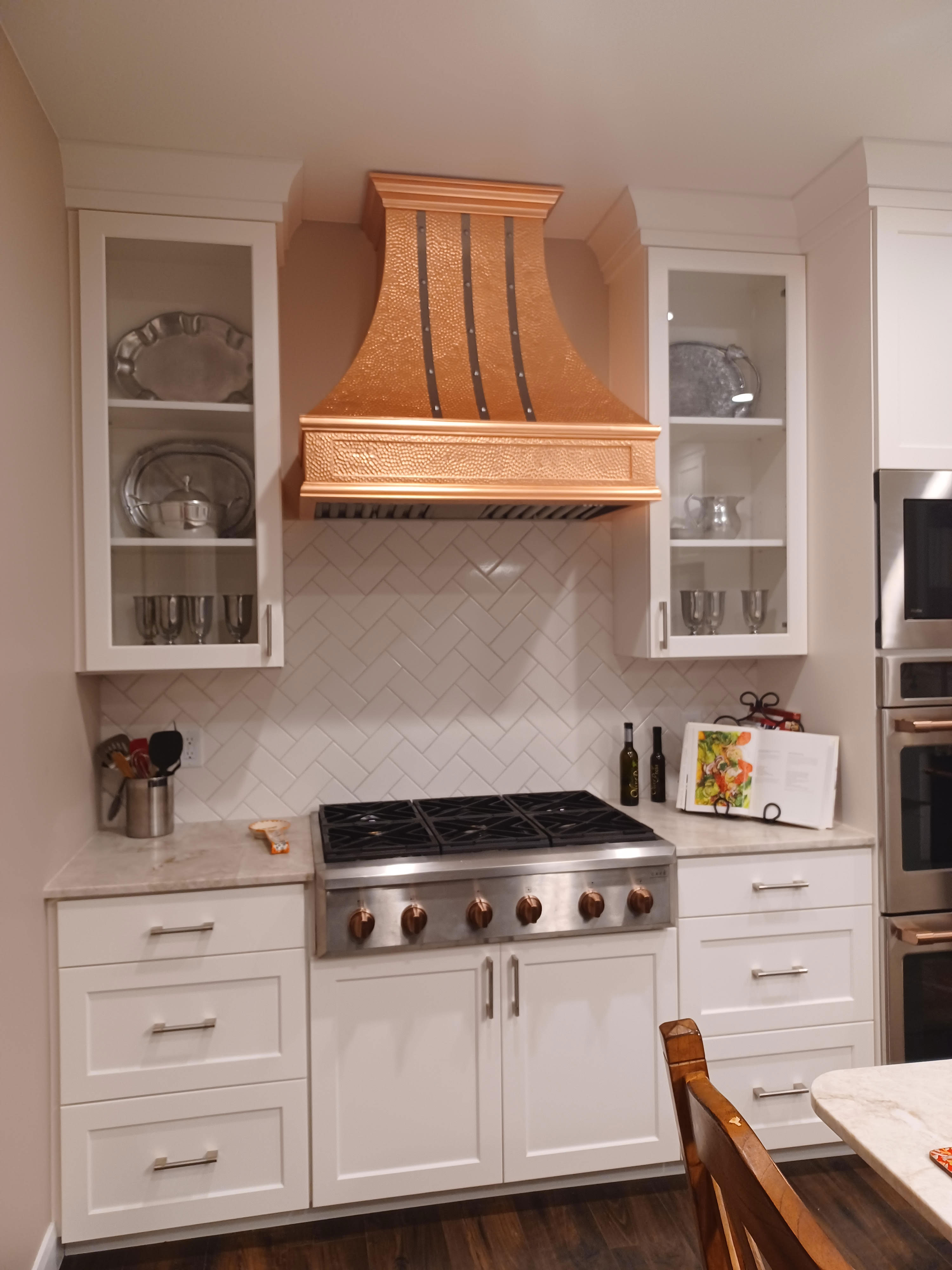
Use the inspiration gallery to communicate the appearance you want, then separate that visual brief from the engineering documents. Review finish samples for color and texture after the required equipment and permitted enclosure details are established.
What should the project team document?
- The full equipment schedule, intended cooking methods and operating conditions.
- The proposed hood classification and the authority responsible for approving it.
- Exhaust, replacement air, fire protection and controls as a coordinated system.
- Access for cleaning, inspection, servicing and future equipment replacement.
- The approved relationship between the listed equipment and decorative metalwork.
When reviewing range hoods, ask for the documentation relevant to the intended application. CopperSmith can be part of the material and fabrication discussion, while the design team retains responsibility for the complete commercial installation. Professionals can also review the trade program when coordinating the project.
Does the hood type determine maintenance?
It informs the maintenance plan, but it does not eliminate maintenance. Grease-producing systems need appropriate inspection and cleaning, and heat or steam systems still require care. Keep the approved equipment instructions and service requirements accessible to the operator. Revisit them whenever the equipment or cooking duty changes.
Start your project with your measurements, finish preferences and installation requirements.



 By submitting, you agree to our Privacy Policy & Terms