

Use metal accents to give the kitchen a clear point of focus
Metal can connect the working parts of a kitchen with its architecture. A hood, sink, light fitting or cabinet pull contributes through proportion, tone, texture and reflection. Begin with the room you want to live in, rather than a rule that every surface must follow the latest trend.
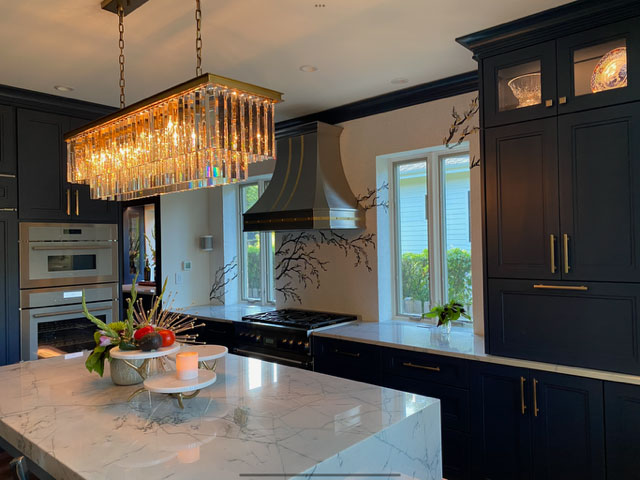
Choose the dominant feature first
If the cooking wall is the main view, start with range hoods and develop the smaller accents around it. If an island or dining area dominates the room, the lighting and tabletop may deserve more attention. Giving one element the lead makes the other choices easier.
Metal accents can change with time, especially when a finish is intended to develop a patina. Decide whether that variation suits your expectations. A controlled factory finish, a brushed surface and a living copper finish are different choices; color alone does not describe their behavior.
Six places to introduce metal
1. Cabinet hardware
Knobs and pulls offer a modest way to change the rhythm of a kitchen. Check the existing hole spacing, grip and projection before choosing replacements. A beautiful pull that catches clothing or feels awkward will be noticed every day. Use the same family where repetition helps the room, and vary size where the cabinet function calls for it.
2. Lighting
Metal pendants can echo a hood or introduce a contrast above an island. Judge the fixture with the lights both on and off. Highly reflective finishes can create a sharper effect than brushed ones, while the bulb and shade influence the apparent color. Keep sightlines between seated and standing people in view.
3. The cooking wall
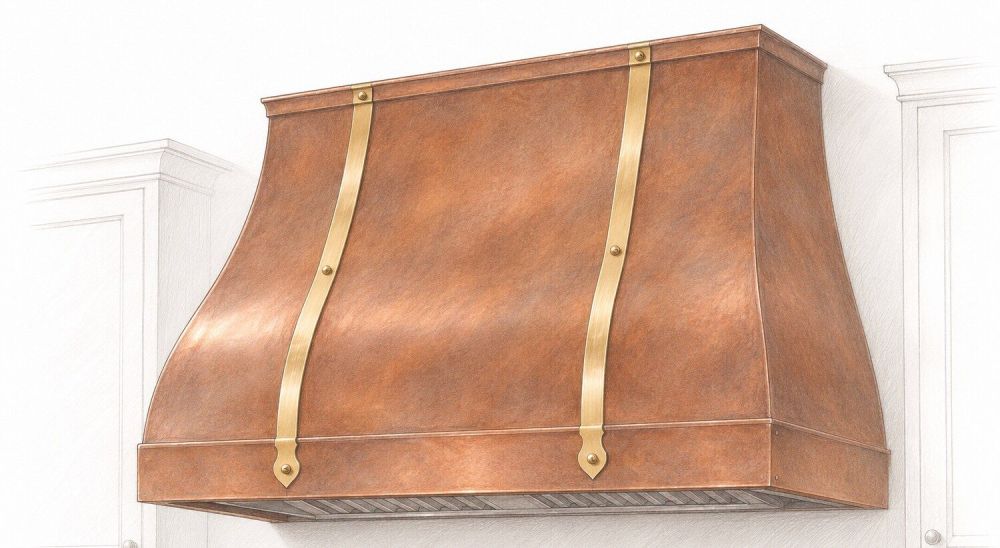
A range hood is a substantial piece of metalwork, so its outline should relate to the cabinetry and appliance. Compare Explore copper range hoods for warm-toned options, but choose the working ventilation system independently of the decorative finish. Do not use visual similarity as proof of the same technical specification.
4. Backsplashes and wall details
A metal backsplash can be quiet and continuous or divided into a more visible pattern. Consider seams, outlets, edges and the junction with the countertop. Have the installer confirm substrate, fastening, appliance clearances and cleaning compatibility. A thin decorative sheet is not a substitute for a required protective assembly.
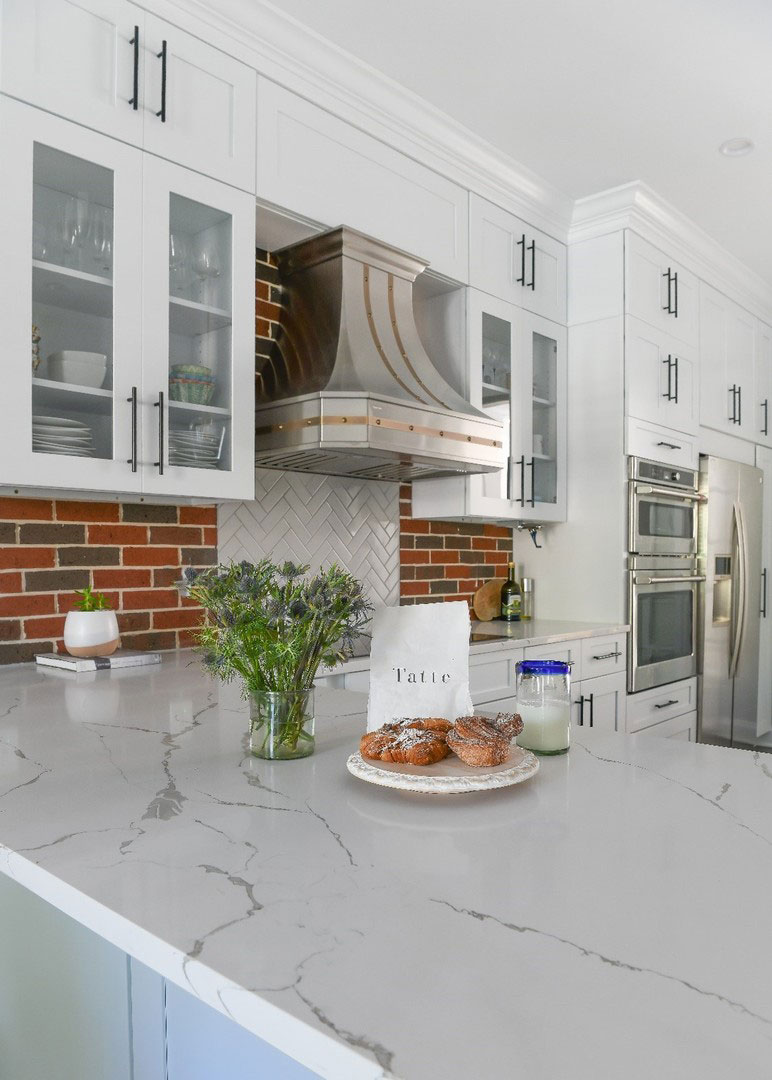
5. Sinks and faucets
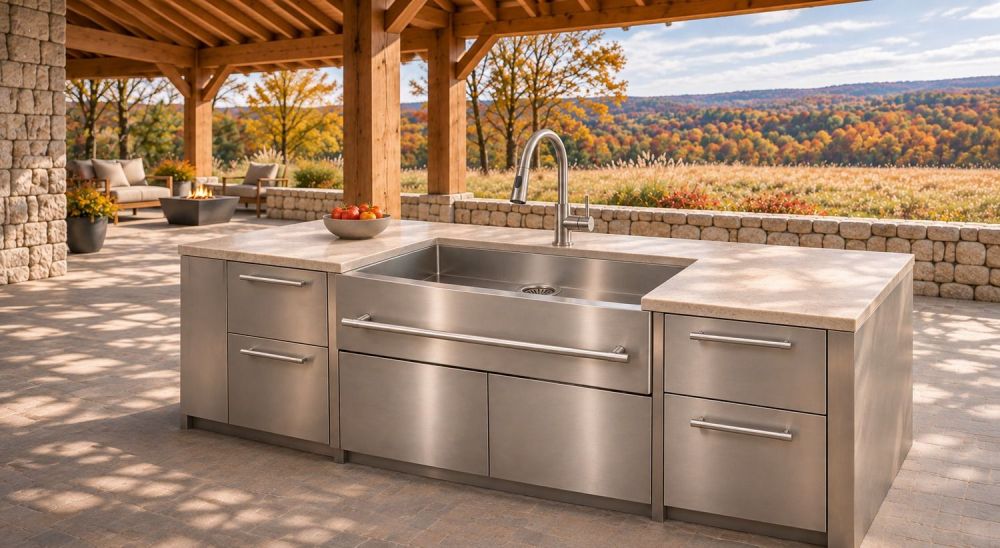
These surfaces are touched and cleaned frequently. Compare care requirements as well as color, and decide how the finish should relate to the countertop. A faucet and sink can coordinate without being identical. Keep the bowl layout, mounting method and reach of the faucet central to the decision.
6. Furniture and smaller objects
A metal table surface, framed mirror or serving piece can continue the kitchen's material story into an adjoining room. Use smaller objects to test a combination before changing permanent elements. Avoid buying a collection of decorative pieces simply to repeat a finish that is already clearly established.
Mix finishes with a reason
Start with one dominant metal and one supporting tone. Repeat the supporting tone in separated parts of the room so it feels intentional. The exact count is a design tool, not a universal rule: a restrained kitchen may need only one metal, while a layered interior may accommodate several.
For example, a warm copper hood can sit comfortably with stainless appliances when wood and stone provide a bridge between them. A brushed hood and polished lighting can share a color family while differing in reflectivity. Review physical samples together; matching names from different suppliers do not guarantee matching finishes.
The range hoods collection lets you compare silhouettes before narrowing finishes. Review range hoods in installed settings to see how a larger form reads alongside cabinetry, rather than judging a product against a blank background alone.
Keep care and budget in the design brief
List the items you are keeping, the items you are replacing and the work each change requires. New hardware may be straightforward; a different sink, backsplash or hood can affect adjoining construction. Include fitting, support, ventilation and electrical work where applicable.
For modern kitchen design, a coherent material palette matters more than a trend label. Retain elements that work, and change the ones that resolve a specific visual or practical problem. Record the finish and care instructions for each component so routine cleaning preserves the intended appearance.
Further design reading
The following references accompanied the original article. The 2023 trend pieces provide historical context rather than a current ranking; use current product instructions for technical decisions.
- https://www.bhg.com/home-improvement/remodeling/architectural-details/metal-in-the-home/
- https://www.elledecor.com/design-decorate/trends/g34797887/interior-design-trends-2023/
- https://www.architecturaldigest.com/story/the-top-kitchen-trends-for-2023
- https://www.realsimple.com/home-organizing/decorating/decorating-kitchen/metal-accents-kitchen
- https://www.houzz.com/magazine/metal-finishes-how-to-choose-the-right-one-for-your-kitchen-stsetivw-vs~136573731
Start your project with your measurements, finish preferences and installation requirements.
Originally published April 11, 2023.

 By submitting, you agree to our Privacy Policy & Terms