

An uncoated copper sink will change color through use. Mild washing, rinsing and drying can reduce residue and water marks, but cannot permanently stop a living finish from developing. First identify whether the bowl is bare, patinated or coated; that determines which care products are appropriate.
What Does Copper Sink Tarnishing Look Like?
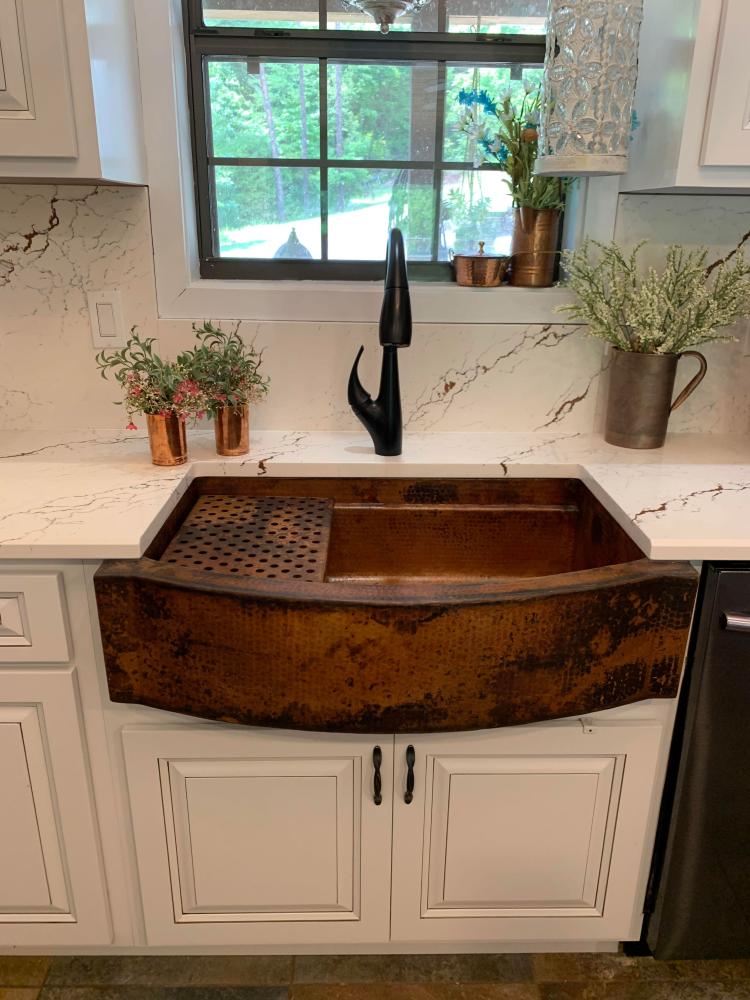
Tarnish and patina are overlapping descriptions of changes at a metal’s surface, not separate processes that can be distinguished reliably by whether the color is even. Copper may darken to brown or nearly black, while moisture, residues and local exposure can produce uneven patches.
A copper patina is not necessarily green or blue. Those colors can develop under particular exposure conditions, especially outdoors; an indoor sink often develops brown tones. Acidic food contact can leave a brighter area by removing part of a patina.
A color change alone does not establish damage. Distinguish ordinary living-finish variation from deposits, coating failure or active corrosion before attempting treatment. Abrasive polishing can remove an intentional patina and change the finish permanently.
What Causes Copper Sinks to Tarnish?
Copper sinks tarnish when exposed to certain chemicals, moisture, or environmental factors that speed up the oxidation process. Common causes of tarnishing include:
-
Harsh Chemicals: Cleaning products that contain acidic or abrasive ingredients can strip away the protective layer of patina, causing tarnish to form. Strong chemicals like bleach or vinegar can cause the copper to discolor or darken prematurely.
-
Water Exposure: Standing water, especially if it's hard water, can cause water spots or streaks on the surface, leading to tarnishing over time. Water that is too acidic or alkaline can also accelerate the tarnishing process.
-
Salt or chlorine: Remove food salts and residues promptly using the approved cleaning method. Avoid chlorine bleach unless the exact finish instructions expressly allow it. Coastal exposure varies with the site and is not determined by a window’s location alone.
-
Airborne Pollutants: Exposure to smoke, pollution, or certain cleaning products can also cause tarnishing. Chemicals or airborne particles settle on the copper surface and may react with the metal, causing uneven discoloration.
Regular gentle cleaning can reduce avoidable discoloration and deposits, but does not stop the chemistry of an exposed living finish.
How Do You Maintain Different Types of Copper Sinks To Prevent Tarnishing?
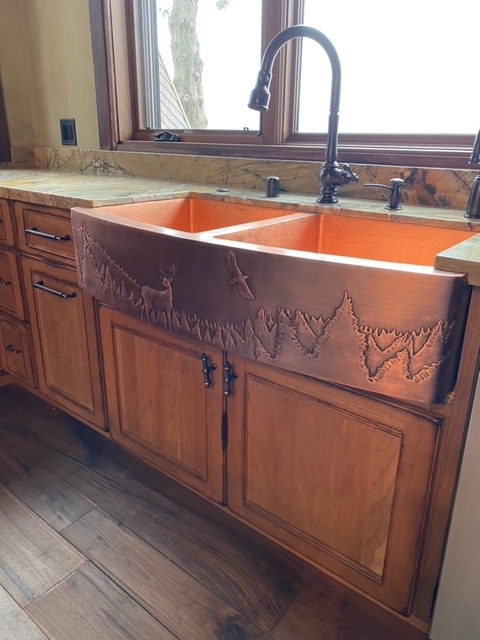
Before trying to prevent tarnish, identify both the underlying metal and the surface treatment. Confirm the bowl and apron specifications separately; the two surfaces may use different finishes and face different exposure.
General Copper Sink Maintenance:
-
Wash regularly with mild soap and warm water to remove dirt and buildup.
-
Avoid abrasive cleaners or scrubbing pads that could scratch the surface.
-
Wipe dry after use to reduce water marks; drying does not permanently prevent oxidation.
-
Use wax only when the sink manufacturer approves the exact product and application. There is no universal annual schedule.
Maintaining your copper sink doesn’t have to be difficult, but it requires attention to the unique needs of the finish. Now, let’s dive into how to care for each specific type of copper sink to ensure long-lasting beauty and performance.
Living Finish Sinks
A living finish is an exposed surface intended to change through use; it can be smooth or hammered and may already have a patina. Wash with a soft cloth and a finish-compatible mild cleaner, rinse and dry. Do not use a teak cleaner or oil on the bowl unless its specific care instructions approve it.
Rustic Finish Sinks
A rustic appearance may involve texture, patination or other surface treatments. Its name does not establish how it was manufactured or whether it is coated. Follow the documented care method rather than applying oil or carnauba wax on a fixed schedule.
Antique Copper Sinks
An antique finish gives copper an aged appearance at delivery. An uncoated patinated surface can continue changing; the initial treatment does not freeze its color. Gentle cleaning preserves the intended surface better than polishing it back to bright metal.
Sealed Copper Sinks
A coating can slow exposure-related changes while intact, but it requires compatible cleaning and may eventually need repair. Do not polish or wax over an unidentified coating. Obtain the coating-specific care instructions before treating a mark.
Polished Copper Sinks
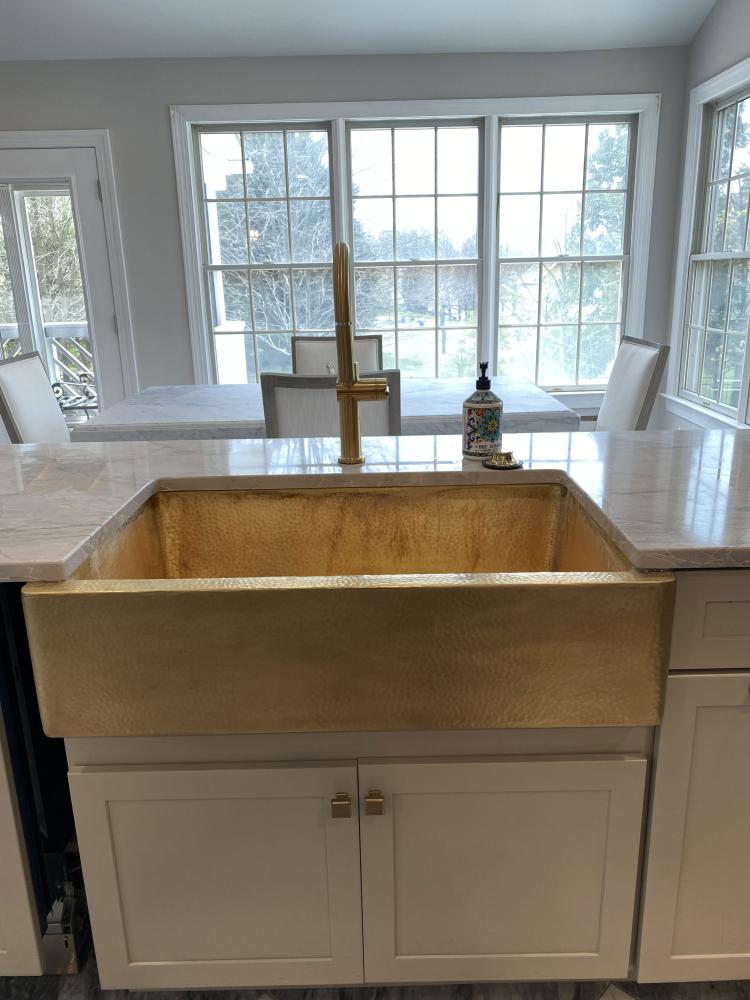
Bright polished copper is reflective and readily shows fingerprints and oxidation when uncoated. Polishing removes surface material and can erase a deliberate patina, so use it only for a confirmed polishable finish and with the manufacturer’s approved method.
Keep Your New High-Quality Copper Sink From Tarnishing
CopperSmith copper sinks allow the visible apron, working bowl and surrounding finishes to be considered as a whole. Choose a surface you are comfortable maintaining and allowing to change, then review the care requirements before ordering.
For more information about our copper sink customization options or additional tips on how to keep your new copper sink from tarnishing, Start your project.
Specify the bowl and apron separately
The Farmhouse SB uses a straight exposed apron and one open bowl. CopperSmith specifies compatible living finishes for bowls and a broader decorative range for aprons. Because washing, acidic foods and handling expose these surfaces differently, compare their care requirements as well as their color. Review Farmhouse SB bowl and apron options.
Identify the surface before treating a mark
Conservation guidance emphasizes identifying patina and coatings before cleaning. Its historic-object treatments are not sink-care instructions. See Ford Conservation Center’s surface-care guidance.
The copper section explains why patina should not automatically be removed. Use the sink’s own instructions for daily washing and food-contact surfaces. See Australian National Maritime Museum’s copper-care discussion.
Start your project →Originally published July 12, 2025. Updated November 4, 2026.


 By submitting, you agree to our Privacy Policy & Terms