

Yes, a copper fire pit can develop a green patina
Copper can change from bright metal to brown, darker tones and, under some conditions, green or blue-green patina. An outdoor fire pit's finish, climate, moisture and use influence that change. There is no fixed timetable, and a factory-applied patina does not necessarily freeze the appearance permanently.
The history of the Statue of Liberty offers a familiar example of copper changing outdoors. A fire pit has a different form, exposure and heat cycle, so it should not be expected to follow the monument's exact color or rate of change. Choose the finish with an understanding of how that specific product is intended to age.

What causes the color change?
Copper reacts at its surface with the surrounding environment. A green patina is one possible result of those reactions, not a layer of ordinary iron rust. OpenStax's corrosion explanation describes copper oxidation and the formation of colored surface compounds. The chemistry is more involved than a simple progression through “copper dioxide.”
That distinction matters when assessing appearance. Gradual surface variation may belong to a living finish. Deposits, soot, damaged coatings and unexpected localized corrosion are different conditions that can look similar from a distance. Do not assume every green or dark mark has the same cause.
Four conditions that affect the finish
Coastal and local exposure
Salt, moisture, airborne substances and periods of wetting and drying can affect metal surfaces. A sheltered courtyard and an exposed coastal terrace create different conditions. Tell the manufacturer about the location before selecting a finish or deciding how the fire pit will be protected.
The finish on the copper
Unsealed copper, a developed patina and a coated finish can behave differently. “Pure copper” describes material composition, while “sealed” describes a surface treatment; they are not mutually exclusive material categories. Ask which surfaces are treated and what care is approved around heat.
Heat and everyday use
The exterior, rim and areas near the burner may experience different conditions. A photograph of a new fire pit cannot predict exactly how every panel will look after use. The selected burner and installation must remain within the product's requirements regardless of the metal's melting point.
Other metals and details
Brass fire pits have their own finish characteristics. A fire pit can also contain a burner, fasteners, supports and controls made from other materials. The appearance of its copper shell does not establish the condition of those components.
Can you stop the surface turning green?
Approved care and protection can influence exposure, but no universal home treatment guarantees a permanent color. Read about developing a patina as background on the material; do not transfer a decorative patination recipe to a working fire appliance.
Do not use car wax, furniture polish, salt-and-vinegar mixtures or an improvised coating on heated surfaces. A treatment suitable for a decorative object may be unsuitable near flame or for the fire pit's finish. Obtain the manufacturer's instructions for the exact product, including any restriction on coatings.
Use an approved cover only after shutdown and complete cooling. Keep required ventilation and drainage unobstructed. A cover should suit the installation rather than trap moisture or conflict with gas-equipment requirements. Follow the product's seasonal-care instructions; a fixed gas installation is not something to disconnect and move casually.
Clean for condition, not a promised color
Use the permitted cleaner, soft tools and drying method. Avoid abrasives that can change the finish. A gentle cleaning routine does not guarantee a caramel-brown patina, and monthly polishing is not a universal requirement.
For a gas model, follow the burner and media instructions rather than flooding the assembly with wash water. For a separate product explicitly designed to burn wood, ash handling belongs to its own manual and should happen only when safe. Never burn wood in a gas fire pit because the exterior is copper.
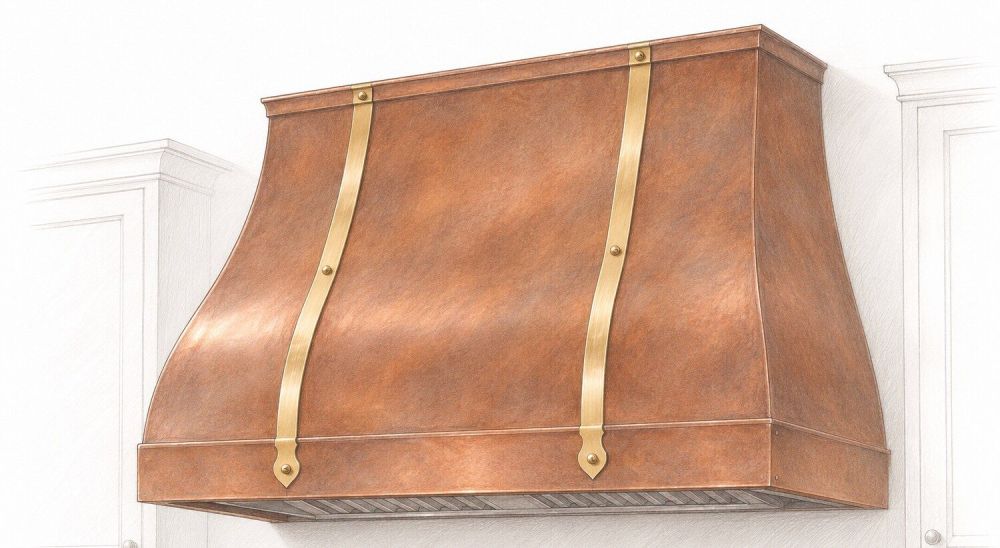
The care method for a range hood elsewhere in the home may differ from that for an outdoor fire feature. Keep product-specific instructions with each fixture instead of using one metal-cleaning routine everywhere.
When patina is part of the design
Country Life's perspective on patina considers the visual value of surfaces that gain character with time. In an outdoor space, that variation can relate to stone, planting and weathered timber. It is a design preference, not evidence that the appliance never needs inspection.
A copper fire pit should be selected around the appearance you want to live with, its actual care needs and the complete installation. As with range hoods, samples and drawings help resolve the finish and proportions before ordering. If a stable, uniform appearance is essential, discuss the available options and their limitations before choosing a living finish.
Start your project with your measurements, finish preferences and installation requirements.

 By submitting, you agree to our Privacy Policy & Terms