

A placement guide for copper lighting, from entry and patio settings to kitchens and living rooms, with attention to light quality, finish, ratings, and care.

Open-frame pendants show both the metal structure and light source. Review glare and lamp appearance as carefully as the fixture shape. This is an inspiration image, not a current product specification.
Use copper lighting where the fixture’s scale, light distribution, and finish support the room or exterior task. Porches and patios need fixtures approved for their exposure; kitchens need useful light on work surfaces; dining and living areas benefit from controlled glare. Copper color alone does not establish performance or outdoor suitability.
Copper Lights can bring a material connection to a lighting plan. The copper may relate to a hood, table, cabinet hardware, or the exterior palette. Its visual role should be considered together with the job the light needs to perform.
Start by identifying the activity and location. An entry needs a different distribution of light from a kitchen counter or a reading chair. Choose the fixture around that use, then assess its proportion, material, and finish. Treat inspiration photographs as a starting point for the design, not as proof of a product’s ratings.
Exterior Ideas: Porches, Patios, and Paths
At an entry, place light where it helps people see the door, steps, and approach. Consider the view from inside the house and from the street. A fixture that seems restrained in daylight can become a bright point of glare after dark if its lamp is exposed.
On a patio, plan around the seating and dining zones rather than evenly filling every area with brightness. Keep the light source out of seated sightlines where possible. Wall fixtures, overhead lights, and portable lamps each have different installation and exposure requirements.
For paths and landscape edges, direct light to the useful surface and avoid lighting adjacent windows unnecessarily. DarkSky and IES outdoor-lighting principles emphasize purposeful, targeted, controlled light. Use the amount needed for the task, and review timing and dimming rather than leaving decorative light at full output all night.
Choose a luminaire marked for the actual location. A copper shell is not an outdoor rating. UL’s luminaire marking guide distinguishes dry, damp, and wet use; have the installer confirm suitability and the current requirements for the installation.
Interior Ideas: Connect the Fixture to the Room
Above a kitchen table, the fixture can relate to the tabletop outline without repeating it exactly. Compare the width, hanging position, and view across the table. Check that people can see each other comfortably and that the light source does not dominate the seated view.
At an island, separate visual rhythm from task coverage. An arrangement that looks balanced along the counter may still leave shadows in the places where people work. Coordinate decorative pendants with the broader lighting plan instead of asking one fixture type to do every job.
In a living space, think about reading, conversation, and circulation separately. A copper lamp or shade can connect nearby materials, but the bulb and shade determine how useful and comfortable the light is. Review cord routes and avoid creating obstacles at furniture edges.
The Department of Energy’s light-bulb guidance distinguishes output, power, and color appearance. Compare brightness and color temperature separately from the copper finish. The color of the fixture is not the same as the color of the light it produces.
Care: Identify the Finish Before Cleaning
Copper-colored lighting may use solid copper, plating, another coating, or a copper-toned finish. Ask which material is actually present and how it should be maintained. A cleaner appropriate for one construction can damage another or change an intentional patina.
Do not assume lemon, vinegar, salt, or ketchup is an appropriate cleaning recipe. Identify any coating and follow the fixture manufacturer’s directions. Dust with the recommended method and avoid applying liquid around sockets, wiring, drivers, or other electrical components.
Have the fixture safely isolated as directed before maintenance and allow lamps to cool. Use the documented procedure for removing shades or glass. Do not immerse an electrical fixture or attempt to refinish installed electrical parts as a household cleaning task.
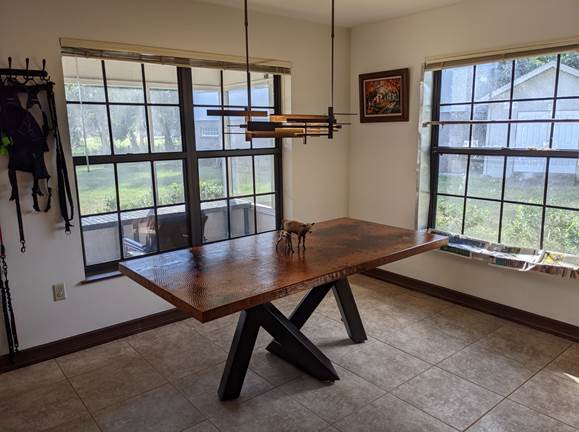
Copper connects the table surface with the warmer tones in the room. Base position and chair clearance deserve the same attention as the finish.
Versatility: Create a Material Relationship Without Matching Everything
Copper can sit within a restrained room as readily as a rustic one. Proportion, edge detail, sheen, and the surrounding materials help determine that relationship. A simple fixture in copper can create a different effect from a highly detailed fixture in the same metal.
Use a limited number of deliberate connections. The fixture might relate to a copper table while the faucet and door hardware remain a different metal. Review metal finish and texture references beside actual materials so the relationship is established by samples rather than names.
When coordinating a kitchen, compare the light placement against the sightline to a copper range hood or eating area. A fixture can complement those pieces without obscuring them or forcing an exact finish match.
A Placement Review Before Installation
Mark the proposed position, then review it from the places people will sit, stand, and approach. Check doors, cabinet movement, work areas, and the views through adjacent rooms. Use a temporary size template where practical before committing to the final fixture.
Record the model, mounting method, dimensions, location rating, light source, control compatibility, and care requirements. A qualified installer should confirm the electrical and structural details. If considering gas lighting, obtain a separate review of the fuel system and installation requirements.
- What activity is the light serving?
- Where will glare be seen from seated or standing positions?
- Is the fixture approved for the location and mounting method?
- How do the bulb, controls, and material finish work together?
Common questions
Can any copper light be used outdoors?
No. Select a fixture approved for the actual damp or wet exposure and installation method. Copper as a material does not establish the fixture’s environmental rating.
Does a copper shade make the light warm?
The shade can affect reflected light, but the light source also has its own color appearance. Compare the bulb and fixture together rather than relying on metal color.
Must copper lighting match a copper table exactly?
No. A related tone or deliberate contrast can work. Evaluate samples, scale, and the overall room instead of requiring an identical finish name.
Updated October 29, 2026. Originally published 2015-02-01. Care and suitability depend on the selected product and finish.
Define the details around your space.
Review the lighting layout beside the surrounding metalwork, stone, and wood. Confirm current fixture availability and specifications with its supplier before purchase.
Explore the material palette
 By submitting, you agree to our Privacy Policy & Terms