

A copper range hood can give a kitchen a clear center of gravity. Its shape frames the cooking area, while its surface connects with wood, stone, paint and the light moving through the room. These seven kitchens show different ways to make that relationship work.
Use the photographs to study composition rather than to copy a specification. A finished room does not reveal its insert model, duct route or installation clearances. Those decisions belong in the drawings for your own project.
At a glance
Build the room around the hood
Form
Compare the silhouette with the cabinets and ceiling.
Palette
View metal, stone and paint samples together.
Performance
Coordinate the insert, ductwork and clearances.
Detail
Repeat a few materials without matching every finish.
1. Bring warmth to blue cabinetry
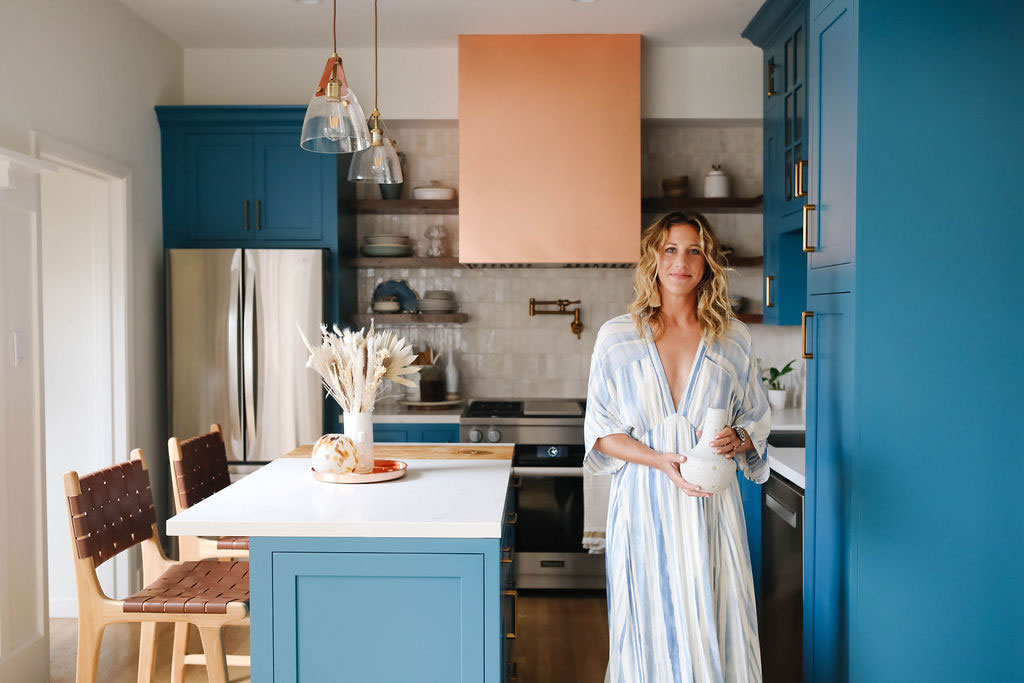
Blue and copper create a distinct contrast without requiring a complicated palette. Here, the warm metal gives the cooking area a focal point while the cabinetry establishes the larger field of color. The relationship works because the finishes have different jobs: one organizes the room, and the other draws the eye.
If you prefer a brighter metal expression, compare a penny copper range hood with darker copper samples in the actual kitchen light. A finish that looks quiet online may become much more reflective beside a window. Keep the countertop, paint and hardware samples nearby while making the comparison.
The article linked under Copper is the primary metal offers another way to consider copper as a decorative finish. For a permanent hood, judge the material against your cabinets and daily care preferences rather than a seasonal trend.
2. Let white cabinetry frame the metal
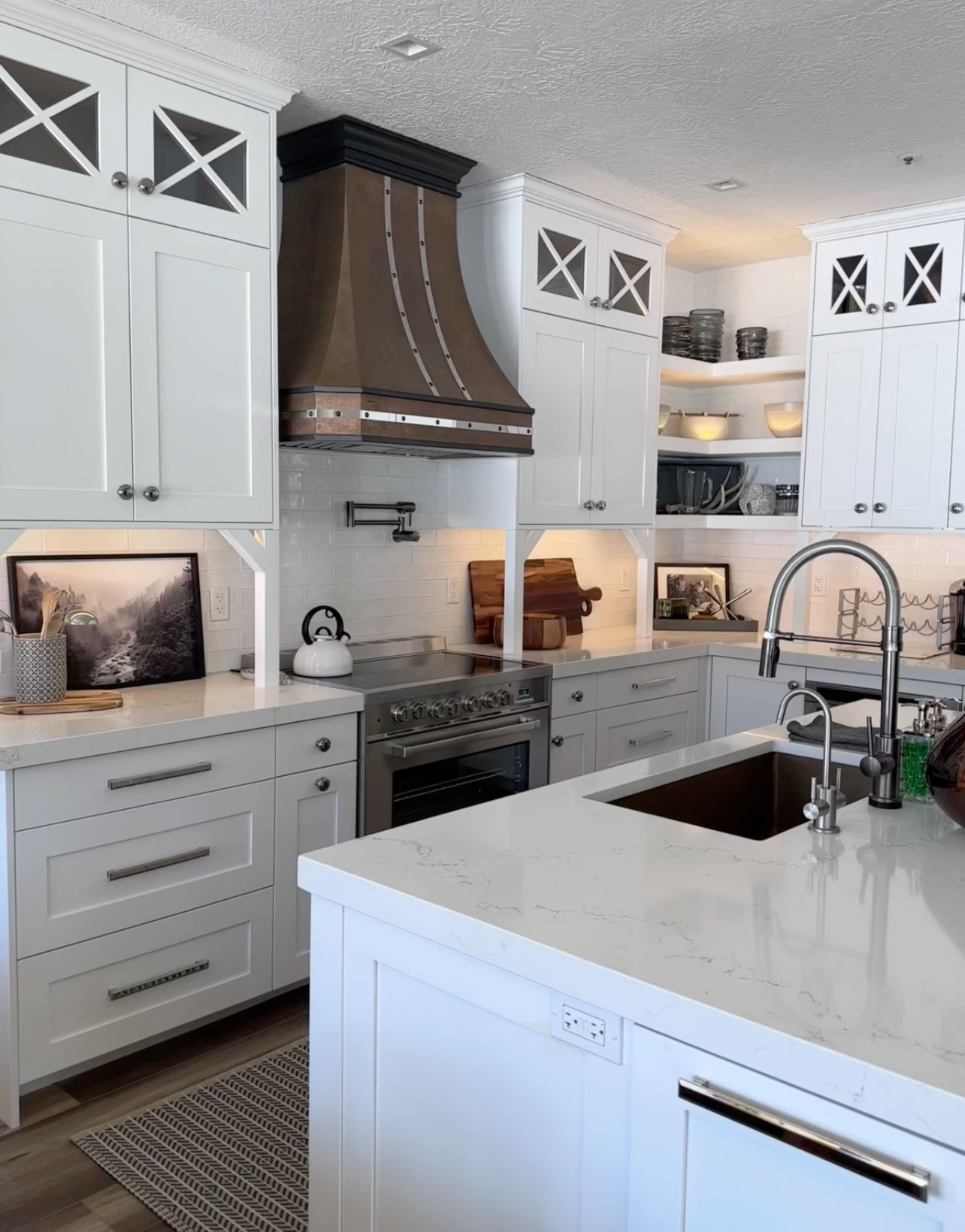
A white kitchen gives copper room to register through tone and shape. The surrounding cabinets need not be completely plain, but their lines should support the hood's proportions. Look at the distance between upper cabinets, the height of the crown and the amount of backsplash visible beneath the hood.
An antique smooth copper range hood is one design direction to compare. A smooth surface and a textured surface reflect light differently, so review the finish as closely as the outline. There is no need to repeat copper on every handle or faucet; a single substantial element can carry the material through the room.
3. Set a dark hood within stone
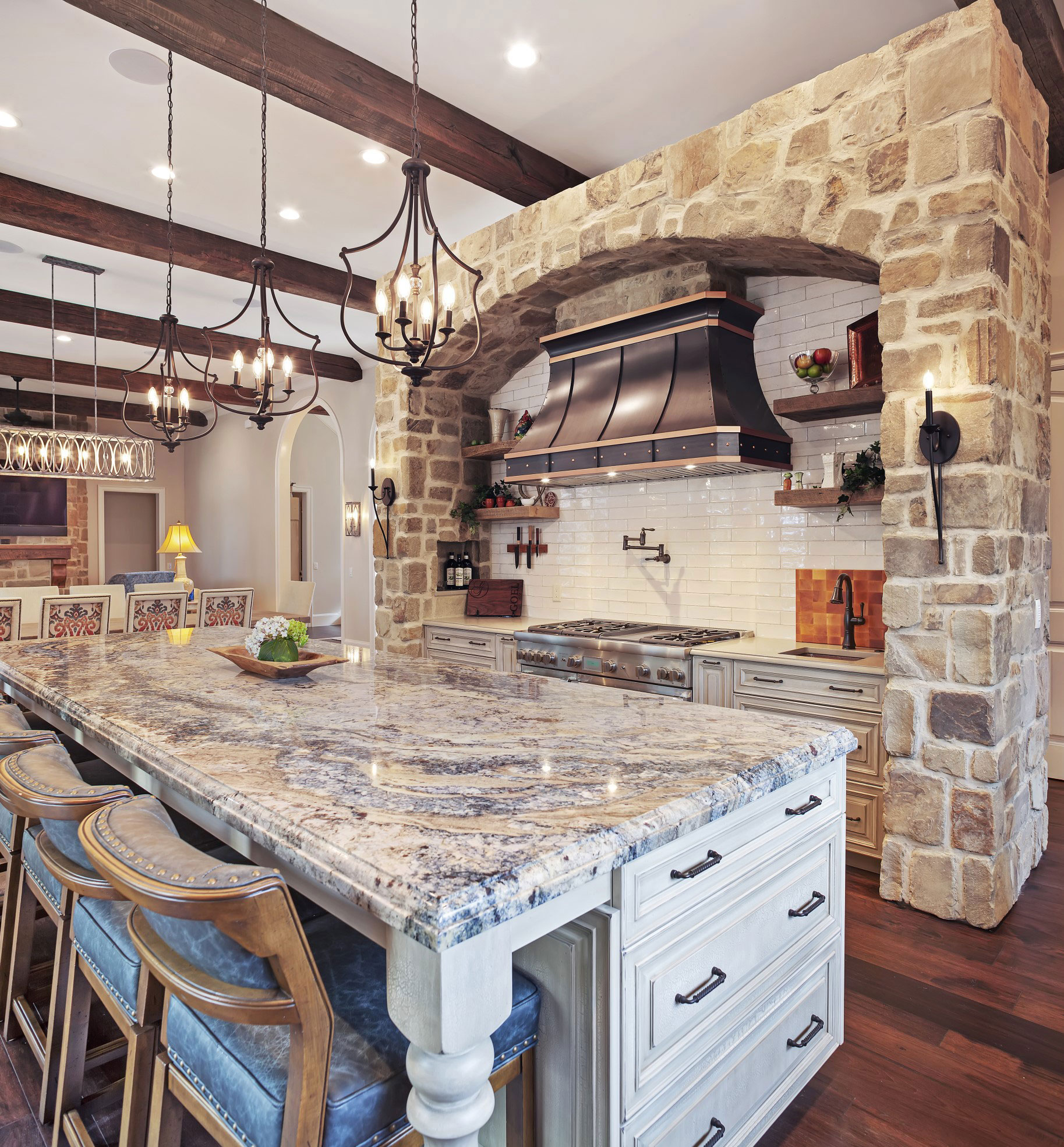
The stone arch makes this cooking wall feel like part of the architecture. The darker hood sits within that frame, and its curved profile gives the composition a softer center. The adjacent light island prevents the stone and metal from making the entire room feel visually heavy.
When considering an antique copper smooth range hood, compare its outline with the masonry opening and cabinet elevations before choosing trim. A variety of textures can be effective, but each surface needs enough space to be understood. Stone joints, metal straps and decorative corbels can become crowded if all are equally prominent.
4. Anchor a wood kitchen with copper
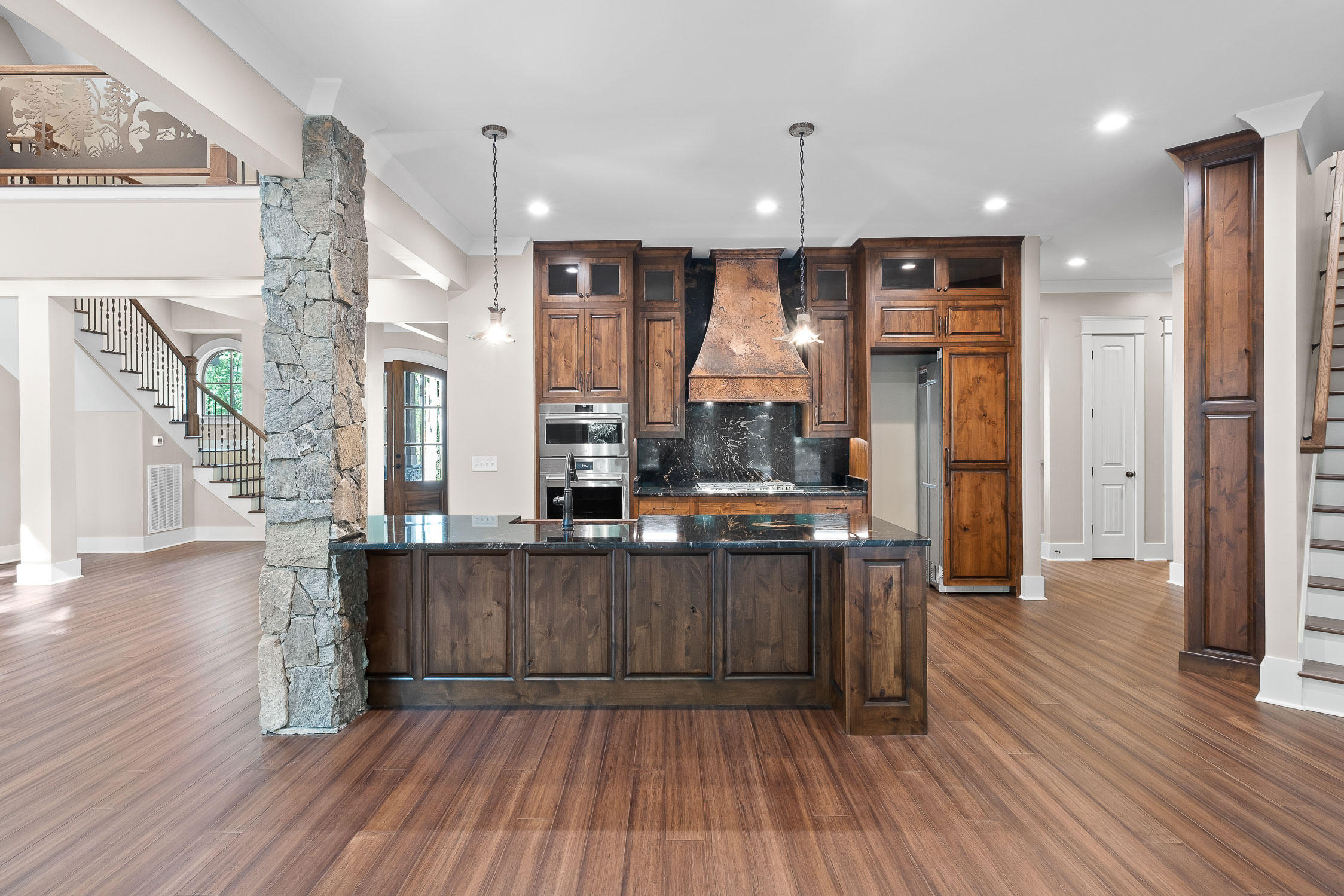
In a room with extensive wood cabinetry, copper can introduce a related warmth while retaining its own surface character. The central island and long cabinet runs establish strong horizontal lines; the hood gives the cooking wall a vertical emphasis.
A classic antique copper range hood is one option for exploring that balance. Compare the hood with the darkest and lightest tones in the wood rather than trying to achieve an exact color match. Advice on mixing metals in the kitchen can help organize the remaining finishes: choose a dominant metal, then use a smaller number of complementary accents.
Keep the practical view in mind as well. From the dining table or living area, the hood may be seen across the island rather than directly in front of the range. Review the design from those everyday positions.
5. Use copper in a kitchen with clean lines
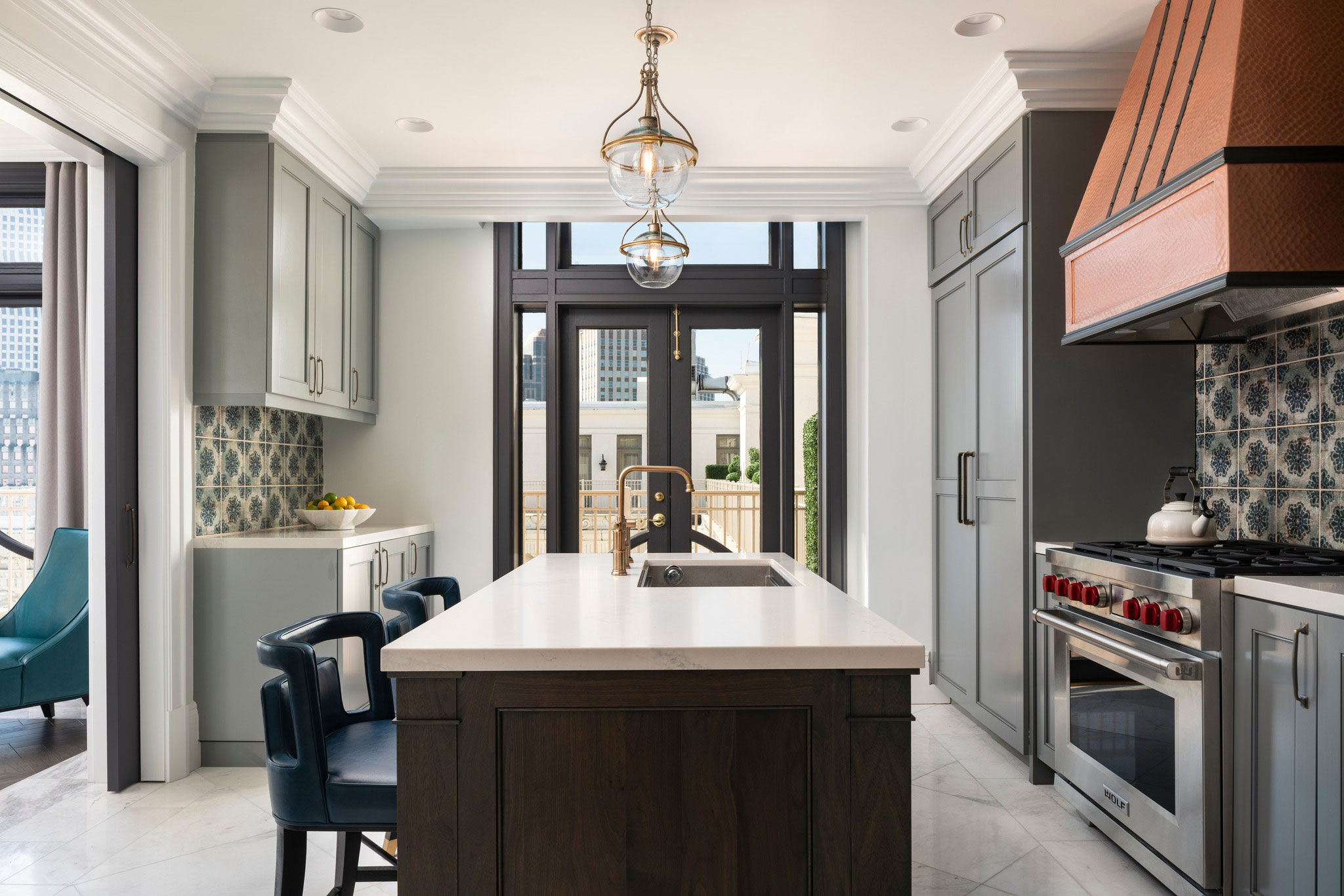
Copper belongs comfortably in a kitchen organized around a long island, simple cabinetry and glazed doors. Here, its placement at the edge of the view gives the cooking area definition without competing with the room's central axis.
Compare a classic copper range hood with more angular profiles to decide which shape suits the cabinet design. A classic copper smooth antique range hood offers another point of comparison, while the Signature SX5 page provides a specific model reference. Review current dimensions and finish options on the selected product rather than assuming that an inspiration image shows the same configuration.
Mixing metals, materials, and textures becomes easier when the underlying geometry is calm. A restrained island profile and a clear backsplash pattern can leave room for expressive metalwork.
6. Balance pale cabinetry with a dark, architectural hood
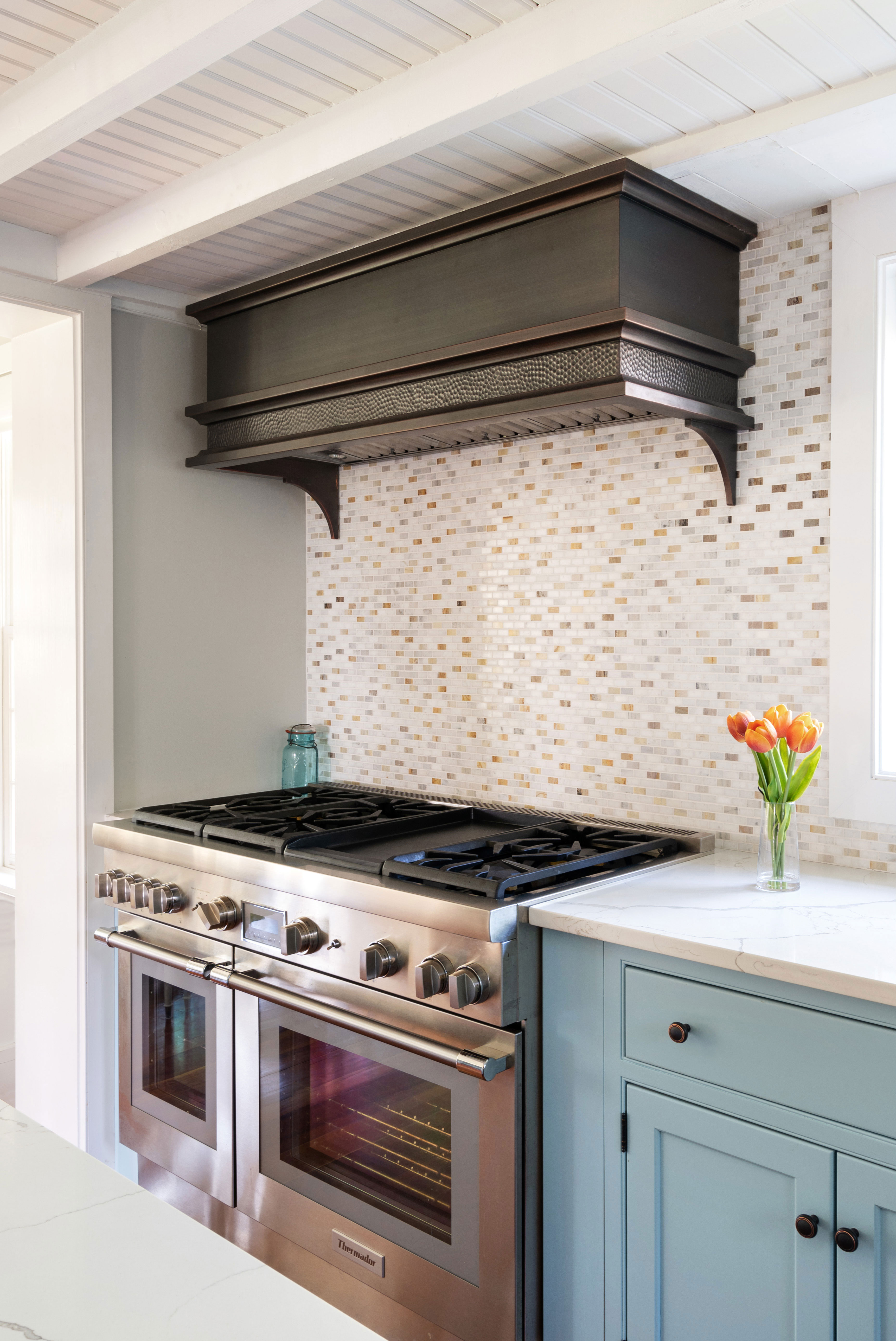
A darker copper finish can read almost like a built-in architectural element. In this kitchen, the broad hood sits above a range and patterned backsplash, with pale blue cabinetry adding color below. The contrast gives the cooking wall depth without requiring a bright metallic surface.
When comparing copper range hoods, include darker finishes in the sample review. They can make straps, edges and changes of plane more visible in some light and less visible in others. Look at the samples in daylight and under the lighting you expect to use while cooking.
You do not need to embrace this trend simply because a material appears in current inspiration. Choose the combination you want to live with, including its cleaning routine and the way its finish may change.
7. Give open shelving a clear center
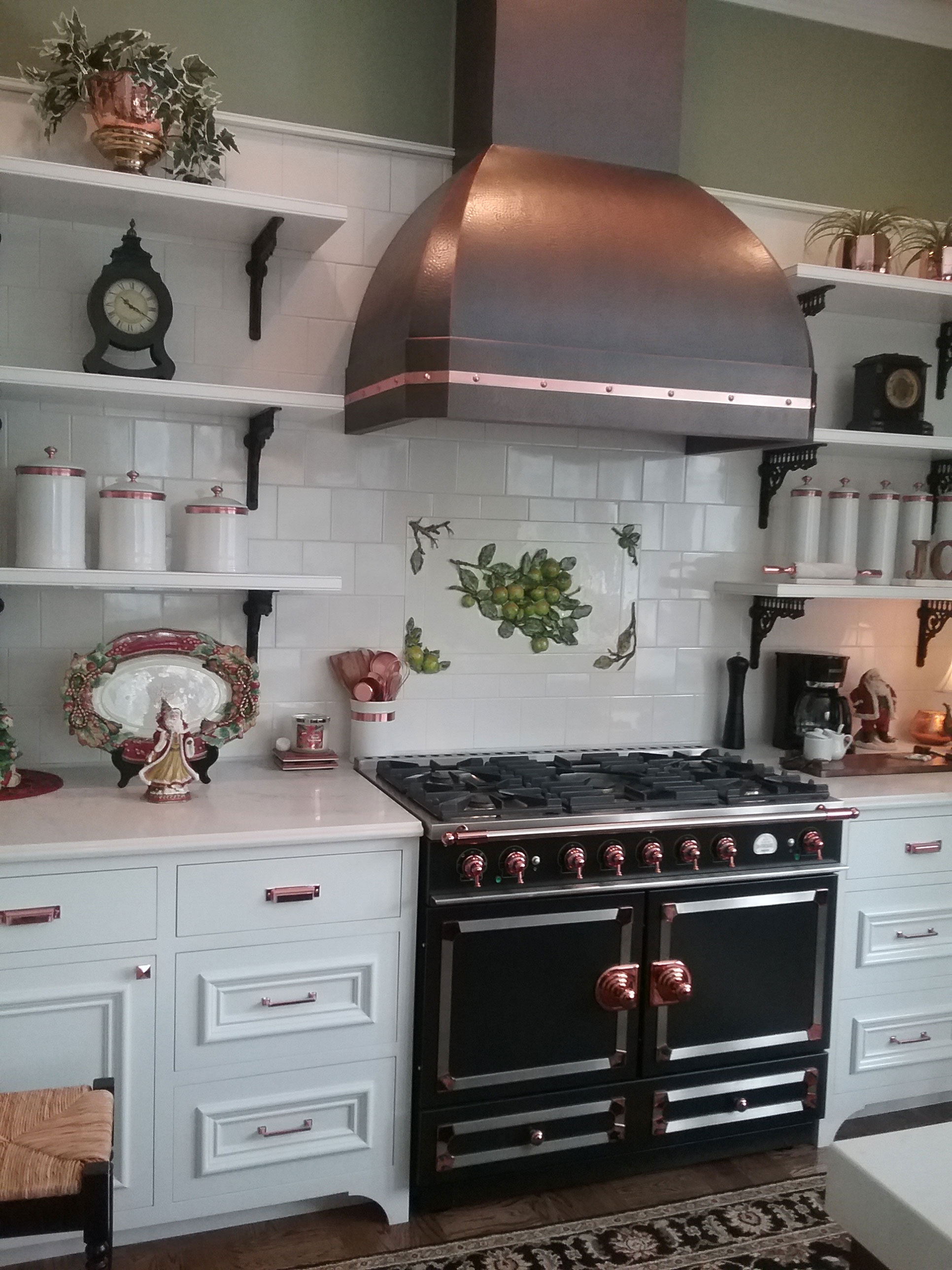
Open shelves create a lighter boundary around this hood. The dark range, pale cabinetry and warm metal form a balanced composition, while everyday dishes give the room a lived-in character. The hood remains the central object because the shelves are arranged around it.
Keep shelf contents and combustible materials outside the clearances required by the cooking appliance and hood. The visual openness of a layout does not remove the need to coordinate its installation.
Translate the inspiration into your own specification
Begin with the appliance model, the available wall or island space and the ventilation route. Then resolve the hood's width, projection, mounting position and finish. A larger decorative shell alone does not optimize performance; the capture area, compatible equipment and installation work together.
Once those requirements are clear, choose a copper hood whose proportions belong in the room. Bring the cabinet elevations, material samples and the views you value most to the discussion with CopperSmith. The strongest result is a kitchen in which the metalwork feels considered from every useful angle.
Start your project with your measurements, finish preferences and installation requirements.

 By submitting, you agree to our Privacy Policy & Terms