
Range hood depth refers to how far the range hood extends over your cooktop. The ideal depth for your range hood depends on the size of your cooktop. That's because the perfect range hood size in terms of both depth and width should cover all of your burners at minimum, and the whole stove unit at best. In this article, you're going to learn how to measure hood depth as well as overall hood size, and other things you need to think about.
How to Measure Range Hood Depth
If you’re feeling overwhelmed about getting your range hood to fit your kitchen perfectly, don't worry, you're about to discover that measuring for range hood depth is easy.
Whether you're measuring for under cabinet range hood depth, or the depth for a wall-mount hood or island range hood, the principle is the same. You will need to follow several steps to get your dimensions just right for a perfect range hood installation.
Start By Measuring the Depth of Your Stove
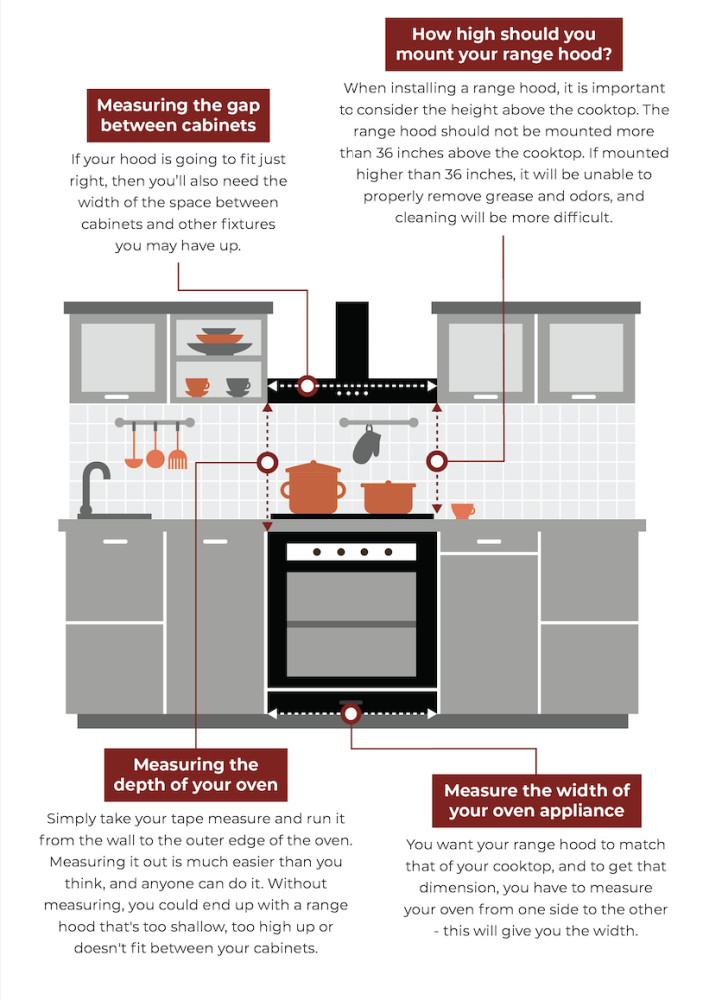
To figure out your perfect range hood depth, first measure the depth of your stove. Simply take your tape measure and run it from the wall, all the way to the outer edge of the stove.
Measuring the Width of Your Cooktop
Of course, you want your range hood to work with the size of your cooktop, and to get that dimension, all you have to do is measure the cooktop from one side to the other - this will give you the width you need for to figure out the best range hood size for your kitchen.
Don't Forget the Gaps Between Cabinets
In addition to measuring the depth and width of your stove, you also need to meaure the space between your stove and cabinet and other fixtures. That's because having your range hood extend out a little over your stove will give you better ventilation as well as prevent damage to cabinets. Understanding how much space you have can help your range hood professional figure out the perfect range hood size for you.
With the above, you have all of the numbers you need to get your own perfectly fitted range hood. Measuring range hood depth and the other dimensions is easy, so long as you’ve got a tape measure at hand. Without measuring it, you could end up with a range hood that’s too shallow, too high up, or doesn’t fit between your cabinets.
Selecting the Proper Hood Depth
According to the experts at World CopperSmith, the standard depth of a range hood is 22 inches. They can be larger, and a custom hood can be any size that’s needed.
Keep in mind that having a hood that is the same depth as the range would impede your ability to reach all of the burners safely unless it is installed quite high. However, in the case of a microwave/hood swap, a high installation would probably not be possible.
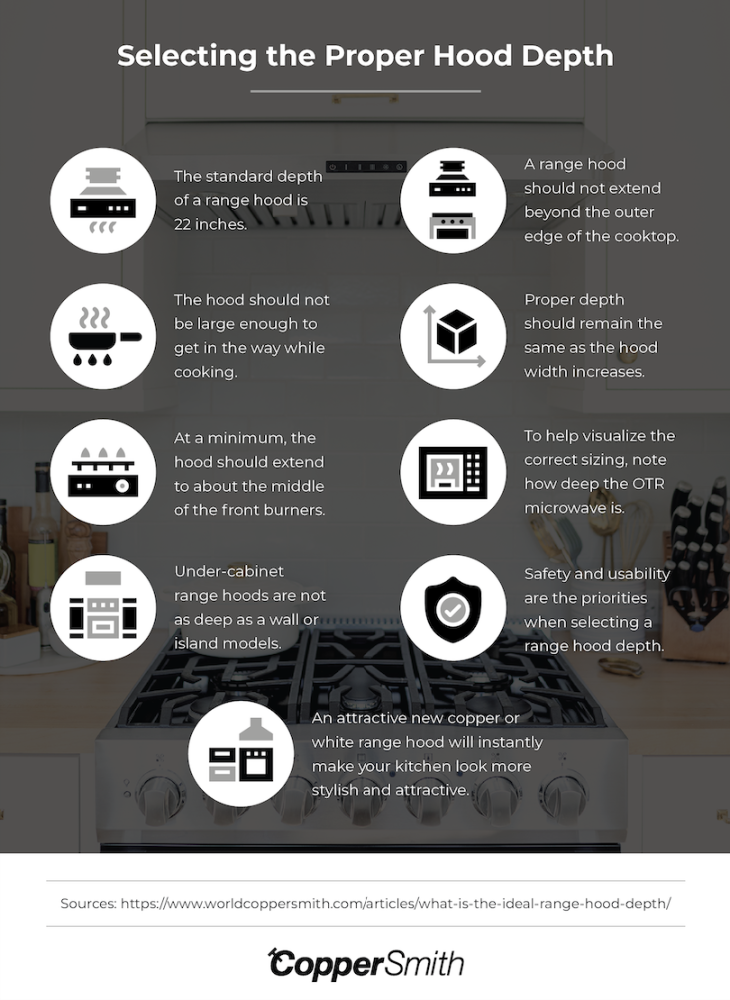
Consider these points when selecting the right range hood depth:
- The hood should not be large enough to get in the way while cooking
- At a minimum, the hood should extend to about the middle of the front burners
- Under-cabinet range hoods are not as deep as wall or island models
- A range hood should not extend beyond the outer edge of the cooktop
- Proper depth should remain the same as the hood width increases
You may like the look of a deeper hood, but safety and usability are the priorities. Remember, installing an attractive new copper or white range hood will instantly make your kitchen look more stylish and attractive.
Figuring out Hood Height Above Range
Something else you’ll want to consider when measuring, and when installing your range hood is how high you’re going to have it. If it’s going to perform efficiently, then you need to make sure it’s not too high above your cooktop.
Generally speaking, your range hood should not be mounted more than 36 inches higher than your cooktop. If it’s going to properly remove grease and odors, then you’ll want to have it within the 27-36 inch range. Any higher than that, and you’re going to see a lot more grease than you should, which will make cleaning much more difficult.
Sizing Your Range Hood
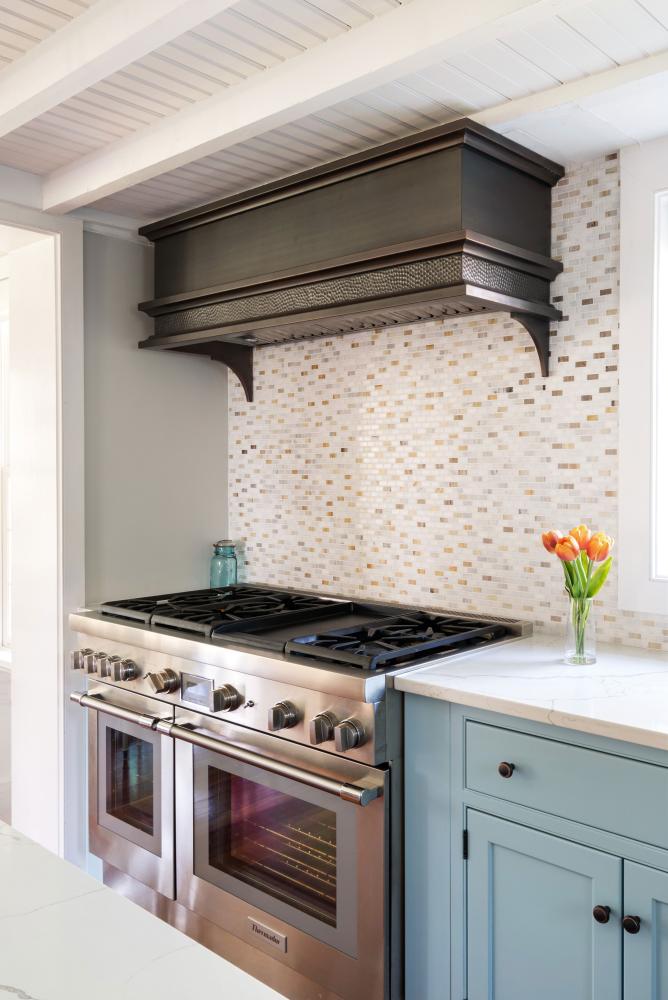
Typically, the size of the range hood varies according to the size of the range. A larger range needs a hood with a bigger capture area to be the most efficient. In new construction or major remodeling, it’s easy to upgrade sizes to meet your personal needs and preferences.
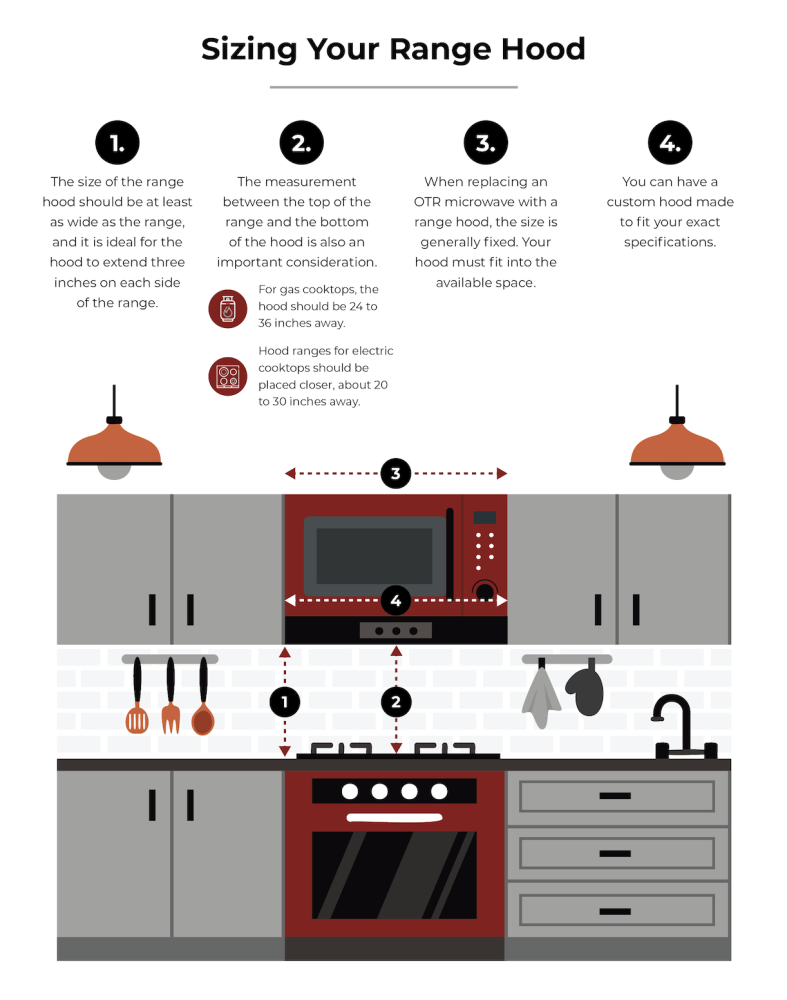
When replacing an OTR microwave with a range hood, the size is generally fixed. Your hood must fit into the available space. Fortunately, that still gives you plenty of options when it comes to choosing the style, color, and finish. You can even have a custom hood made to fit your exact specifications.
A standard range hood is 30 to 36 inches wide. The hood should be at least as wide as the range. If possible, it is ideal for the hood to extend three inches on each side of the range. This margin allows for a large capture range.
The measurement between the top of the range and the bottom of the hood is also an important consideration. For gas cooktops, the hood should be 24 to 36 inches away. Hood ranges for electric cooktops should be placed somewhat closer, about 20 to 30 inches away.
Does Range Hood Vent Size Matter?
Something that you may consider when picking your range hood is the vent. It’s a part of the range hood, and plays a vital part in ventilating all of the odors and grease, so how important is it that you get a vent of the right size?
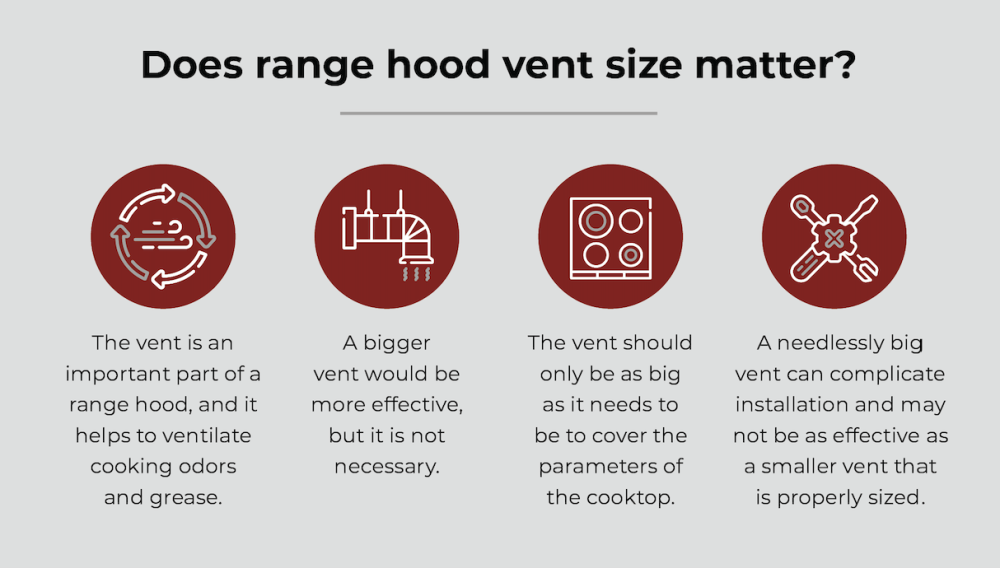
While it may be more commonly believed that a bigger vent makes for more effective ventilation, that’s not generally true - and opting for a vent that’s needlessly big may complicate the installation of your range hood. You shouldn’t aim to have a vent that’s bigger than the space you have available, as it’s just not necessary. So long as the vent covers the parameters of the cooktop, it should work efficiently and effectively.
How an OTR Microwave Compares to a Range Hood
If you’ve been living with an over-the-range (OTR) microwave and have decided to replace it with a range hood, you probably have some questions. Eventually, you’ll need to understand the importance of range hood depth, but that may not be your first concern.
The first question may be, “is switching to a range hood really worth the trouble?” The venting systems in OTR microwaves are sufficient, but even the best microwave vent will not be as good as a range hood.
OTR microwaves are convenient and save space which is a big plus in small kitchens. However, they have a much smaller capture area, the filters are more difficult to clean than range hood filters, and the fans are typically much louder than hood fans.
High-quality range hoods like those available at World CopperSmith limit the amount of steam, smoke, and heat that waft through your house when you cook while also mitigating cooking odors.
The shape and size of a range hood does a superior job of capturing these unwanted elements. Range hoods also help keep the kitchen cleaner by capturing splattering grease. They do a better job overall, and with so many styles to choose from, like statement black range hoods, they can make a big impact on your kitchen style.
Ducted or Ductless Range Hood: Which is Best?
If your home already had an OTR microwave installed when you purchased it, it may or may not be vented to the outside. Outdoor venting is preferable, but if the ductwork has not already been installed, you’ll have to decide whether you want to spend the extra money to have a duct installed.

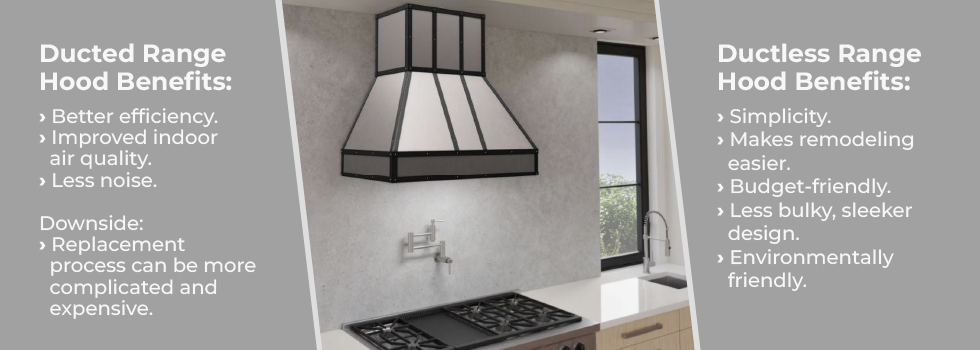
Ductless range hoods are also known as non-vented, recirculated, and duct-free. All of these terms refer to a hood that pulls air through a charcoal filter and recirculates the cleaned air back into the house.
Benefits of a Ducted Range Hood
Ducted range hoods connect the appliance to the outdoors through a piping or duct system. Most commercial kitchens rely on ducted models to keep the large amounts of smoke and grease they produce out of the workspace and prevent it from blowing into any dining areas.
Vented range hoods (ducted) aren’t always necessary in a home kitchen, but they do offer several benefits, including:
- Better efficiency
- Improved indoor air quality because they do not recirculate air
- Less noise
- Being ideal for large ranges and households that do a lot of cooking
The downside of ducted hoods is that if the ventilation system isn’t already installed above your OTR microwave, the replacement process will be more complicated and more expensive. Depending on how your home is built, it may not be possible to install a ducted hood in the space where your microwave previously hung.

Benefits of a Ductless Range Hood
If you are replacing a ductless OTR microwave oven, the biggest benefit of installing a ductless range hood is simplicity. Swapping out one appliance for the other is a relatively easy project that even an inexperienced DIYer can do with a little help. Other benefits of a ductless range include:
- Makes remodeling easier
- Budget-friendly
- Less bulky, sleeker design
- Environmentally friendly — does not vent carbon emissions into the atmosphere
The downside of ductless range hoods is that they do not perform at the same level as vented hoods. Recirculating the air is not as efficient as venting it. However, modern range hoods still do an excellent job of removing smoke and odors, and many models run as efficiently as ducted hoods.
What About CFM?
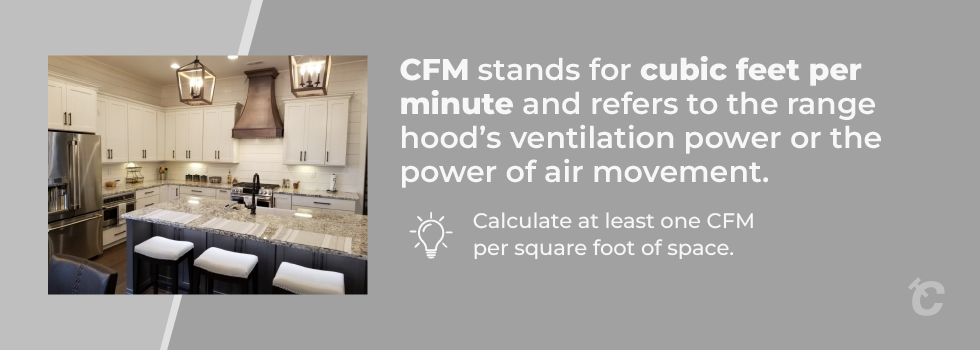
CFM stands for cubic feet per minute and refers to the range hood’s ventilation power or the power of air movement. The CFM needs to be strong enough to remove smoke, odor, grease, and heat but not too strong for the size of your cooking area.
In general, calculate at least one CFM per square foot of space. To find the square footage, multiply the width of your kitchen by the length. For example, a kitchen that is 14 feet wide and 12 feet long is 180 square feet and requires a range hood with a minimum of 180 CFM.
The experts at World CopperSmith assure customers that a full-service supplier will help them calculate the correct CFM size.
Installing a Ductless Range Hood
If you prefer a ducted copper range hood and need a venting system installed, hiring a local contractor to lay in the ductwork is the best idea. An experienced contractor will be able to confirm if ducting is possible and will have the knowledge to do it efficiently.
Installing a ductless hood yourself is not a five-minute job, but it is fairly straightforward. You may need a friend or two to help when it comes time to lift the hood into place for dry fitting and final installation. Basic tools needed to complete the job are simple and include a drill or screwdriver, a pencil for marking, and a measuring tape.
Read through all of the manufacturer’s instructions before starting so that you are fully prepared. Also, take the time to verify that the range hood functions as it should. Take it out of the box and plug it in to check the fans, lights, and other control mechanisms. Keep in mind that some minor wiring is required to complete the job.

How to Better Visualize Your Range Hood
If you’re going for a full remodel, or just want a way that makes all of these things easier to visualize, you’re in luck. You don’t need to struggle with trying to picture everything in your head, and you’ll have an easier time getting accurate plans with a 3-D configurator.
You can use this to get a much clearer view of your plans, and you’ll be able to see what works and doesn’t work. You'll be able to see hood range height as well as width, and depth.
Unless you enjoy smelling last night’s dinner at breakfast time, kitchen ventilation is an important topic. A proper over-the-range hood keeps your home free of smoke, grease, and unwanted food smells.
Connect With CopperSmith Professionals
If you’re interested in getting your own range hood and are ready to have one ordered to your measurements, you can get a quote right away. Don’t hesitate to reach out if you have any questions about range hood installation or measurements, as you’re just one phone call away from an expert who can help you with anything you need.
FAQs
How far should the hood stick out over the stove?
Your range hood should stick out enough so that it covers the front two burners at minimum, but it should stick out far enough to cover your whole stove unit.
Should the hood be the same size as my cabinets or bigger?
An under cabinet range hood doesn't have to be exactly the same size as your cabinet and it doesn't have to be bigger. But it does have to fit under your cabinet and in between surrounding cabinets and appliances. The more important measure is that the range hood should cover your cooktop at minimum and if you have space it should cover your full stove unit.
Is there a standard measurement for how much the hood extends outward?
In terms of range hood depth, the hood should extend out so it covers either all of your burners on a cooktop or the full stove unit. In terms of hood with, it should extend out anywhere from 3 inches to six inches.