

The right copper finish depends on what you want the piece to do in the room. It might bring light to a quiet corner, anchor a pale kitchen or connect a dining table with nearby hardware. Begin with tone, sheen and texture, then consider how the surface will be used and maintained.

Polished Copper: Light and Reflection
A bright surface can pick up light and nearby colors. That can make a hood or tabletop feel lively, but it can also increase its visual presence. Look at reflections from windows and fixtures rather than assuming polished copper will always make a small room feel larger.
Compare the finish in daylight and under the lighting you use in the evening. A sample held flat on a counter may look different from the same surface held vertically beside cabinet doors. Match the sample orientation to the proposed product wherever possible.
Fire and Variegated Finishes: Movement Across the Surface
Fire-style finishes introduce tonal variation that can give a broad surface depth. The pattern may be more noticeable on a large apron or tabletop than on a small swatch. Ask about the expected range of variation and the finish currently offered for the chosen model; older names such as Tuscan are not a guarantee of a current catalog option.
A copper surface may change as it gets older, but the appearance depends on its treatment, exposure and care. Ask whether the selected finish is living, protected or coated instead of assuming all copper develops in the same way.
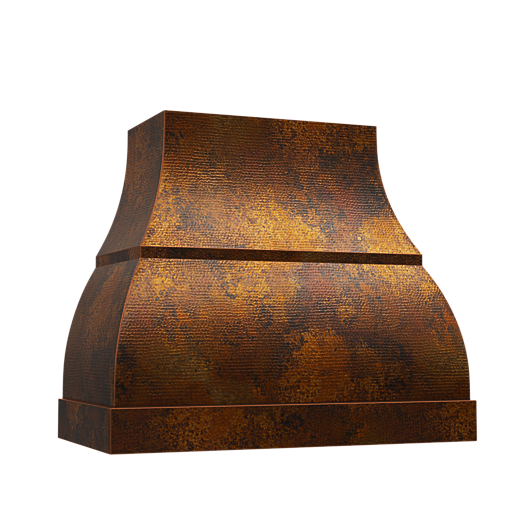
Rustic and Aged Finishes: Weight and Contrast
A dark surface can anchor a lighter palette. Pair it with simple surrounding forms when you want the metal’s texture to stand out, or repeat a related tone in hardware to make it feel connected. Dark copper can suit contemporary interiors as well as rustic rooms; silhouette and proportion are as important as color.
To accent your interiors, decide which surface should lead and which should support. A heavily patterned stone, detailed cabinet door and strongly mottled copper finish can compete when all are equally prominent. Make one the main event and allow the others to provide context.
Match the Finish to the Product
A range hood is viewed mostly upright and from a distance. A sink is touched, wetted and cleaned throughout the day. A table is viewed across a horizontal plane with changing reflections. The same finish name does not make these experiences identical.
When considering copper furniture, compare the top with its base and the chairs around it. For a stove hood or vent, review the finish beside cabinetry and the cooking area. The goal is a coherent relationship, not a requirement to repeat the same metal on every surface.
Separate Cleaning From Polishing
Cleaning removes everyday deposits; polishing can change a surface you deliberately selected. The Western Australian Museum’s copper guidance notes that repeated polishing wears the metal. Its conservation methods are not instructions for a kitchen sink; use the product’s own care guidance for the finish in your home.
Choose the right patina with a realistic view of daily use. If you want a very stable appearance, ask what maintenance or protection the specified finish requires. If you enjoy tonal change, ask what kinds of change are expected and which cleaning products must be avoided.
A Simple Sample Review
- Place the copper beside the actual cabinet, counter and flooring samples.
- Compare morning, afternoon and evening light.
- Hold it in the product’s intended orientation.
- Review the texture at close range and from across the room.
- Confirm the model, finish name and care requirements together.
Photographs help establish direction; physical samples help resolve the surface. Keep the selected sample with the project schedule so everyone is discussing the same finish.

Do all copper pieces need the same patina?
No. Related tones can work together even when their sheen or texture differs. Review the whole palette and let each piece’s scale and purpose guide the choice.


 By submitting, you agree to our Privacy Policy & Terms