
If you have a copper hood or copper sink, or any type of copper element in your home, you want to know how to prevent copper from tarnishing. The fascinating thing about copper is that the more it changes, the more it protects itself, but at the same time, you might wonder if you're doing all of the right things to keep it clean. In this guide you're going to learn how to take care of copper, while also allowing copper to take care of itself.

Why Copper Always Looks Great
Copper is utilized in a wide range of industries for its genius properties and n homeware it is both functional and aesthetic. As a "living" metal, copper will change naturally, developing a patina that is unique and appealing. And that patina is the answer for how to keep copper from tarnishing. Patina is copper's natural defense mechanism to keep it from tarnishing. It also possesses native antibacterial qualities, meaning you don't have to worry about germ buildup. And its ability to conduct heat makes it extremely useful as cookware.
As the proud owner of a copper bathroom fixture, copper range hood, or another copper product, you don't need to do much at all for upkeep. The metal will achieve its singular coloration and texture all on its own. You can, however, perform simple maintenance to preserve the inherent qualities and elevate the beauty of your copper pieces.
How a Seal Can Prevent Copper From Tarnishing
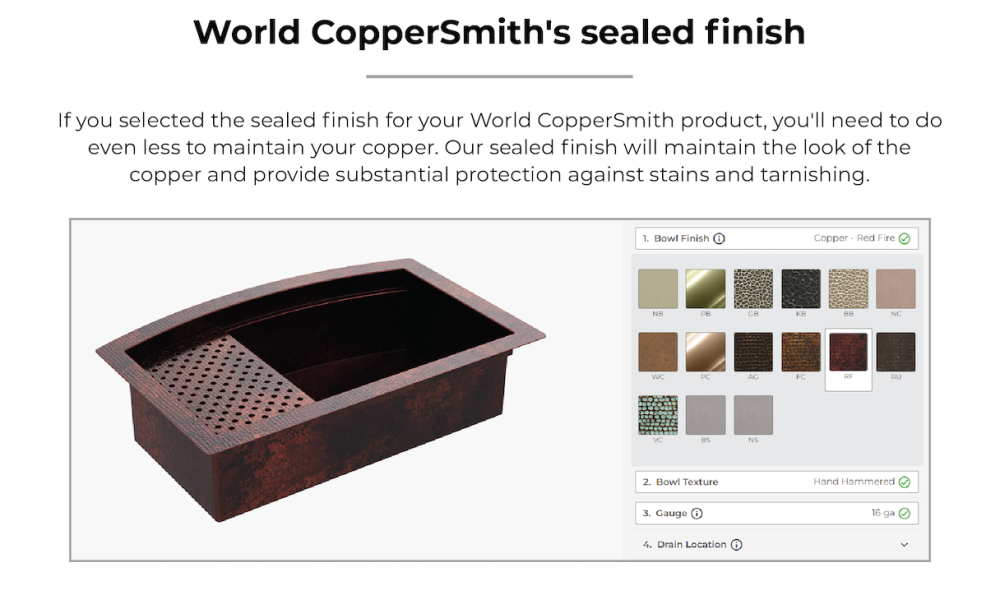
Copper is naturally resilient to elements, but sealing them makes them more robust. For example, if you select a sealed finish for your CopperSmith product, you'll need to do even less to maintain your copper. Our sealed finish will maintain the look of the copper and provide substantial protection against stains and tarnishing. It's likely all you'll need to clean sealed-finish copper is a soft cloth and mild detergent soap. Rinse and dry, and you're good to go.
Effects of Wear and Tear on Copper Products
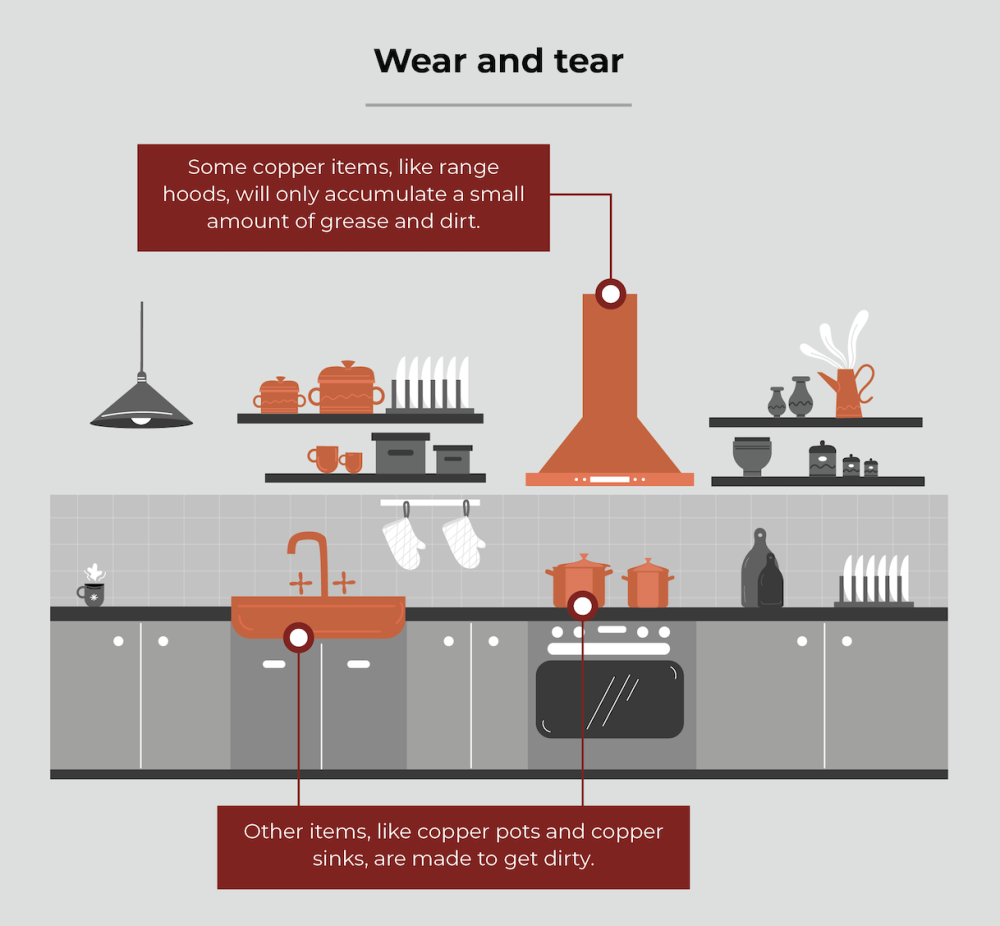
Some copper items, like range hoods, will only accumulate a small amount of grease and dirt. Other items, like copper pots and copper sinks, are made to get dirty.
Threats to Copper
As a highly reactive metal, copper is prone to tarnishing from water, harsh chemicals, and oxygen. Contact with human skin and its oils will also cause copper to tarnish over time, which is why copper jewelry and utensils tend to discolor quickly.
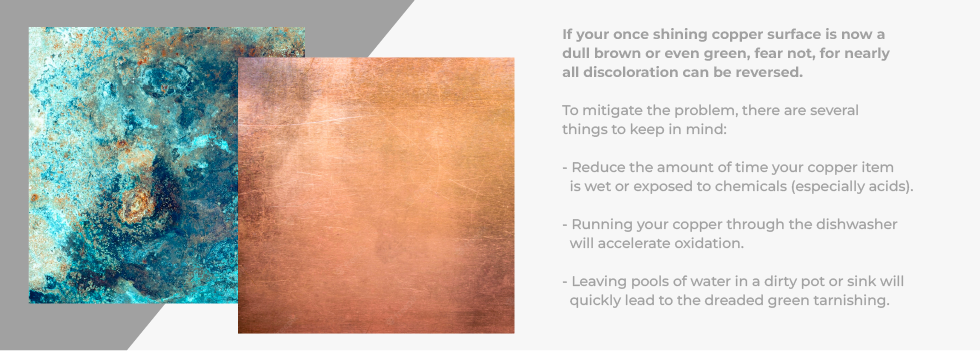
If your once shining copper surface is now a dull brown or even green, fear not, for nearly all discoloration can be reversed.
Solutions for Keeping Your Copper Clean
Firstly, reduce the amount of time your copper fixture is wet or exposed to chemicals (especially acids). Running your copper through the dishwasher will accelerate oxidation, and leaving pools of water in a dirty pot or sink will quickly lead to the dreaded green tarnishing.
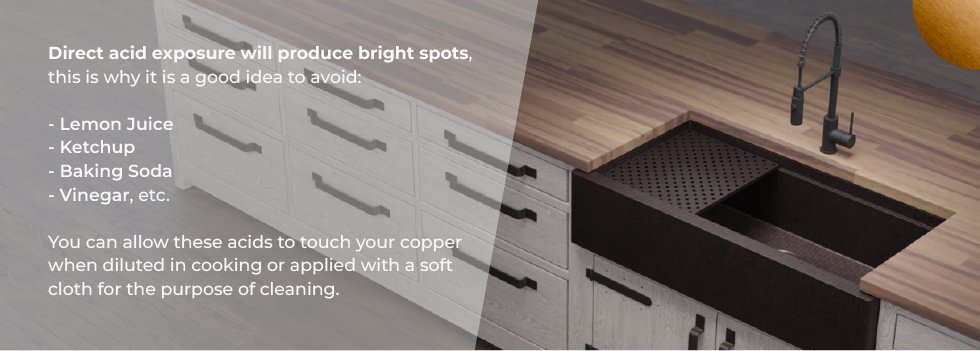
Direct acid exposure, such as a copper pot holding food remains (e.g. lemon juice, ketchup, baking soda, vinegar, etc.), will produce bright spots. Over time, the copper will repair itself and return to its original color, but it's a good idea to avoid the situation altogether by only allowing acid to touch your copper when diluted in cooking or applied with a soft cloth for the purpose of cleaning.
How to Clean Copper
So, how does one clean copper?
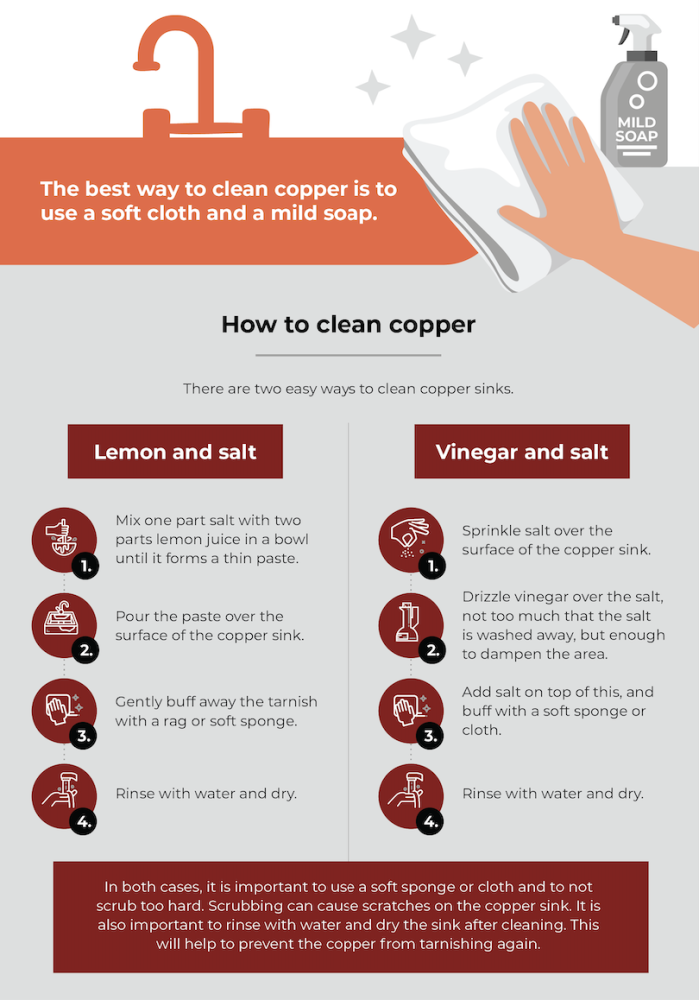
As stated above, minor dirt or grease accumulation on your range hood can be wiped off with mild dish soap and a soft cloth. For natural copper products like cookware or natural copper sinks where you would like to get back to the original copper finish, here is a simple solution.
Clean Copper With Lemon and Salt
This first technique to clean copper sinks, copper range hoods, and other copper fixtures at home is great because it uses items that most people will already have on hand: lemons and sodium chloride (salt). In a bowl, stir together one part salt to two parts lemon juice until it forms a thin paste. Next, pour the paste over the surface of your copper item. Then gently buff away the tarnish with a rag or soft sponge. Don't scrub too hard and don't use an abrasive brush or steel wool, as this can cause scratches.
A very similar approach can be taken with vinegar. The steps are even simpler. First, sprinkle salt over the surface of the copper. Then drizzle vinegar over the salt, not too much that the salt is washed away, but enough to dampen the area. You may consider using a spray bottle for even distribution. Add salt on top of this, and buff with a soft sponge or cloth before rinsing with water and drying.

What Is the Best Cleaner for Copper?
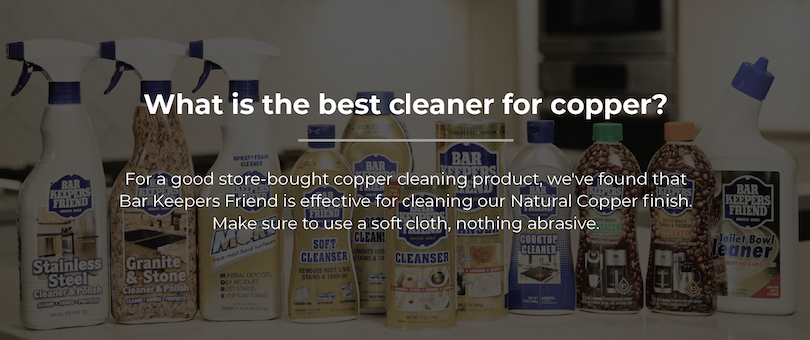
For a good store-bought copper cleaning product, we've found that Bar Keepers Friend is effective for cleaning our Natural Copper finish. Make sure to use a soft cloth, nothing abrasive.
Does WD 40 Clean Copper?
WD 40 won't clean tarnished copper, but it may be able to act as a sealant (along with carnauba wax or mineral oil) to prevent future tarnishing.
What Cleans Stained Copper?
If you've tried the homemade methods and your copper's tarnish persists, you may want to try a commercial product, such as Bar Keepers Friend.
For another, stronger homemade solution, create a paste out of equal parts flour and salt with enough vinegar to bring it to a spreadable consistency. Cover your copper with this mixture, allow it to sit for a few hours, then wipe it off with a soft cloth and rinse.
How to Protect Your Patina
Every chemical you introduce to copper will change it, at least slightly. To protect the existing patina, apply occasional (monthly or less frequent) coats of carnauba wax or beeswax to the copper, as detailed in our copper sink maintenance guide.
Caring for your copper

Copper is a wonderful investment - robust, useful, and stylish. With this guide, you've seen how, with prudence and a little elbow grease, you can keep your copper's brilliant shine as it naturally develops a unique and striking patina.
Best Way to Clean Copper Guidelines
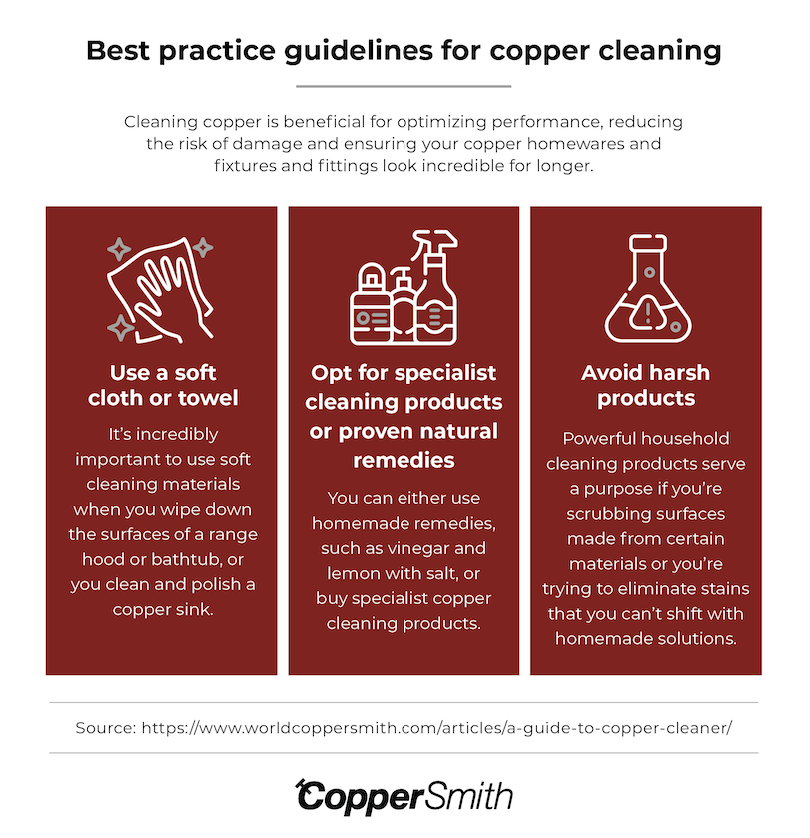
If you have a copper range hood inyour kitchen, you’ve recently bought a copper bathtub, or you’re considering adding a copper sink to your bathroom, it’s natural to want to prolong its lifespan. Cleaning copper is beneficial for optimizing performance, reducing the risk of damage and ensuring your copper homewares and fixtures and fittings look incredible for longer. To simplify copper cleaning and save you time and effort, we’ve put together some best practice guidelines:
- Use a soft cloth or towel
It’s incredibly important to use soft cleaning materials when you wipe down the surfaces of a range hood or bathtub, or you clean and polish a copper sink. If you use an abrasive cloth or brush, such as wire wool, for example, you could tarnish the metal and dull its beautiful shine. Brushes and scrapers can also scratch the metal.
- Opt for specialist cleaning products or proven natural remedies
There are two main options to choose from when cleaning copper. You can either use homemade remedies, such as vinegar and lemon with salt, or buy specialist copper cleaning products. To clean copper quickly and simply without the need for shop-bought cleaning products, you can create a solution using lemon or vinegar. Wipe the surface very gently using a soft cloth to lift dirt and debris and add a glossy sheen to the copper. If you’re shopping for copper cleaning products in a homeware store or browsing online to tackle stubborn stains, read the instructions carefully and check user reviews. In most cases of mild staining, you can use soapy water to wipe copper range hoods, sinks and tubs for fast, fuss-free cleaning.
- Avoid harsh products
Powerful household cleaning products serve a purpose if you’re scrubbing surfaces made from certain materials or you’re trying to eliminate stains that you can’t shift with homemade solutions. However, there are risks. In the case of copper cleaning, it’s best to avoid harsh chemicals and products that could damage the copper. We strongly recommend sticking to lemon and vinegar with salt, soapy water or approved copper cleaning products. Chemicals like hydrogen peroxide and bleach react with the copper, which can tarnish the metal.

How to maintain copper sinks and bathtubs for enhanced durability
Copper is a durable metal but it is not invincible. Cleaning and maintaining copper bathtubs, sinks and range hoods can help to prolong their lifespan and enhance performance and durability. Here are some simple tips to maintain copper at home:
- Clean your copper regularly: regular cleaning with soapy water and a soft cloth can help to prevent dirt buildup and protect the copper. Take a couple of minutes every day or after cooking or bathing to wipe the copper and remove excess water and traces of dirt and grease.
- Use a wax coating to protect the copper: applying a coating of wax to the copper offers greater protection for the metal. You can use beeswax or carnauba wax. You will only need a very thin layer of wax. A small amount will go a long way. Once you have applied the wax, leave it to dry and then gently buff the copper using a soft cloth.
- Take care when choosing cleaning products: quick and easy cleaning is one of the most attractive features of copper sinks, bathtubs, range hoods and tables. When you’re cleaning copper at home, it’s important to take care when choosing cleaning products. For minor, everyday stains, you should only need warm, soapy water and a soft towel or cloth. If you have more stubborn stains, mix lemon or vinegar with salt and gently wipe the copper surface. Avoid using anything abrasive, such as steel wool or brushes with hard bristles. Look for products that are designed specifically for copper cleaning. Avoid using anything that could damage the finish of the product.
- Reduce the risk of dents and scratches: copper is more resistant to dents and scratches than other metals, but it can show signs of wear and tear. Reduce the risk of scratches and scuffs by taking care when cleaning heavy pans and placing pots in your sink and protecting the copper using wax.
If you need any extra information or advice about copper cleaners or cleaning tips, our team will be happy to help. If you’re thinking about buying a copper sink or bathtub, we offer custom quotes. Click here to get a personalized quote. We can also conjure up ideas using our innovative 360 3D configurator.
FAQs
What's the best way to clean copper without damaging it?
Copper is a resilient material and you can clean it with a simple mixture of soap and water. It can also be cleaned with lemon and water, as well as vinegar and water without incurring any damage.
 Are there differences between cleaning decorative copper vs functional copper?
You can clean clean decorative copper and functional copper in the same way as copper cleaning overall is simple and does not require heavy chemicals. You can clean a copper hood stove and a copper pan with soap and water or a lemon and water mixture.
What causes copper to develop patina?
Patina naturally develops as a protective agent for your copper, and some of the triggers for that development include air quality and heat exposure.
Can you clean copper with hydrogen peroxide?
Because hydrogen peroxide reacts strongly with copper, it's recommended you avoid using hydrogen peroxide with your copper products.