

PROPORTION,
RESOLVED
Dimensions and profile are considered in relationship to your cabinetry, cooking surface, and surrounding architecture, so the hood feels intentional within the space.
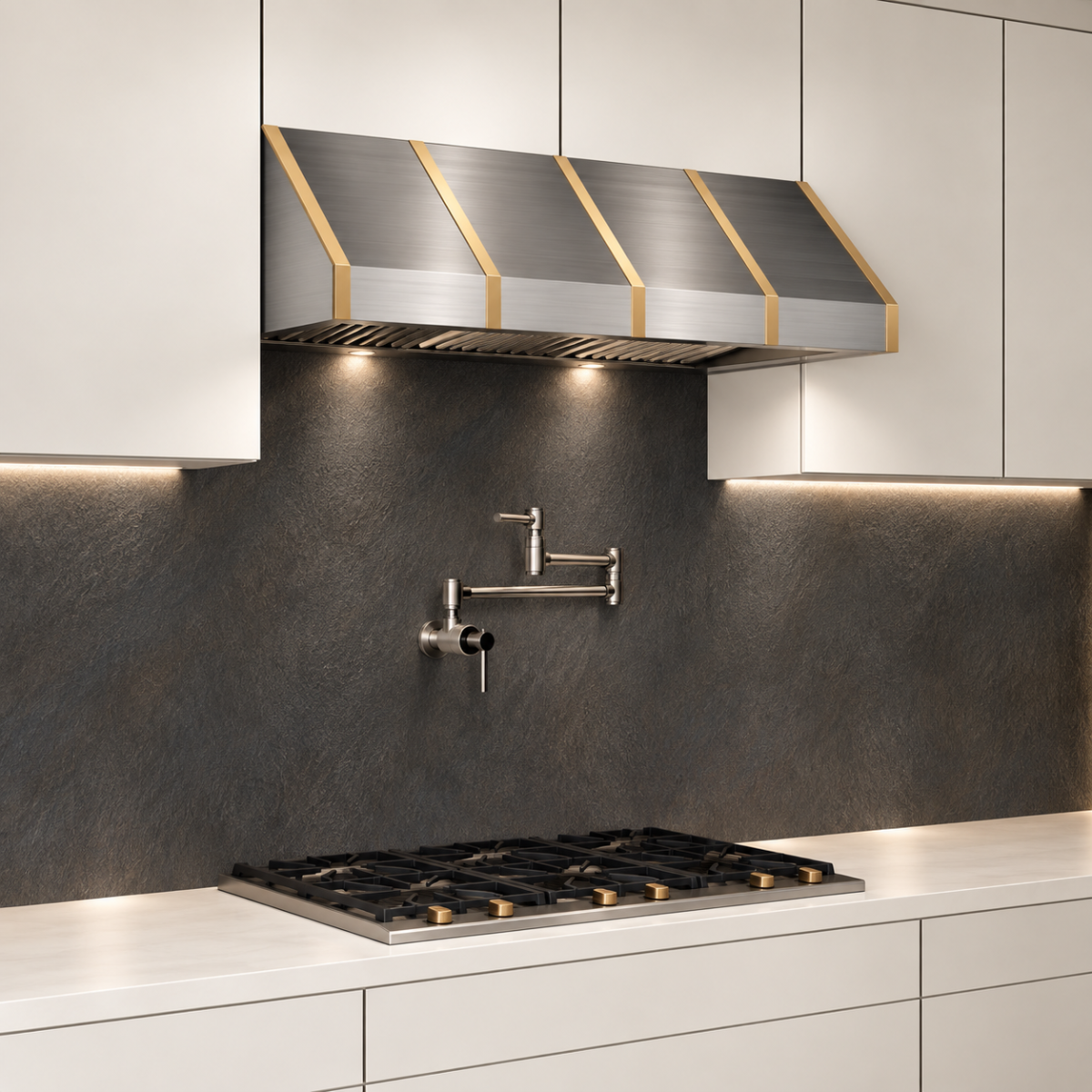
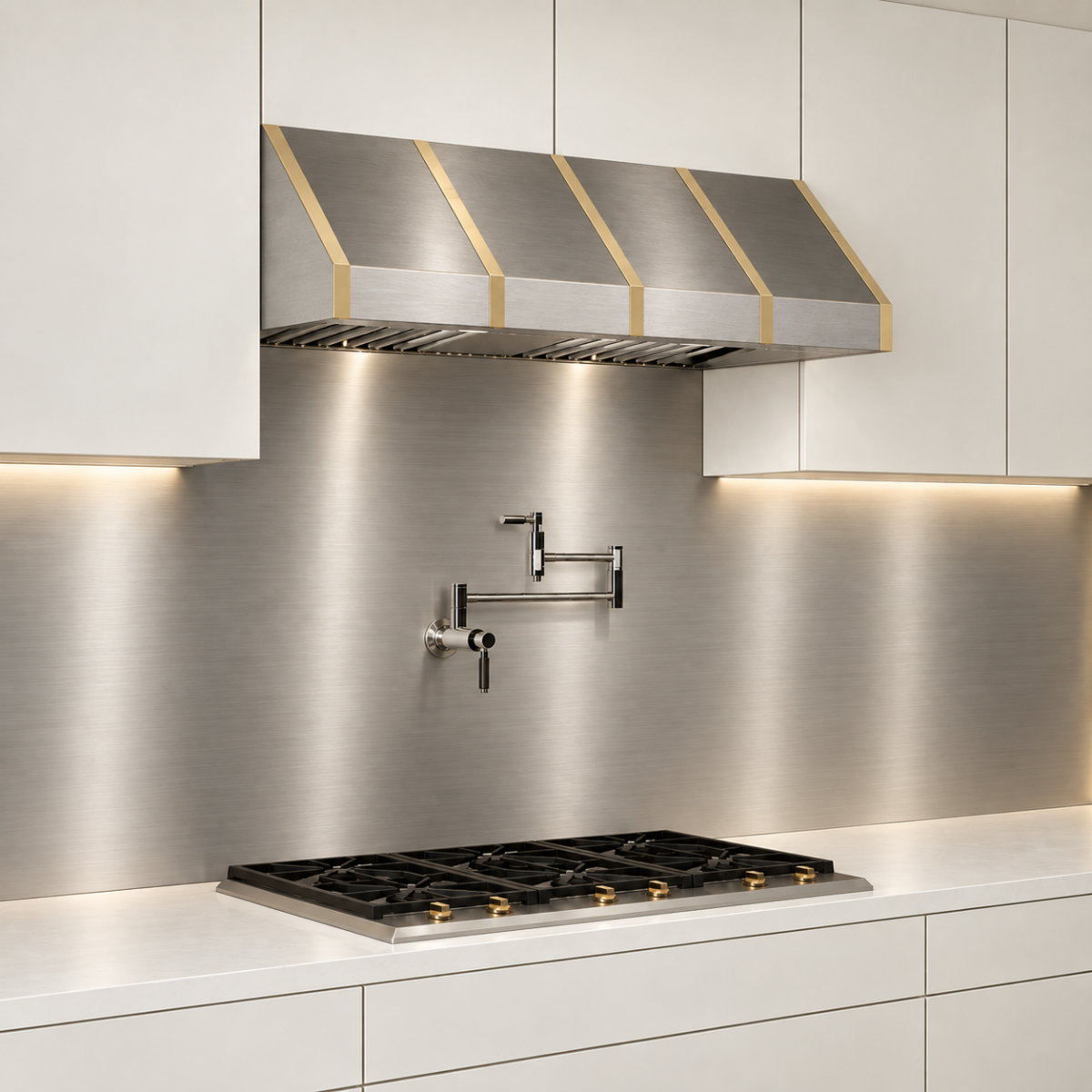
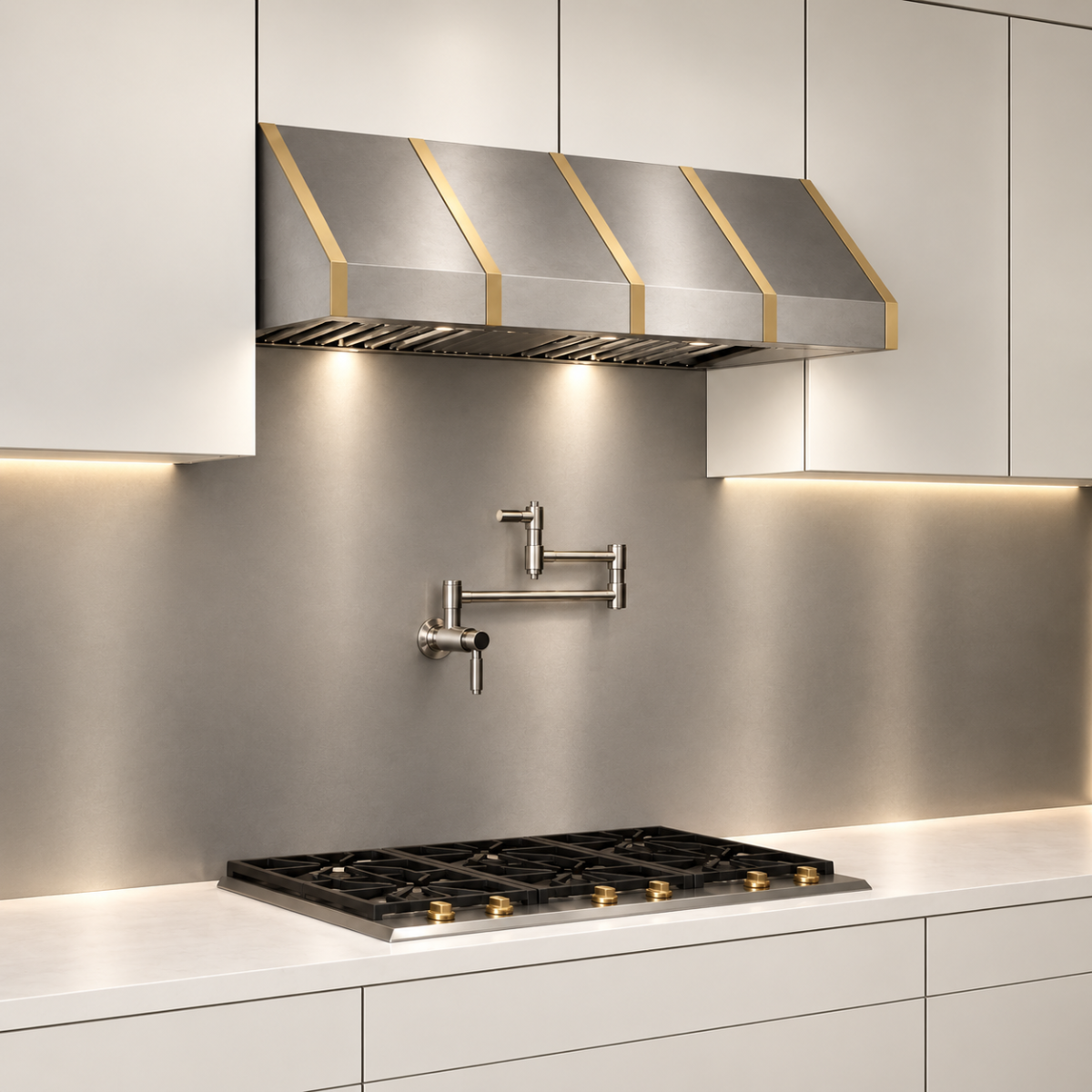
Define the details for your project.
CS-SHEET-CN-ZNaNeed Help? Talk With a Specialist
Dimensions and profile are considered in relationship to your cabinetry, cooking surface, and surrounding architecture, so the hood feels intentional within the space.
Ventilation is engineered alongside the design, bringing performance requirements and architectural intent together from the start.
Real metal, finish, and architectural details are selected for what they bring to the larger design, from tone and contrast to texture, variation, and character.
Detailed CAD drawings bring every decision together before fabrication. Once approved, those specifications guide production through the finished piece.
ARCHITECTURAL METALWORK FOR THE DESIGNED HOME.
 Based on thousands of third-party reviews.
Explore the possibilities and make your initial selections. Our team is available to guide dimensions, material, finish, performance, and architectural details.
We translate your selections into a detailed CAD drawing so you can review dimensions and key specifications before fabrication.
With the drawing approved, your piece moves into fabrication and finishing, guided by the specifications you've reviewed.
Your finished piece is inspected, carefully packaged, and coordinated for delivery to your project.
Have a question about your design, dimensions, finish, or next step? Our team can help you resolve the details and move your project forward with confidence.
CUSTOM ZINC SHEET, PROJECT-DEFINED SIZE, ARCHITECTURAL SURFACE.
The Zinc Sheet - Custom brings quiet tonal variation and a naturally evolving surface to backsplashes, wall panels, cabinetry, furniture, and architectural cladding. Specify the sheet around the exact field dimensions, edge conditions, seams, substrate, fabrication method, and surrounding material palette.
Consider Zinc sheets within the complete furniture, material, and circulation plan.
Treat the sheet as an architectural surface. Panel breaks, corners, cutouts, adjacent materials, lighting, sightlines, and installation access determine how the metal reads across the finished space.
Real zinc changes with finish, texture, light, touch, and—where applicable—natural patina development. Review physical samples and confirm whether tonal variation, directional grain, seams, and fabrication marks are part of the intended result.
Confirm material, gauge or thickness, overall dimensions, cutouts, edge returns, seam locations, substrate, adhesives or fasteners, thermal and moisture conditions, protective film, delivery format, installation method, and care requirements before fabrication.
The Zinc Sheet - Custom is specified around the architectural application. Final material, gauge or thickness, dimensions, finish, fabrication details, substrate, seams, installation, and care are confirmed for the project.
Field measurements, cutouts, seams, edge returns, substrate conditions, fastening or adhesive methods, and trade responsibilities must be resolved before fabrication. Do not order from nominal opening dimensions alone.
It is a project-sized sheet of real zinc intended for architectural surfaces such as backsplashes, panels, cabinetry, furniture, and millwork.
Common applications include backsplashes, wall panels, cabinet and furniture cladding, millwork, and other designed metal surfaces. Confirm actual heat, moisture, wear, and code conditions.
Yes. Final dimensions should come from approved field measurements and fabrication drawings that also locate seams, cutouts, folds, and edge returns.
Available gauge or thickness depends on the material, finish, size, fabrication, and application. Confirm it in the project specification.
Compatible natural, brushed, polished, patinated, directional, or textured finishes vary by material. Review current options and approve a physical sample.
Yes. Real metal can show tonal, directional, fabrication, and patina variation. Living surfaces may continue to change with touch, environment, and use.
Coordinate sheet size, visible joints, corners, folds, edge returns, reveals, and adjacent materials before fabrication so the panelization supports the design.
Substrate requirements depend on sheet construction and installation method. Confirm flatness, stability, moisture, temperature, movement, and material compatibility.
Installation may use approved adhesives, mechanical fasteners, folded assemblies, or shop-fabricated panels. Define the method and trade responsibilities before production.
Exterior suitability depends on the metal, finish, substrate, exposure, drainage, fasteners, detailing, and maintenance plan. Obtain project-specific confirmation.
Use care products and methods approved for the selected metal and finish. Avoid abrasive or harsh cleaners unless specifically permitted.
Confirm material, gauge or thickness, dimensions, seams, cutouts, edges, substrate, finish, variation, installation method, site conditions, delivery format, and care.

 By submitting, you agree to our Privacy Policy & Terms